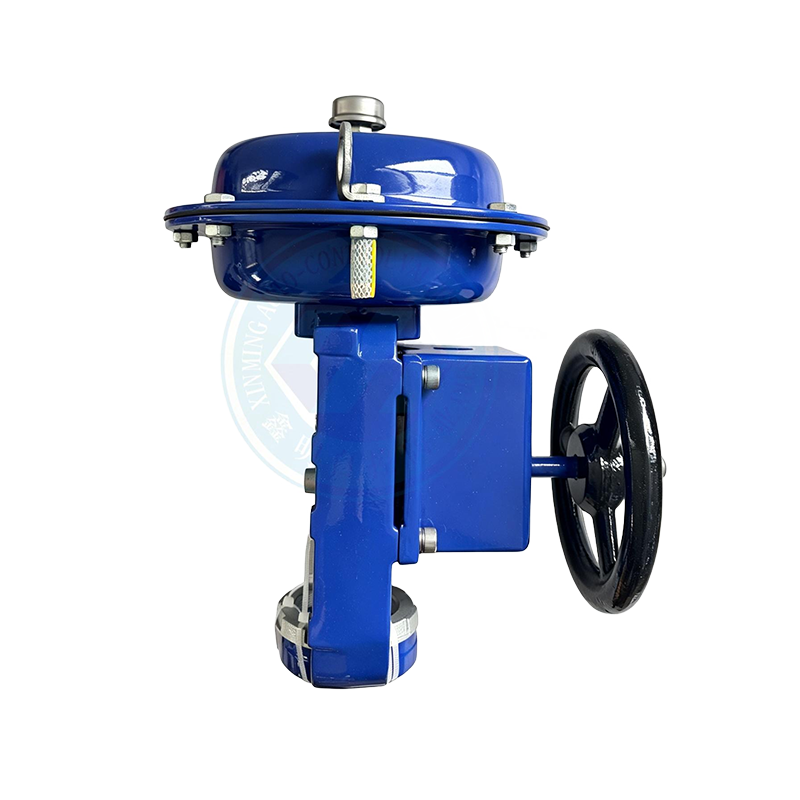
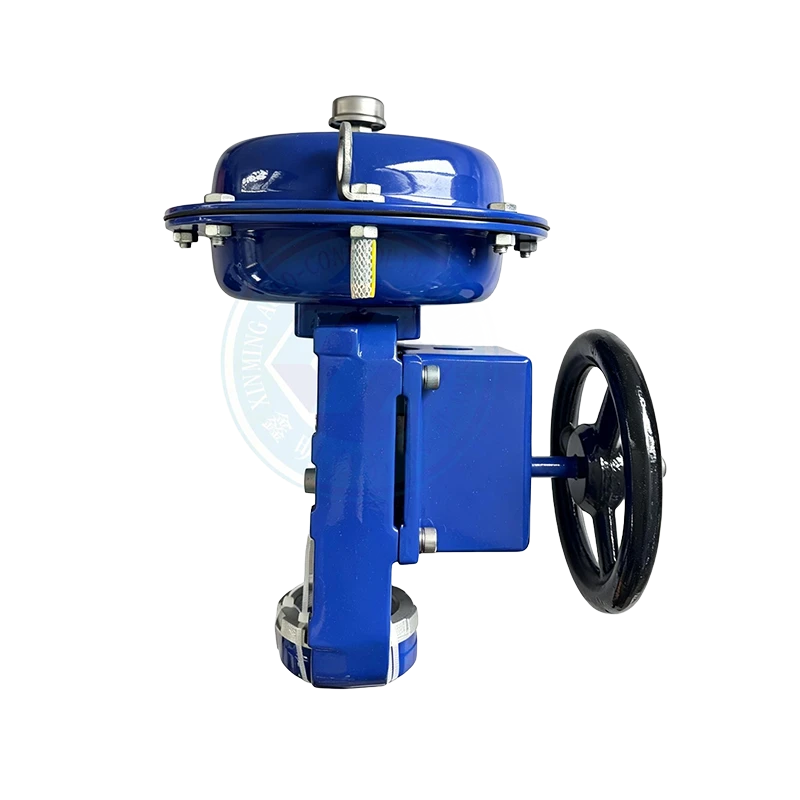
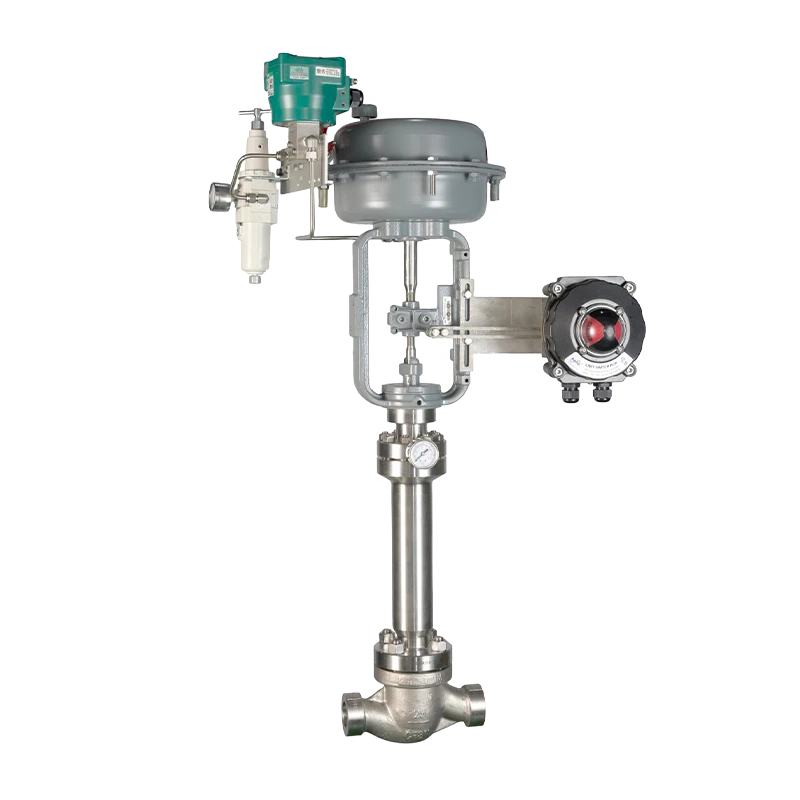
Reverse action Pneumatic Diaphragm Actuators
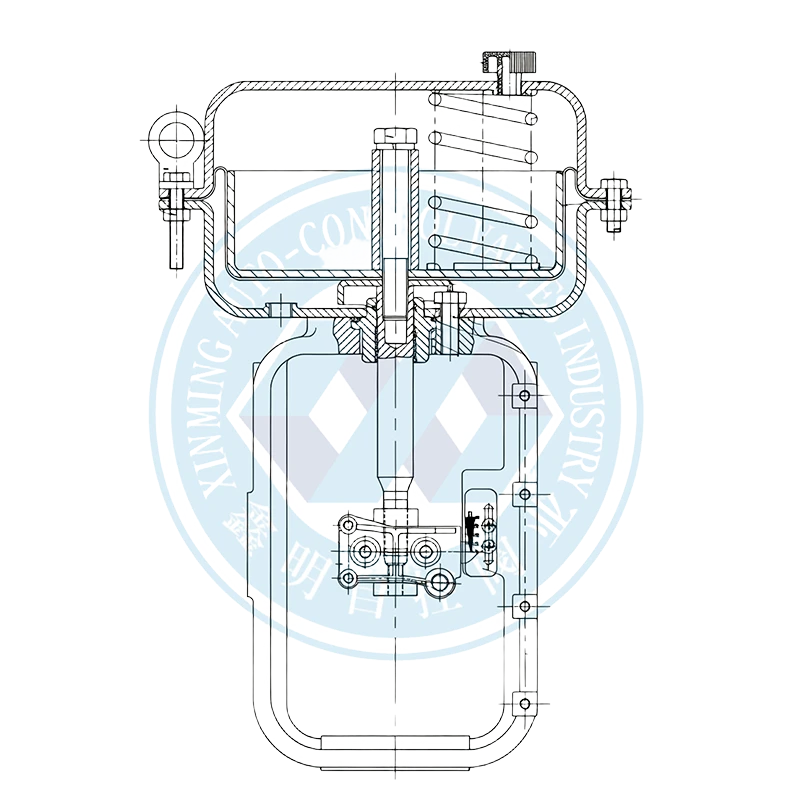
The reverse action pneumatic diaphragm actuator is a linear-stroke single-acting pneumatic actuator compatible with 20~100kPa standard pneumatic signals. Its working logic is opposite to the direct action type: when the diaphragm chamber signal pressure increases, the diaphragm overcomes spring force to push the rod upward and retract; when the pressure decreases or air supply fails, the spring pushes the rod downward and extend. The rod stays at the lower extended position upon air failure. It is commonly matched with air-to-open valves to realize fail-close safety protection.
Product Definition
The reverse action pneumatic diaphragm actuator is a linear-stroke single-acting pneumatic actuator compatible with 20~100kPa standard pneumatic signals. Its working logic is opposite to the direct action type: when the diaphragm chamber signal pressure increases, the diaphragm overcomes spring force to push the rod upward and retract; when the pressure decreases or air supply fails, the spring pushes the rod downward and extend. The rod stays at the lower extended position upon air failure. It is commonly matched with air-to-open valves to realize fail-close safety protection.
Core Features

Precise Reverse Action: The input signal pressure is reversely and linearly correlated with rod stroke; pressure rise leads to rod retraction and pressure drop leads to rod extension, with accurate response and stable linearity.

Safe Shutdown Performance: The rod extends downward automatically after air failure. Matched with air-to-open valves to realize automatic valve closing and medium cutoff, suitable for emergency shutdown of flammable, explosive and high-risk media.

Modular Integrated Structure: Adopts symmetrical multi-spring layout, featuring compact structure, small size and light weight with flexible vertical and horizontal installation methods.

High Stability & Durability: Core parts are wear-resistant and fatigue-resistant with excellent sealing performance. No stroke drift during long-term operation, adapting to continuous industrial production conditions.
Technical Parameters
|
Model |
XM-D21, XM-D27, XM-D35, XM-D45S, XM-D-45L, XM-D65S, XM-D65L |
|
Material |
Ductile iron / carbon steel |
|
Action type |
Reverse action: Air to valve open |
|
Color |
Grey |
|
Air Supply |
300kPa G; 340kPa G; 400kPa G |
|
Air Connection |
Rc1/4 (Φ650: Rc3/8) |
|
Spring Range |
80~200kPa G; 120~300kPa G; 120~280kPa G |
Technical Advantages
Outstanding Emergency Safety Performance: The core fail-close function can quickly cut off medium flow under sudden faults such as air supply failure and power outage, eliminating safety risks such as leakage, pipe burst and overpressure, complying with high-risk process safety specifications.
Excellent Control Accuracy: Uniform diaphragm stress and high stroke repeatability with minimal hysteresis. High-precision proportional control is realized with intelligent positioners to accurately adjust process flow, pressure and temperature parameters.
Strong Anti-Interference Ability: The symmetrical spring structure offsets axial deviation effectively, ensuring no rod offset or jamming during operation, adaptable to complex industrial sites with vibration and slight impact.
Long Maintenance-Free Cycle: Wear-resistant and corrosion-resistant parts with stable sealing system require no frequent calibration and maintenance during long-term operation, reducing operation costs and shutdown losses significantly.
FAQ
Q: What is the working principle and safety mode of the reverse action pneumatic diaphragm actuator?
The rod retracts upward with increased signal pressure and extends downward with decreased pressure or air failure. It is standardly matched with air-to-open valves to realize fail-close safety mode, which is the preferred configuration for emergency shutdown of high-risk processes.
Q: How to distinguish between direct-acting and reverse-acting pneumatic diaphragm actuators?
The core distinction lies in the pressure-stroke action relationship: 1. Direct-acting: extend downward with pressure rise, retract upward with air failure; 2. Reverse-acting: retract upward with pressure rise, extend downward with air failure. It can also be distinguished by model number, air intake structure and spring reset direction.
Q: What is the reason why the actuator fails to close the valve after losing its air supply?
Common fault causes include fatigue or fracture of reset spring, rod blockage by foreign matters, valve core jamming by medium pressure, and residual air pressure. Solutions: replace invalid springs, clean foreign matters on rods and valves, exhaust residual pressure, and inspect valve core tightness.
Q: How to solve the problem of lagging and slow response in the reverse-acting pneumatic diaphragm actuator?
Firstly, check whether the air supply pressure is standard and the air circuit is blocked or leaking. Secondly, recalibrate the zero point and range of the positioner. Replace aging diaphragms and attenuated springs in time to restore fast response and precise regulation performance.
Our Products
Related Products
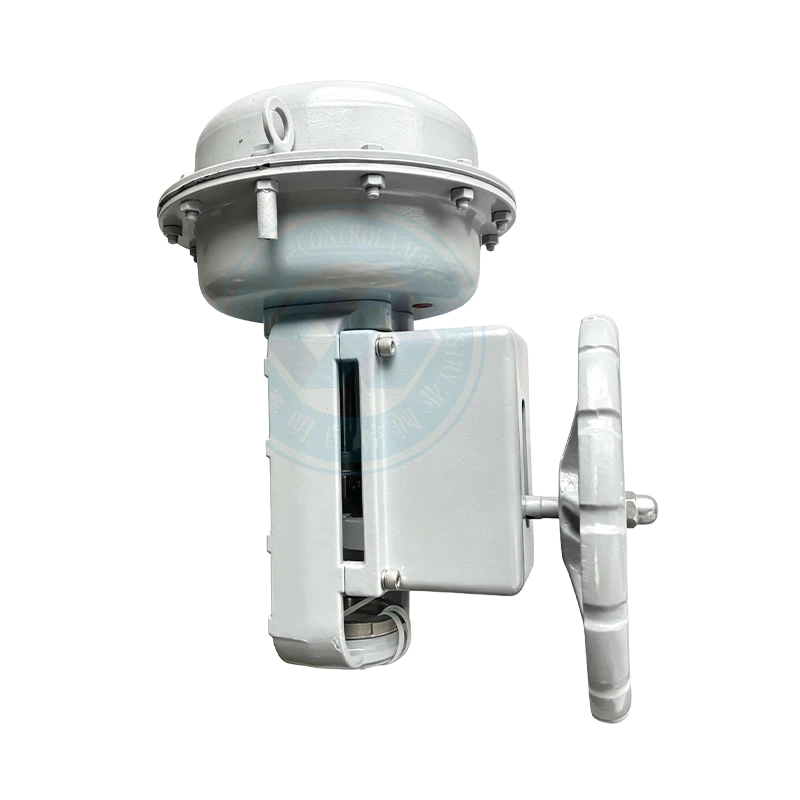
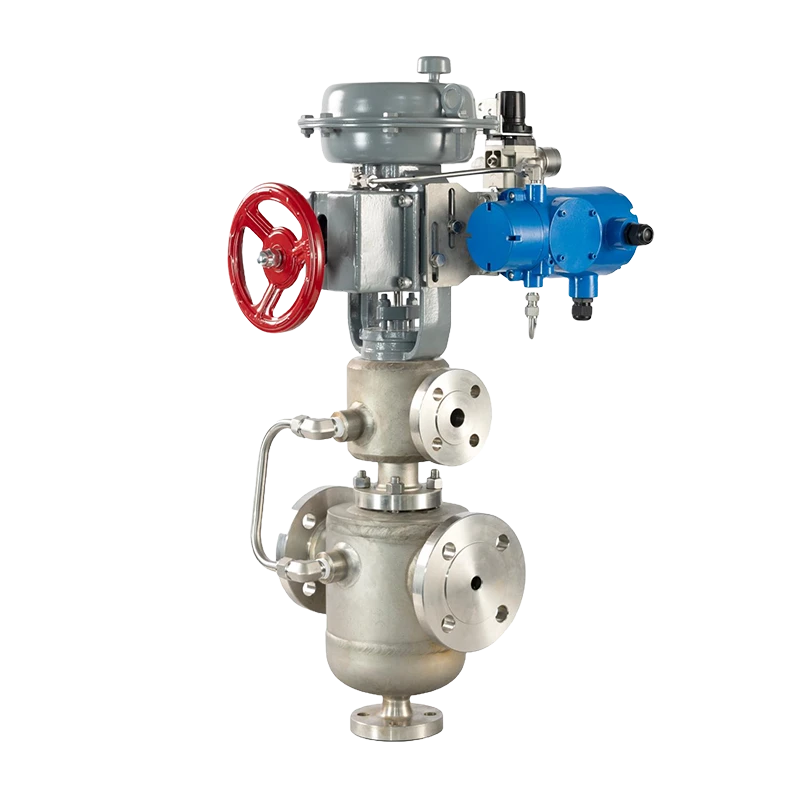
Direct action Pneumatic Diaphragm Actuators
XM-D series is a direct-acting pneumatic diaphragm actuator with a multi-spring structure. It is lightweight, compact, has high performance and can exert great output force.The core working logic of the direct action pneumatic diaphragm actuator is as follows: when the signal pressure in the diaphragm chamber increases, the diaphragm pushes the actuator rod downward for extension; when the signal pressure decreases, the built-in spring resets the rod upward for retraction. The rod stays at the upper retracted position when air supply fails.
Quick Links
Quick Links
Contact Us
Phone : +86-510-8356 8681
Telephone : +86-139 2127 3425
E-mail : sales@xmzkf.com
Wechat : +86-139 2127 3425
WhatsApp : +86 139 2127 3425
Adress : No.6, Zhenyang Road, Yangshi, Luoshe Town, Wuxi, Jiangsu, China.