Structural Features
Valve Body: Usually with a circular structure, this design allows for smoother fluid flow within the valve body, reducing flow resistance. The valve body is made of various materials, commonly including cast iron, cast steel, and stainless steel, which can be selected according to different usage environments and medium characteristics.
Butterfly Plate: It is a key component of the valve, installed on the valve stem and in a disc shape. The edge of the butterfly plate is usually specially treated to ensure a tight fit with the valve seat, achieving a good sealing effect. The material of the butterfly plate generally matches that of the valve body, and in some special applications, coatings or linings are used to improve its corrosion resistance.
Valve Stem: Used to connect the actuator and the butterfly plate, transmitting torque to enable the butterfly plate to rotate around the axis of the valve stem, thus realizing the opening and closing of the valve. The valve stem needs to have sufficient strength and rigidity to ensure that it will not deform or break under frequent operation and high - pressure conditions.
Sealing Structure: Generally includes seat sealing and stem sealing. The seat sealing usually uses elastic materials such as rubber and polytetrafluoroethylene to effectively prevent medium leakage; the stem sealing uses packing sealing or mechanical sealing to ensure the sealing of the stem part.
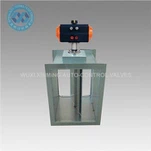
Actuator: The common one is the pneumatic actuator, which drives the opening and closing of the valve through compressed air. There are two types of actuators: double - acting and single - acting. The double - acting actuator can provide driving force in two directions, while the single - acting actuator relies on a spring for reset.
Application Fields
Chemical Industry: In the chemical production process, precise control of various corrosive media such as acid, alkali, and salt solutions is required. Due to its good corrosion resistance and sealing performance, the pneumatic butterfly valve is widely used in chemical pipeline systems to regulate the flow and pressure of the medium.
Power Industry: In the cooling water system, desulfurization system, and boiler steam system of power plants, a large amount of water and steam need to be controlled. The pneumatic butterfly valve can quickly respond to control signals, achieving accurate regulation of the fluid and ensuring the normal operation of power generation equipment.
Food and Beverage Industry: This industry has high requirements for hygiene and safety. The material of the pneumatic butterfly valve usually meets food hygiene standards, and its simple structure is easy to clean and disinfect. It can be used for the transportation and control of fluids such as milk, fruit juice, and beer.
Paper Industry: In the papermaking process, precise flow control of pulp, water, and chemical agents is required. The pneumatic butterfly valve can adapt to the harsh working environment of the paper industry, operate stably and reliably, and improve production efficiency and product quality.
Sewage Treatment Industry: Used for the flow control in the sewage discharge, regulation, and treatment processes. Since sewage contains a large amount of impurities and corrosive substances, the corrosion resistance and wear resistance of the pneumatic butterfly valve make it an ideal choice for sewage treatment systems.
Specifications
Nominal Diameter: The common nominal diameter ranges from DN50 to DN3000, which can be selected according to different pipeline sizes and flow requirements.
Nominal Pressure: Generally, there are various specifications such as PN10, PN16, PN25, and PN40. Users can determine the appropriate nominal pressure grade according to the working pressure of the pipeline system.
Connection Method: Mainly include wafer - type, flange - type, and lug - type connections. The wafer - type connection is compact in structure and easy to install; the flange - type connection has high connection strength and sealing performance; the lug - type connection is suitable for occasions where frequent disassembly and installation are required.
Operating Temperature: Depending on different materials and sealing materials, the operating temperature range of the pneumatic butterfly valve varies. Generally, the working temperature of a butterfly valve with a rubber seal is between - 20°C and 80°C, while a butterfly valve with a polytetrafluoroethylene seal can work normally in the temperature range of - 40°C to 200°C.
Advantages
Simple Structure: Compared with other types of valves, the pneumatic butterfly valve has a relatively simple structure with fewer components. This results in lower manufacturing costs and more convenient installation and maintenance.
Low Flow Resistance: When the butterfly plate is in the open state, it is almost entirely within the fluid passage, causing little resistance to the fluid. This can effectively reduce energy consumption and improve the operating efficiency of the system.
Quick Opening and Closing: The pneumatic actuator can quickly respond to control signals, enabling the butterfly plate to complete the opening or closing action in a short time, which is suitable for occasions where rapid flow adjustment is required.
Good Regulation Performance: By changing the rotation angle of the butterfly plate, the flow and pressure of the fluid can be precisely controlled, achieving linear adjustment to meet the needs of different working conditions.
Light Weight: Due to its simple structure, the valve body and butterfly plate are usually made of lightweight materials, making the whole valve light in weight and easy to install and handle.
Disadvantages
Limited Sealing Performance: Although the pneumatic butterfly valve can provide good sealing performance in general, compared with some high - end sealing valves, its sealing performance still has certain limitations. In high - pressure, high - vacuum, or occasions with extremely high sealing requirements, it may not meet the usage requirements.
Relatively Narrow Applicable Pressure and Temperature Range: Limited by the material and structure, the applicable pressure and temperature range of the pneumatic butterfly valve is relatively narrow, and it is not suitable for ultra - high - pressure, ultra - high - temperature, or extremely low - temperature working conditions.
Weak Erosion Resistance: The butterfly plate is prone to wear under the scouring action of the fluid, especially in fluids containing particulate media, and the wear phenomenon is more obvious, which will affect the service life and sealing performance of the valve.
Hot Tags: pneumatic butterfly valve: key component for optimal pneumatic system performance, China, suppliers, manufacturers, factory, customized, buy, price, for sale, in stock, free sample, non return butterfly valves, replacement butterfly valve, lug check butterfly valves, flange end butterfly valves, flow control butterfly valves, high quality butterfly valves