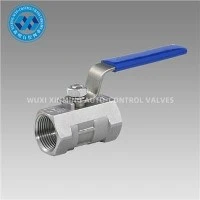
Determining the leakage rate of a welded ball valve is crucial for ensuring its proper functioning and safety in various industrial applications. As a supplier of welded ball valves, I've dealt with many situations where clients need to understand how to measure and assess the leakage rate. In this blog, I'll share some practical ways to determine the leakage rate of a welded ball valve.
Why is Determining Leakage Rate Important?
Before we dive into the methods, let's talk about why it's so important to know the leakage rate. A high leakage rate in a welded ball valve can lead to several problems. For one, it can cause a loss of the fluid or gas being transported through the valve. This not only wastes resources but can also be costly, especially if the substance is expensive or in short supply.
Moreover, leakage can pose safety risks. If the valve is handling hazardous materials like chemicals or flammable gases, even a small leak can lead to accidents, such as fires, explosions, or environmental pollution. So, accurately determining the leakage rate helps in maintaining the efficiency, safety, and compliance of industrial systems.
Methods to Determine Leakage Rate
Visual Inspection
The first and simplest method is visual inspection. It's a quick way to get an initial idea of whether there's a leak. You just need to look around the valve for any signs of fluid or gas escaping. Look for wet spots, drips, or bubbles. If you're dealing with a valve handling a colored fluid, it's even easier to spot a leak.
However, visual inspection has its limitations. It can only detect relatively large leaks. Small leaks, especially those of gases, might not be visible to the naked eye. Also, it doesn't give you a quantitative measure of the leakage rate. It's more of a preliminary check to see if there's a problem that needs further investigation.
Pressure Testing
Pressure testing is a more accurate and widely used method for determining the leakage rate. There are two main types of pressure tests: hydrostatic testing and pneumatic testing.
Hydrostatic Testing
In hydrostatic testing, the valve is filled with a liquid, usually water, and then pressurized to a specified level. The pressure is maintained for a certain period, and the change in pressure is monitored. If there's a leak, the pressure will drop over time.
To calculate the leakage rate, you need to measure the volume of the liquid that escapes during the test. You can do this by collecting the leaked liquid in a container and measuring its volume. The leakage rate is then calculated as the volume of the leaked liquid divided by the time of the test.

Hydrostatic testing is a reliable method because water is relatively incompressible, which means that any pressure drop is likely due to a leak. However, it has some drawbacks. It can be time - consuming, especially for large valves, and it requires a large amount of water. Also, after the test, the valve needs to be dried thoroughly to prevent corrosion.
Pneumatic Testing
Pneumatic testing uses a gas, usually air or nitrogen, to pressurize the valve. Similar to hydrostatic testing, the pressure is maintained for a specific time, and any pressure drop is monitored.
One advantage of pneumatic testing is that it's faster than hydrostatic testing. It also doesn't require a large amount of liquid, which is beneficial if the valve is used in a dry environment or if water can cause damage. However, gases are more compressible than liquids, so it can be more difficult to accurately determine the leakage rate. Small pressure fluctuations due to temperature changes or gas compression can sometimes be misinterpreted as leaks.
Bubble Testing
Bubble testing is a simple and effective way to detect leaks, especially for small valves or for detecting small leaks in larger valves. In this method, the valve is submerged in a liquid, usually soapy water, and pressurized. If there's a leak, bubbles will form at the point of leakage.
You can estimate the leakage rate based on the size and frequency of the bubbles. Small, slow - forming bubbles indicate a small leak, while large, fast - forming bubbles suggest a larger leak. However, this method is more qualitative than quantitative. It's great for quickly identifying the presence of a leak, but it doesn't give you an exact leakage rate.
Factors Affecting Leakage Rate
Several factors can affect the leakage rate of a welded ball valve. One of the most important factors is the quality of the weld. A poorly welded valve is more likely to have leaks. The type of sealing material used in the valve also plays a crucial role. Different sealing materials have different levels of resistance to wear, temperature, and chemical exposure.
The operating conditions of the valve, such as pressure, temperature, and the type of fluid or gas being handled, can also impact the leakage rate. High - pressure applications may require more robust valves to prevent leaks. Similarly, extreme temperatures can cause the sealing materials to expand or contract, leading to leaks.
Our Welded Ball Valves
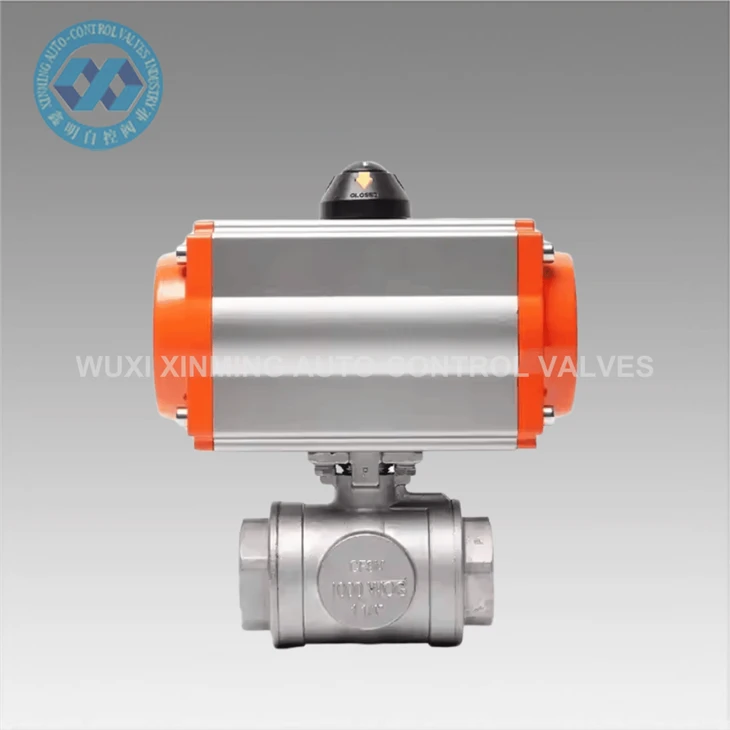
As a supplier of welded ball valves, we offer a wide range of products to meet different industrial needs. For example, our Pneumatic Actuated Three - Way Stainless Steel Ball Valve is designed for precise control and efficient flow regulation. It's made of high - quality stainless steel, which provides excellent corrosion resistance and durability.
Our High Quality Stainless Steel Pneumatic Three - way Ball Valve is another great option. It's suitable for various industrial applications and is known for its reliable performance.
If you're looking for a valve for precision control and industrial flow regulation, our Pneumatic Ball Valve For Precision Control And Industrial Flow Regulation is a perfect choice. It offers accurate control and can handle different types of fluids and gases.
Conclusion
Determining the leakage rate of a welded ball valve is an important part of ensuring its proper functioning and safety. By using methods like visual inspection, pressure testing, and bubble testing, you can accurately assess the leakage rate. However, it's also important to consider the factors that can affect the leakage rate, such as the quality of the weld and the operating conditions.
If you're in the market for a high - quality welded ball valve, don't hesitate to contact us. We're here to help you find the right valve for your specific needs and can provide you with all the information you need about leakage rates and valve performance.