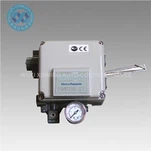
The coil casing of the explosion-proof solenoid valve not only has the explosion-proof effect of withstanding the pressure of the gas explosion, but also blocks the energy transmission of the gas explosion, which has higher safety performance. It is a series of special solenoid valves, specially designed for conveying flammable and explosive media or explosive hazardous places. For different environments and fluids, solenoid valves with different explosion-proof grades should be selected. There is a closed chamber in the explosion-proof solenoid valve, and the through holes are opened in different positions. Each hole leads to a different tubing. In the middle of the chamber there is a valve flanked by two electromagnets. Which side the valve body will be attracted to when the magnet coil is energized. By controlling the movement of the valve body, different oil discharge holes will be blocked or leaked. The oil inlet hole is always open, the hydraulic oil enters different oil discharge pipes, the oil pressure pushes the cylinder piston, the piston drives the piston rod, and the piston rod drives the mechanical device. In this way, the mechanical movement is controlled by controlling the current to the electromagnet.
The selection of explosion-proof solenoid valves should first follow the four principles of safety, reliability, applicability and economy, and then according to the on-site working conditions from the six aspects of pipeline parameters, fluid parameters, pressure parameters, electrical parameters, action methods and special requirements Make a selection. Choose according to the pipeline parameters Select the diameter specification (DN) and interface mode of the solenoid valve according to the pipeline parameters: the diameter (DN) should be determined according to the inner diameter or flow requirements of the on-site pipeline. Interface method: Generally, flange interface is used when it is greater than DN50, and DN50 can be freely selected when ≤ DN50. Select according to the fluid parameters: select the material and temperature group of the solenoid valve according to the fluid parameters 1. Corrosive fluid: choose corrosion-resistant solenoid valve, all stainless steel; edible ultra-clean fluid: choose food-grade stainless steel solenoid valve. 2. High-temperature fluid: The solenoid valve adopts high-temperature-resistant electrical materials and sealing materials, and adopts a piston structure. 3. Fluid state: gas state, liquid state or mixed state, especially when the order diameter is larger than DN25. 4. Fluid viscosity: generally lower than 50cst, optional. If this value is exceeded, choose a high viscosity solenoid valve.