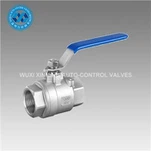
The leakage of the valve disc and valve seat of the stainless steel pneumatic actuator exceeds the rated range, which will lead to medium loss and damage to the sealing material under normal circumstances. The sealing surface of the safety valve is mainly composed of metal materials, which should be as smooth and flat as possible. However, if the medium is extruded a second time under pressure, it is not possible to require complete sealing without leakage. Therefore, under the rated pressure environment, the safety valve with steam as the medium can only be detected by visual inspection and ear probe. The main reasons for valve leakage are as follows:
(1) Dirt and debris appear on the sealing surface, and the original sealing surface is blocked and separated, resulting in a gap between the valve core and the valve seat, resulting in valve leakage. In order to solve this kind of problem, it is usually to clean the dirt and debris on the sealing surface. When the boiler is temporarily shut down for maintenance, a weighing operation test should be carried out on the safety door first. If there is any leakage, a comprehensive inspection should be carried out. The operation interval is 20 minutes after complete cooling.
(2) The sealing surface is damaged. There are many reasons, such as: First, the sealing material is not qualified. After years of use, the single-side safety valve can easily weaken the strength of the sealing surface due to the continuous operation and maintenance of the switch, resulting in a weakening of the sealing ability. The suggested measure to solve this problem is to flatten the original sealing surface, and perform secondary processing and welding according to the original drawing to improve the hardness and strength of the surface. And pay attention to surface damage. Don't be careless.
Second, the quality of maintenance. Due to the low maintenance level, the grinding process of the valve core and valve seat cannot reach a certain level. The solution is to repair as many seal faces as possible by grinding or even turning, depending on the severity of the damage.
Third, improper assembly or wrong size of parts. During the whole assembly work, the valve core and valve seat are not completely aligned, or the light transmission problem of the joint surface is serious, or the valve core and valve seat seals are loose and cannot be truly sealed. The solution is to strictly check the length, thickness and distribution of the gap next to the valve core to ensure that the valve core cannot be lifted in the gap of each part, and appropriately reduce the width of the sealing surface according to the data on the drawing.