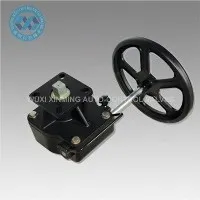
The control mechanism, the control valve, is actually a throttling element whose local resistance can be changed. The upper part of the valve stem is connected with the actuator, and the lower part is connected with the valve core. Since the valve core moves in the valve body, the flow area between the valve core and the valve seat is changed, that is, the resistance coefficient of the valve is changed, and the flow rate of the controlled medium is correspondingly changed, so as to achieve the purpose of controlling the process parameters. The control valve consists of the valve body, valve seat, valve core, valve stem, upper and lower valve cover, etc. The control valve is in direct contact with the controlled medium. In order to meet various application requirements, the structure and material of the valve core and valve body are different.
The spool of the control valve has two types: straight stroke spool and angle stroke spool. Common straight-stroke valve cores are: flat type valve core, which has quick opening characteristics and can be used for two-position control; plunger-type valve core, which can be installed upside down to achieve positive and negative adjustment; window type valve core, with confluence type and shunt type, suitable for three-way valve; multi-stage valve core, several valve cores are connected in series to play a step-by-step pressure reduction effect. The angular stroke valve core changes the flow section between it and the valve seat through the rotary motion of the valve core. The common angular stroke valve cores are eccentric rotary valve core, butterfly valve core, and spherical valve core.