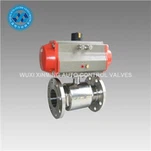
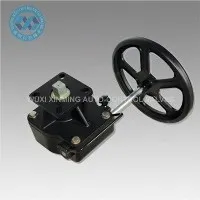
There are several types of manual handwheels, each designed for specific purposes and applications:
1. Spoked Handwheel: This is the most basic type of handwheel, typically made of metal or plastic. It consists of a central hub with spokes radiating outwards, providing a firm grip for turning.
2. Solid Handwheel: Similar to the spoked handwheel, but without the spokes. It is a solid disc-shaped wheel that is easier to clean and offers a more streamlined design.
3. Knurled Handwheel: This type of handwheel has a textured surface, usually with diamond-shaped or straight knurled patterns. The knurling provides extra grip, making it easier to turn the wheel even with wet or oily hands.
4. Folding Handwheel: This handwheel is designed to be folded down when not in use, reducing the overall profile and minimizing the risk of accidental contact. It is commonly used in applications where space is limited, such as on portable devices or compact machinery.
5. Handwheel with Handle: Some handwheels feature an additional handle attached to the side or top, providing extra leverage for turning. This design is often used when the wheel requires more force to rotate or when finer control is needed.
6. Handwheel with Dial: In certain applications, handwheels may have an integrated dial or scale to indicate the position or measure the rotation. This allows for precise adjustments and repeatability.
7. Handwheel with Clutch: Handwheels with a built-in clutch mechanism enable disengagement of the wheel from the driven mechanism, allowing for quick adjustments without stopping the entire system.