What are the advantages of pneumatic actuators compared to electric actuators
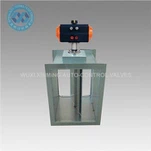
Pneumatic actuator refers to an actuator that uses air pressure to drive opening and closing or adjusting valves. It is also called pneumatic actuator or pneumatic device, but it is generally called pneumatic head. The actuator and adjustment mechanism of the pneumatic actuator are a unified whole, and the actuator has a membrane type, a piston type, a fork type and a rack and pinion type. The piston type has a long stroke, which is suitable for occasions that require greater thrust; while the membrane type has a small stroke and can only directly drive the valve stem. The fork-type pneumatic actuator has the characteristics of large torque, small space, and the torque curve is more in line with the torque curve of the valve. However, because it is not very beautiful, it is often used on valves with high torque. Finally, the rack-and-pinion pneumatic actuator has the characteristics of simple structure, stable and reliable action, and safety and explosion protection. It is widely used in power plants, chemical industries, oil refining and other production processes that require high safety.
Many people wonder whether pneumatic actuators are better or electric actuators. In fact, in terms of technical performance, the advantages of pneumatic actuators compared to electric actuators mainly include the following four aspects:
(1) The load is large and can be adapted to the application of high torque output.
(2) Quick action and quick response.
(3) Good working environment adaptability, especially in the harsh working environment such as flammable, explosive, dusty, strong magnetism, radiation and vibration, it is superior to hydraulic, electronic and electrical control.
(4) The motor is easily damaged when the stroke is blocked or the valve stem is tied.