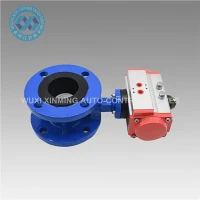
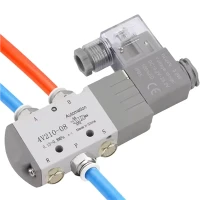
A pneumatic actuator is a device that converts compressed air energy into mechanical motion to control or move components in various systems. It uses compressed air pressure-instead of electric power or hydraulic fluids-to generate force for linear or rotational movement, making it popular in industries valuing simplicity and reliability.
Working Principle
The working principle of a pneumatic actuator focuses on using compressed air to create pressure differences. Compressed air is first supplied to one side of an internal chamber that holds a movable part like a piston or diaphragm. The air pressure pushes this part to generate mechanical force. Meanwhile, the opposite side of the chamber is either vented to the atmosphere or supplied with lower-pressure air, enabling smooth movement of the movable part. This movement-either straight or turning-is transferred to external components such as valves, dampers, or mechanical arms to complete tasks. After the task, compressed air flow is adjusted: supply to the first side stops, and air may be sent to the opposite side to return the movable part to its original position, finishing a cycle.
Key Applications
Valve Control: They operate valves in pipelines for liquids, gases, or powders, enabling quick opening, closing, or position adjustment to control fluid flow in oil and gas, water treatment, and chemical sectors.
Manufacturing Lines: They power robotic arms, conveyor stoppers, and clamps, automating repetitive tasks like part picking and workpiece securing to boost efficiency.
HVAC Systems: They control dampers to regulate air flow, maintaining desired temperature and air quality in offices, hospitals, and malls.
Food Processing: They handle products and operate filling machines, complying with hygiene standards to ensure food safety.
If you are interested in learning more about Pneumatic Actuator and other related knowledge, please contact WUXI XINMING AUTO-CONTROL VALVES INDUSTRY for more consultation. Our professional team is on standby at any time.