Can a thread ball valve be used for on - off control only?
Hey there! I'm a supplier of thread ball valves, and I often get asked this question: Can a thread ball valve be used for on - off control only? Well, let's dig into this topic and find out.
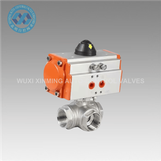
First off, let's understand what a thread ball valve is. A thread ball valve is a type of valve that uses a ball with a hole in the middle to control the flow of fluid. The ball can be rotated to either align the hole with the flow path (allowing fluid to pass through, which is the "on" position) or to block the flow path (the "off" position).
In many cases, thread ball valves are indeed used for simple on - off control. They're great for applications where you just need to start or stop the flow of a liquid or gas. For example, in a home plumbing system, you might use a thread ball valve to turn off the water supply to a specific fixture like a sink or a toilet. It's easy to operate, and you can quickly shut off the flow when needed.
But here's the thing: thread ball valves aren't limited to just on - off control. They can also be used for throttling applications. Throttling means adjusting the flow rate of the fluid passing through the valve. While ball valves aren't as precise as some other types of valves like globe valves when it comes to throttling, they can still do a decent job in certain situations.
Let's say you have a process where you need to control the flow of a relatively clean fluid at a moderate pressure. A thread ball valve can be adjusted to partially open the ball, allowing a certain amount of fluid to pass through. This can be useful in industrial processes where you need to regulate the flow of chemicals, water, or air.
One of the advantages of using a thread ball valve for throttling is its low resistance to flow. When the ball is fully open, the flow path is relatively straight, which means there's less pressure drop compared to some other valve types. This can save energy in systems where fluid flow is continuous.
However, there are some limitations to using thread ball valves for throttling. Since the ball rotates to control the flow, it can cause uneven wear on the ball and the valve seat when used for extended throttling. This can lead to leaks over time, especially if the fluid contains abrasive particles. So, for applications where precise and long - term throttling is required, other valve types might be a better choice.
Now, let's talk about the different types of thread ball valves available. We have Stainless Steel Ball Valve. Stainless steel ball valves are highly resistant to corrosion, making them suitable for applications where the fluid is corrosive, such as in chemical processing plants or marine environments. They can handle a wide range of temperatures and pressures, and they're durable, which means they'll last a long time.
Another type is the Vacuum Ball Valve. These valves are designed to work in vacuum systems. They have special seals and materials that can withstand the low - pressure conditions in a vacuum. They're commonly used in industries like semiconductor manufacturing, where a clean and controlled vacuum environment is essential.
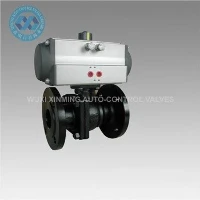
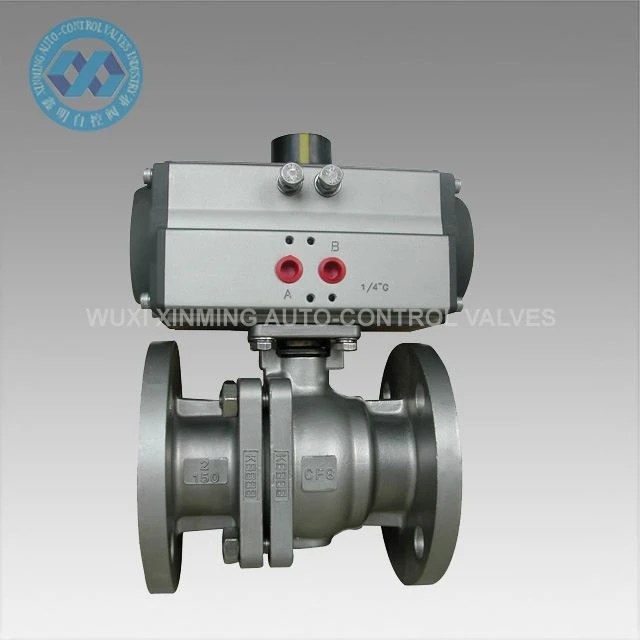
We also offer Flanged Stainless Steel Ball Valve. Flanged ball valves are easy to install and can handle high - pressure applications. The flanges provide a secure connection to the pipeline, and the stainless steel construction ensures corrosion resistance.
So, to answer the question "Can a thread ball valve be used for on - off control only?" The answer is no. While they're excellent for on - off control, they can also be used for throttling in the right circumstances. It all depends on your specific application, the type of fluid, the pressure, and the level of precision required.
If you're in the market for thread ball valves or any of the other types I mentioned, don't hesitate to reach out. I'm here to help you find the right valve for your needs. Whether you need a valve for a simple on - off application or a more complex throttling task, I've got the expertise and the products to meet your requirements. Contact me for a consultation and let's start a great business relationship!

References
- Valve Handbook, 4th Edition, by E. Richard Hennessy
- Industrial Valves: Selection, Installation, and Maintenance, by John A. Campbell