What are the standards for soft - seal ball valves?
As a prominent supplier of soft - seal ball valves, I understand the critical importance of adhering to strict standards in manufacturing these essential components. Soft - seal ball valves are widely used in various industries due to their excellent sealing performance, reliability, and ease of operation. But what exactly are the standards for soft - seal ball valves? Let's delve into this topic in detail.
1. Material Standards
The choice of materials is the cornerstone of a high - quality soft - seal ball valve. The body of the ball valve must be made of materials that can withstand the pressure, temperature, and corrosive environment of the application.
- Metallic Materials: For applications where durability and strength are required, metals such as stainless steel, carbon steel, and brass are commonly used. Stainless steel offers excellent corrosion resistance, making it suitable for applications in the chemical, food and beverage, and marine industries. Carbon steel is preferred for high - pressure and high - temperature applications, while brass is often used in low - pressure water systems.
- Seal Materials: The soft seal in the ball valve is typically made of elastomers. Common seal materials include rubber, Teflon (PTFE), and Nylon. Rubber seals provide excellent flexibility and sealing performance at relatively low temperatures. Teflon is known for its chemical resistance and ability to operate at high temperatures, making it a popular choice for applications involving aggressive chemicals. Nylon offers good mechanical properties and wear resistance.
2. Design Standards
The design of a soft - seal ball valve should meet specific requirements to ensure optimal performance.
- Valve Structure: There are two main types of soft - seal ball valve structures: floating ball valves and trunnion - mounted ball valves. Floating ball valves are suitable for low - to medium - pressure applications, where the ball is floating and is pressed against the seat by the fluid pressure. Trunnion - mounted ball valves are designed for high - pressure applications, with a fixed ball supported by trunnions to reduce the operating torque.
- Sealing Design: The sealing mechanism is crucial for a soft - seal ball valve. The seal should be able to provide a tight shut - off even under low pressure differentials. Design considerations include the shape of the seat, the interference fit between the ball and the seat, and the surface finish of both the ball and the seat.
3. Performance Standards
Performance standards define the operating capabilities of a soft - seal ball valve.
- Pressure Rating: The pressure rating indicates the maximum pressure that the valve can safely withstand. It is determined by factors such as the valve body material, wall thickness, and design. Standard pressure ratings are available in various units, such as pounds per square inch (psi) or bar. For example, a common pressure rating for industrial soft - seal ball valves can range from 150 psi to 2500 psi.
- Temperature Rating: The temperature rating specifies the range of temperatures within which the valve can operate effectively. Different materials have different temperature limits. For instance, rubber seals may have a lower temperature limit compared to Teflon seals. A typical temperature rating for a soft - seal ball valve with a rubber seal might be from - 20°C to 120°C, while a valve with a Teflon seal could operate from -50°C to 260°C.
- Flow Capacity: The flow capacity of a ball valve is determined by its port size and the resistance to fluid flow. Full - port ball valves have a port size equal to the pipe diameter, which provides minimal flow resistance and high flow capacity. Reduced - port ball valves, on the other hand, have a smaller port size, resulting in a higher pressure drop but lower cost.
4. Manufacturing Standards
Manufacturing processes must be carried out in accordance with strict quality control standards.
- Machining Tolerances: The machining of the ball and the seat should be done with high precision. Tolerances for dimensions such as the ball diameter, seat width, and valve body bore diameter must be tightly controlled to ensure proper sealing and smooth operation.
- Surface Finish: The surface finish of the ball and the seat affects the sealing performance. A smooth surface finish reduces friction and wear, and helps to achieve a better seal. Surface roughness values are typically specified in micro - inches or micrometers.
5. Testing Standards
Before a soft - seal ball valve is released to the market, it must undergo rigorous testing to ensure compliance with the standards.
- Pressure Testing: Hydrostatic pressure testing is commonly used to check for leaks in the valve body and the sealing joints. The valve is filled with water and subjected to a specified pressure for a certain period of time. Any pressure drop during the test indicates a leak.
- Sealing Testing: Sealing tests are performed to verify the ability of the valve to provide a tight shut - off. This can be done using either gas or liquid media, and the leakage rate is measured to ensure it is within the acceptable limits.
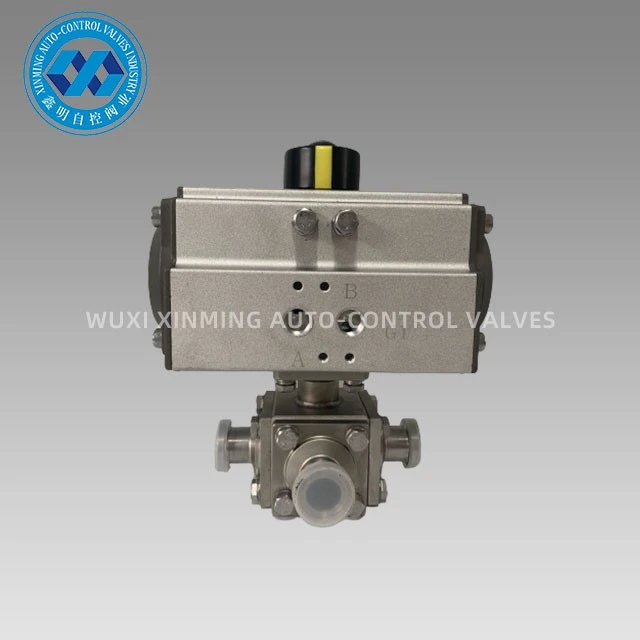
At our company, we are committed to producing soft - seal ball valves that meet and exceed these standards. We offer a wide range of products, including the Flanged Stainless Steel Ball Valve , which is made of high - quality stainless steel and provides excellent corrosion resistance. Our Pneumatic Actuator WCB Flange Ball Valve offers automated operation and is suitable for applications requiring quick and precise control. And the Pneumatic Actuator Tri - clamp Three Way Ball Valve provides flexibility in fluid flow control for more complex systems.
If you are in the market for high - quality soft - seal ball valves, we invite you to contact us for a detailed discussion on your specific requirements. Our team of experts is ready to assist you in finding the most suitable solution for your application. We look forward to establishing a long - term partnership with you.