Hey there! As a supplier of Vacuum Ball Valves, I often get asked about the acceptable leakage rate for these valves. It's a crucial question, especially when you're dealing with applications where precision and reliability are non - negotiable.
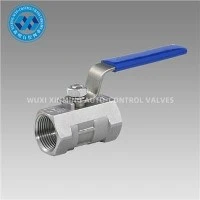
Let's start by understanding what a vacuum ball valve is. A vacuum ball valve is a type of valve that uses a ball with a hole in it to control the flow of fluid or gas. When the ball is rotated, the hole aligns with the flow path, allowing the medium to pass through. When it's turned 90 degrees, the solid part of the ball blocks the flow. These valves are commonly used in industries such as semiconductor manufacturing, vacuum furnaces, and chemical processing, where maintaining a vacuum is essential.
Now, onto the main topic: the acceptable leakage rate. The acceptable leakage rate for a vacuum ball valve can vary widely depending on the application. In some low - precision applications, a relatively high leakage rate might be acceptable. For example, in a simple laboratory setup where the vacuum doesn't need to be extremely high, a leakage rate of around 1 x 10⁻³ mbar·l/s might be okay. This means that a small amount of gas can leak into the system without significantly affecting the overall performance.
However, in high - precision applications like semiconductor manufacturing, the acceptable leakage rate is much lower. In these cases, a leakage rate of 1 x 10⁻⁹ mbar·l/s or even lower might be required. This is because even the slightest amount of gas leakage can contaminate the process and lead to defects in the final product.
There are several factors that can affect the leakage rate of a vacuum ball valve. One of the most important factors is the quality of the valve's seals. High - quality seals made from materials like PTFE (polytetrafluoroethylene) can provide better sealing performance and lower leakage rates. The design of the valve also plays a crucial role. A well - designed valve will have a tight fit between the ball and the seat, minimizing the gap through which gas can leak.
Another factor is the operating conditions. Temperature, pressure, and the type of medium flowing through the valve can all impact the leakage rate. For example, high temperatures can cause the seals to expand or contract, potentially increasing the leakage rate. Similarly, high pressures can put more stress on the valve components, leading to leaks.
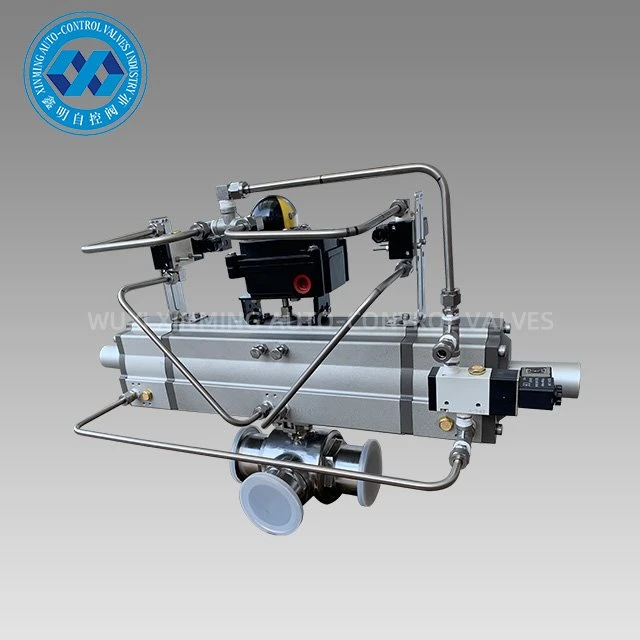
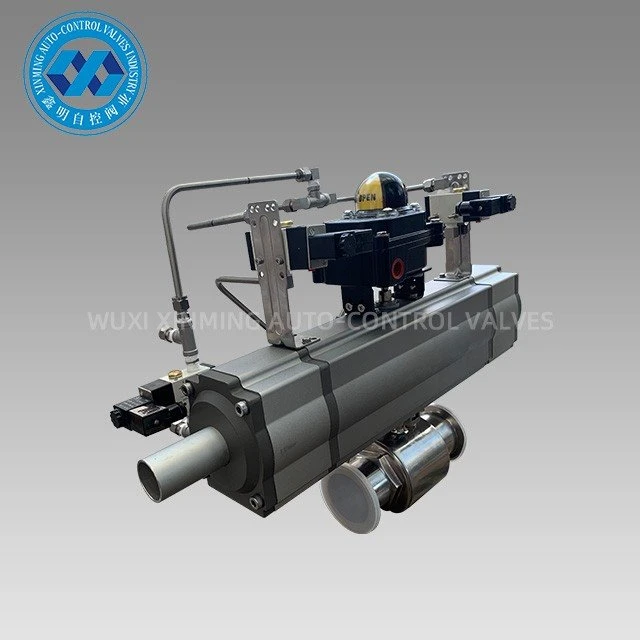
As a Vacuum Ball Valve supplier, we offer a wide range of valves to meet different application requirements. For instance, we have the Three Stage Pneumatic Rotary Actuator Ball Valve Made in China. This valve is designed with precision and durability in mind. It features a three - stage pneumatic rotary actuator that provides smooth and reliable operation. The high - quality seals ensure a low leakage rate, making it suitable for a variety of applications.
We also have the 3 Way Ball Valve With Pneumatic Actuator. This valve is ideal for applications where you need to control the flow of fluid or gas in multiple directions. The pneumatic actuator allows for easy and precise control, and the valve is designed to minimize leakage.
If you're looking for a valve for investment casting, our Stainless Steel Flanged Floating Jacketed Ball Valve For Investment Casting is a great option. The stainless - steel construction provides excellent corrosion resistance, and the floating jacketed design helps to maintain a stable temperature, reducing the risk of leakage due to thermal expansion or contraction.
When it comes to determining the acceptable leakage rate for your specific application, it's important to consider the requirements of your process. You need to think about factors such as the level of vacuum needed, the sensitivity of the process to gas contamination, and the cost - effectiveness of achieving a lower leakage rate.
If you're not sure what leakage rate is acceptable for your application, our team of experts is here to help. We can provide you with detailed information about our valves and help you choose the right one for your needs. We understand that every application is unique, and we're committed to providing you with the best solutions.
So, if you're in the market for a Vacuum Ball Valve and want to learn more about the acceptable leakage rate or our product range, don't hesitate to get in touch. We're ready to have a chat about your requirements and find the perfect valve for you. Whether you're a small - scale laboratory or a large - scale industrial facility, we have the expertise and products to meet your needs.
Engaging in a conversation with us about your procurement needs is the first step towards getting the right Vacuum Ball Valve for your project. We're looking forward to hearing from you and helping you make the best decision for your application.