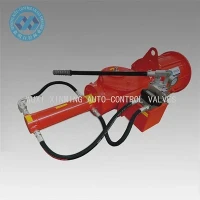
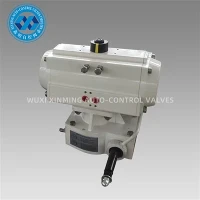
A butterfly valve can be automated relatively easily.
Most butterfly valves have a simple and straightforward design that lends itself well to automation. They typically have a shaft that rotates the disc to open or close the valve. This shaft can be easily connected to an actuator, such as a pneumatic, hydraulic, or electric actuator.
Pneumatic actuators are a popular choice for automating butterfly valves. They use compressed air to drive the rotation of the valve shaft. The connection between the actuator and the valve is usually a simple mechanical coupling. With the addition of solenoid valves to control the air flow, the butterfly valve can be integrated into a control system and operated remotely or based on pre - programmed sequences.
Electric actuators also offer a convenient way to automate butterfly valves. They provide precise control over the valve's position through the use of an electric motor and a gear mechanism. The actuator can be connected to a programmable logic controller (PLC) or a distributed control system (DCS), allowing for easy integration into an automated process.
However, there are some considerations. The torque requirements of the valve need to be carefully matched with the actuator's capacity. Also, the valve's response time and accuracy of positioning need to be considered depending on the specific application requirements. But overall, due to its simple design and the availability of suitable actuators, a butterfly valve can be automated with relative ease.
Where to buy high quality Butterfly Valve, please visit the following website: www.xmvalveactuator.com