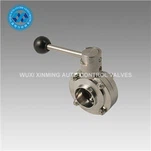
A pneumatic actuator is an indispensable structure in the process of industrial production automation. It is used frequently and is prone to failure due to high temperature, high pressure and serious social and environmental issues, thus requiring maintenance. Actuator power includes electric, pneumatic, and hydraulic, but here we mainly introduce the fault and maintenance management method of the pneumatic actuator system. The analysis results are as follows.
Failures of pneumatic actuators include clogged control coils, leaks, and burning. Here, we will briefly analyze the problems in the maintenance method according to these three basic conditions. Pneumatic actuator stuck. Disassemble the actuator, check adhesion, analyze and reassemble. Check the pneumatic actuator and valve stem for air leakage, and check the sealing sleeve for damage. If damaged, it should be replaced in time. If it directly affects the function of the element, it must be replaced, otherwise, a damaged seal will cause a leak. Check the piston or check for impurities. Piston rings and lubrication parts can be replaced. The coil also has problems of aging and deterioration, and it can be judged with a multimeter after power-on.
A pneumatic actuator is an actuator that uses air to drive a valve to open, close, or adjust. It is also known as a pneumatic actuator or pneumatic device but is often referred to as a pneumatic head. The actuator and adjustment mechanism of the pneumatic actuator is a whole, including a diaphragm actuator, piston actuator, shift fork actuator, and rack and pinion actuator. The piston type has a long stroke, so it is suitable for situations where a high thrust is required. On the other hand, the diaphragm travel is small and can only drive the valve stem directly. The fork-type pneumatic actuator has the characteristics of large torque and small space, and the torque curve matches the torque curve of the valve, but it is not very beautiful and is usually used for high-torque valves. The rack-and-pinion pneumatic actuator has the advantages of simple structure, stable and reliable operation, safety, and explosion-proof. It is widely used in power plants, the chemical industry, oil refining, and other production processes with high safety requirements. Diaphragm pneumatic actuators: Diaphragm pneumatic actuators are commonly used and can be used as general control valve drivers to form pneumatic diaphragm actuators. The signal pressure P of the pneumatic diaphragm actuator acts on the diaphragm, which deforms the diaphragm, drives the diaphragm push rod to move the valve core, and changes the valve opening. It has the characteristics of simple structure, low price, convenient maintenance, and wide application range.
There are two types of pneumatic actuators: direct acting and reverse acting. When the signal pressure from the controller or valve positioner increases, the downward movement of the valve stem is called a positive actuator, and when the signal pressure increases, the upward movement of the valve stem is called a reactive actuator. The signal pressure of the forward actuator is transmitted to the membrane air chamber above the corrugated diaphragm, and the signal pressure of the reaction actuator is transmitted to the diaphragm air chamber below the corrugated diaphragm. They can be modified by replacing individual parts.