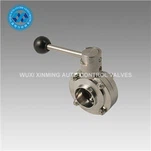
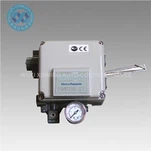
In terms of technical performance, the advantages of pneumatic actuators mainly include the following four aspects:
(1) The load is large, which can adapt to the application of high torque output.
(2) Quick action and quick response.
(3) Good adaptability to the working environment, especially in harsh working environments such as flammable, explosive, dusty, strong magnetism, radiation, and vibration, which are superior to hydraulic, electronic, and electrical controls.
(4) The motor is easily damaged when the stroke is blocked or the valve stem is tied.
The advantages of electric actuators mainly include:
(1) Compact structure and small size. Compared with pneumatic actuators, electric actuators are relatively simple in structure. A basic electronic system includes the actuator, a three-position DPDT switch, a fuse, and some wires, which are easy to assemble.
(2) The drive source of the electric actuator is very flexible. Generally, the onboard power supply can meet the needs, while the pneumatic actuator needs an air source and a compression drive device.
(3) Electric actuators have no danger of "air leakage" and are highly reliable, while the compressibility of air makes pneumatic actuators slightly less stable.
(4) There is no need to install and maintain various pneumatic pipelines.
(5) The load can be maintained without power, while the pneumatic actuator requires a continuous pressure supply.
(6) The electric actuator is quieter because no additional pressure device is required. Usually, if the pneumatic actuator is under heavy load, a silencer should be installed.
(7) In pneumatic devices, it is usually necessary to convert electrical signals into gas signals, and then into electrical signals. The transmission speed is slow, and it is not suitable for complex circuits with too many components.
(8) Electric actuators are superior in control accuracy
In fact, pneumatic and electric systems are not mutually exclusive. Pneumatic actuators can simply realize fast linear cyclic movement, simple structure, and convenient maintenance, and can be used in various harsh working environments, such as explosion-proof requirements, and dusty or humid working conditions. But in situations where forces are rapidly increasing and precise positioning is required, electric drives with servo motors offer advantages. Electric drives are the best choice for applications that require a precise, synchronous operation, adjustable, and specified positioning programming. Electric drive systems consisting of servo or stepper motors with closed-loop positioning controllers can complement the deficiencies of pneumatic systems. place.
Various systems in modern control are becoming more and more complex and sophisticated, and it is not just a certain drive control technology that can satisfy the various control functions of the system. Electric actuators are mainly used in applications that require precise control. The requirements for flexibility in automation equipment are constantly improving. The same equipment is often required to adapt to the processing needs of workpieces of different sizes. The actuator needs to perform multi-point positioning control. Precise control or synchronous tracking of running speed and torque, which cannot be achieved with traditional pneumatic control, and electric actuators can easily achieve such control. It can be seen that pneumatic actuators are more suitable for simple motion control, while electric actuators are mostly used for precision motion control.