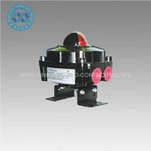
Daily use of pneumatic butterfly valves
Pneumatic butterfly valves are used for the control of solid materials and are often used as discharge valves at the bottom of the tank, such as the bottom of cement tanks, stone powder tanks, etc., for discharge and rapid blocking. Since most of the dust materials contain large or small particles, there is no doubt about the wear of the valve sealing surface. Inappropriate selection will greatly reduce the service life of the valve, or quickly form internal leakage of the valve, which will affect the continuous use.
Equipment considerations
Equipment environment: This product can be used indoors or outdoors, but in corrosive media and rust-prone occasions, the corresponding material combination should be used. Please consult our company for special working conditions.
Equipment location: It is necessary for the equipment to be in a place where it can be operated safely and with simple maintenance, inspection and repair.
Surrounding environment: temperature -20℃~+70℃, humidity below 90%RH. Before the equipment, check whether the valve meets the requirements of the operating conditions based on the nameplate mark on the valve.
Before the equipment, please remove the dirt and oxide scale in the pipeline. Please pay attention to the equipment, make the flow direction of the medium consistent with the flow direction arrow marked on the valve body.
Align the center of the front and rear piping, make the flange joints parallel, and tighten the screws evenly, and be careful not to have excessive piping stress on the cylinder control valve. According to the size and weight of the cylinder control valve, provide proper support and fixation on the piping or on the body.
Maintenance considerations
Daily inspection: check leakage, abnormal noise, vibration, etc.
Punctual inspection: Check valves and other system components on time for leaks, corrosion, and jamming, and maintain, clean and remove dust, and remove residual stains.
Differentiation inspection: The valve should be punctually performed a differentiation overhaul. During the differentiation overhaul, parts should be washed from the beginning, foreign bodies, stains and rust spots should be removed, damaged or worn gaskets and packings should be replaced, and the sealing surface should be modified. After the overhaul, the valve should be hydraulically pressured from the beginning. Test and use it from scratch only after passing the test.
If fluid leakage is found during the inspection, please do not touch or approach the cylinder control valve with your hands before confessing the safety.