Pneumatic Actuator Flange Tee Ball Valve consists of valve body, valve core and valve stem. The spool is linked with the valve stem. There is a cylinder on the valve body of this product. The displacement of the cylinder piston rod is connected with the rolling link of the valve stem. The opening and closing of the valve is controlled by the cylinder, which makes it easier. The movement of the cylinder can be controlled by an external solenoid valve or a manual valve, so that the valve switch can be operated remotely, which is more convenient. Only when the pneumatic actuator and the air source rotate 90 degrees and the rolling torque is small, the pneumatic ball valve can be closed tightly. The completely equal inner cavity of the valve body provides a small resistance and direct flow channel for the medium. It is generally believed that ball valves are suitable for direct opening and closing. The main features of the ball valve are compact structure, convenient operation and maintenance. It is suitable for general working media such as water, solvent, acid and natural gas, as well as media with poor working conditions such as oxygen, hydrogen peroxide, methane and ethylene. The ball valve body can be integral or combined.
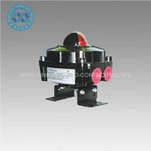
The pneumatic ball valve is a ball valve equipped with a pneumatic actuator. Pneumatic actuators perform relatively quickly. The fast switching speed is 0.05 seconds/time, so it is also commonly called pneumatic fast shut-off ball valve. Pneumatic ball valves are usually equipped with various accessories, such as solenoid valves, air source treatment tees, limit switches, positioners, control boxes, etc., to achieve local control and remote centralized control. The valve can be controlled in the control room without going to the site or high-altitude dangerous areas for manual control, which greatly saves manpower, time and safety.