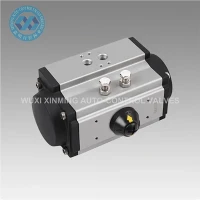
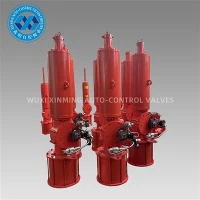
As two common subsets of Pneumatic Actuators, Pneumatic Rotary Actuators and Linear Actuators differ significantly in motion output, design, and application-each suited to distinct industrial automation needs.
Motion Type
Pneumatic Rotary Actuators convert compressed air energy into rotational motion, enabling turning or twisting movements. In contrast, Linear Actuators produce straight-line motion, supporting tasks like pushing, pulling, lifting, or clamping. This fundamental difference in motion direction determines their core use cases: rotary models for angular tasks, linear models for linear displacement needs.
Structural Design
Pneumatic Rotary Actuators typically feature designs like rack-and-pinion or vane. Linear Actuators often use piston cylinders. Rotary designs prioritize torque generation, while linear designs focus on force output for straight motion.
Suitable Applications
Pneumatic Rotary Actuators excel in tasks like operating valves, adjusting robotic end-effectors, or rotating turntables in material sorting. Linear Actuators are ideal for clamping workpieces in assembly lines, lifting components, or pushing products along conveyors. For example, rotary models handle valve opening/closing , while linear models secure parts during welding.
Performance Traits
Pneumatic Rotary Actuators deliver consistent torque and fast angular response, critical for time-sensitive rotational tasks. Linear Actuators offer high linear force and stable straight-line movement, ensuring reliable performance in load-bearing or precision positioning tasks. Both maintain the durability of Pneumatic Actuators, but their performance strengths align with their respective motion types.
If you're interested in learning more about pneumatic actuators, please feel free to contact us! We have extensive industry experience and a professional engineering team, and we sincerely invite you to work together for development!