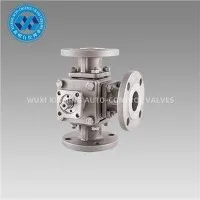
1. Action sensitivity and reliability: The continuous optimization of the throttle valve action and reliability is one of the special requirements of the valve.
2. Lifting force, torque, and speed: In general, there is no strict requirement for the opening and closing speed of the valve, but some working conditions have special requirements for the opening and closing speed. For example, some valves need to be opened or closed quickly to prevent accidents, and some valves need to be closed slowly to prevent water hammers, which should be taken into account when selecting the valve type.
3. Flowing medium: After the medium flows through the valve, there will be pressure loss, that is, the valve has a certain resistance to the flow of the medium. In order to overcome the resistance of the valve, the medium must consume a certain amount of energy, that is, the flow resistance coefficient.
4. Sealing performance: The sealing performance of a flanged ball valve refers to the ability of each sealing part of the valve to prevent medium leakage and is an important technical performance indicator of the valve. The contact between the opening and closing parts and the two sealing surfaces of the valve seat, the cooperation between the packing and the valve stem and the stuffing box, and the connection between the valve body and the valve cover. Therefore, the pneumatic flanged ball valve should meet these requirements in the production process to ensure its performance and provide a reliable guarantee for people's production.