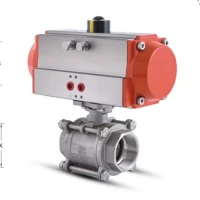
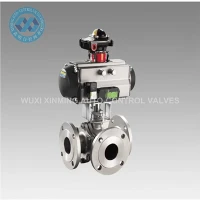
A single acting pneumatic rotary actuator is a mechanical device that converts compressed air into rotary motion in one direction, while using a spring mechanism to return the actuator to its original position. It is commonly used in industrial automation and valve control systems where a fail-safe function is required. When air pressure is lost, the actuator automatically returns to a predefined safe position, making it a reliable solution for safety-critical applications.
How a Single Acting Pneumatic Rotary Actuator Works
A single acting pneumatic rotary actuator operates using compressed air supplied to one side of the actuator. When air pressure enters the actuator chamber, it drives internal pistons or vanes to rotate the output shaft, typically to open or close a valve. At the same time, internal springs are compressed.
When the air supply is cut off or fails, the stored energy in the springs is released, forcing the actuator to rotate back to its original position. This spring-return action ensures that the connected device automatically moves to a safe state without external power.
Key Characteristics
The defining feature of a single acting pneumatic rotary actuator is its spring return mechanism. This design provides automatic positioning during air failure, which is essential in systems where safety, environmental protection, or process stability is critical.
Single acting actuators typically have a simpler air control system than double acting actuators, as they require air supply in only one direction. This can reduce system complexity and control costs. However, part of the actuator's internal space is occupied by springs, which can limit the maximum available torque compared to double acting designs of similar size.
Typical Applications
Single acting pneumatic rotary actuators are widely used in valve automation, especially for ball valves, butterfly valves, and plug valves that require automatic closure or opening in emergency situations. They are commonly found in industries such as oil and gas, chemical processing, water treatment, power plants, and fire protection systems.
These actuators are particularly suitable for applications where valves must automatically close to prevent leakage, contamination, or equipment damage when air or power is lost. In some cases, they are also used to automatically open valves to relieve pressure or ensure safe system shutdown.
Advantages of Single Acting Pneumatic Rotary Actuators
One of the main advantages of a single acting pneumatic rotary actuator is its inherent fail-safe function. The spring return ensures reliable operation even during unexpected system failures. These actuators also offer fast response times, compact structures, and relatively simple control requirements.
Additionally, pneumatic operation makes them suitable for hazardous environments where electrical actuators may pose risks, such as explosive or high-temperature areas.
Single Acting vs. Double Acting Actuators
Compared to double acting pneumatic rotary actuators, single acting models prioritize safety over continuous bidirectional control. Double acting actuators use air pressure for both opening and closing, while single acting actuators rely on air for one direction and springs for return. The choice between the two depends on application requirements, safety standards, torque needs, and system design.
Single acting actuators are preferred when automatic return is essential, whereas double acting actuators are better suited for applications requiring consistent torque in both directions.
Selection Considerations
When selecting a single acting pneumatic rotary actuator, important factors include required torque, operating air pressure, rotation angle, environmental conditions, and fail-safe direction. Proper sizing is especially critical, as spring force must be sufficient to overcome system resistance during return operation.
A single acting pneumatic rotary actuator is a reliable and safety-focused solution for applications requiring automatic return to a safe position during air failure. With its spring return design, fast response, and suitability for harsh industrial environments, it plays a vital role in valve automation and process safety systems across many industries.