When customers contact us about valve automation projects, the discussion often starts with torque, air pressure, or valve type. Surprisingly, actuator housing material is rarely the first topic on the table.
However, after years of working with end users, contractors, and system integrators, we have noticed something interesting. Once a project moves from the design stage to actual installation and maintenance, the actuator material suddenly becomes much more important.
One question we hear more frequently today is:
"Should we choose an aluminum pneumatic actuator or invest in a heavier stainless steel solution?"
The answer depends less on specifications and more on the realities of the operating environment.
The Challenge Many Facilities Face
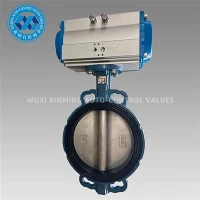
Several years ago, we worked with a contractor involved in upgrading a municipal water treatment facility. The project included dozens of automated butterfly valves installed throughout pumping stations and filtration areas.
At first, the focus was entirely on torque calculations and valve sizing. But during installation, a practical problem emerged.
Many of the valves were located on elevated pipe racks where technicians had limited access. Every additional kilogram of equipment made installation more difficult and increased maintenance time in the future.
The engineering team eventually selected aluminum pneumatic actuators for most valve positions.
Not because they were the cheapest option.
Not because they looked better.
But because they offered the best balance between performance, corrosion resistance, and handling convenience.
Months later, during a follow-up visit, maintenance personnel mentioned that actuator replacement and servicing required significantly less effort compared to heavier alternatives used elsewhere in the facility.
This is the kind of consideration that rarely appears in technical brochures but matters greatly in real-world operation.
Why Weight Matters More Than Many People Think
In theory, actuator weight may seem insignificant.
In practice, it affects:
- Installation efficiency
- Pipe support requirements
- Maintenance accessibility
- Transportation costs
- Worker safety during servicing
For projects involving hundreds of valves, even small reductions in equipment weight can translate into meaningful savings in labor and installation time.
This is one reason aluminum pneumatic actuators have become increasingly popular in water treatment, HVAC, and general industrial automation systems.
Corrosion Resistance Without Excessive Cost
Another common concern is corrosion.
Many engineers automatically assume that stainless steel is the only solution for outdoor installations. While stainless steel is undoubtedly the preferred choice for highly aggressive environments, it is not always necessary.
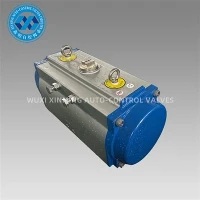
Modern aluminum pneumatic actuators typically use anodized aluminum alloys that provide excellent resistance to weather, humidity, and many industrial environments.
In one project involving outdoor valve automation equipment in Southeast Asia, the customer initially specified stainless steel actuators across the entire site.
After reviewing the actual operating conditions, it became clear that most valve stations were exposed only to rain, sunlight, and normal atmospheric conditions rather than corrosive chemicals.
By switching to high-quality aluminum pneumatic actuators, the customer reduced project costs while maintaining long-term reliability.
Several years later, the actuators continue to operate normally with no significant corrosion-related issues reported.
Aluminum Does Not Mean Weak
This is perhaps one of the biggest misconceptions in the market.
Some buyers associate aluminum with lightweight consumer products and assume it lacks durability.
Our experience shows the opposite.
Properly engineered aluminum actuator housings provide excellent strength-to-weight ratios and are more than capable of handling demanding industrial valve automation applications.
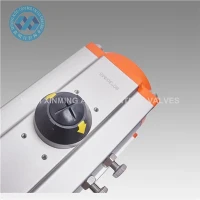
In fact, many rack and pinion pneumatic actuators used around the world rely on aluminum housing designs because they combine structural rigidity with manufacturing precision.
The result is smooth operation, consistent torque output, and long service life.
When Aluminum May Not Be the Right Choice
Being honest with customers is important.
Aluminum pneumatic actuators are not the ideal solution for every application.
In environments involving:
- Continuous exposure to aggressive chemicals
- Offshore oil and gas installations
- Extreme salt spray conditions
- Heavy mechanical impact risks
A stainless steel pneumatic actuator may provide better long-term protection.
The goal is not to sell a specific material.
The goal is to select the actuator that best matches the actual operating environment.
How We Approach Material Selection
At WUXI XINMING AUTO-CONTROL VALVES INDUSTRY CO., LTD., we rarely recommend an actuator based solely on catalog specifications.
Instead, we ask questions such as:
- Where will the actuator be installed?
- How often will it cycle?
- What maintenance access is available?
- What environmental conditions will it face over the next ten years?
These discussions often reveal factors that are far more important than simply comparing datasheets.
In many valve automation projects, aluminum pneumatic actuators prove to be the most practical and cost-effective solution because they deliver reliable performance without unnecessary weight or expense.
Final Thoughts
Choosing an aluminum pneumatic actuator is not simply a material decision.
It is a decision about installation efficiency, maintenance convenience, long-term reliability, and overall project economics.
From our experience supporting valve automation projects across different industries, the most successful systems are not always built with the most expensive components. They are built with components that match the actual operating conditions.
For many applications, that is exactly where aluminum pneumatic actuators excel.