When it comes to controlling the flow of liquids or gases in industrial systems, butterfly valves and ball valves are two of the most common solutions. While both serve similar purposes - regulating and isolating flow - they differ in design, performance, and application. Understanding these differences can help you select the right valve for your process.
At WUXI XINMING AUTO-CONTROL VALVES INDUSTRY CO., LTD., we manufacture high-quality butterfly valves, ball valves, and pneumatic actuators designed to meet a wide range of industrial requirements.
1. Structural Differences
Butterfly Valve
A butterfly valve uses a circular disc mounted on a rotating shaft to regulate flow. When the disc turns 90 degrees, it opens or closes the passage completely. This design allows for compact installation and quick operation.
Key features:
Lightweight and compact design
Simple construction with fewer components
Typically available in wafer, lug, and flanged types
Ball Valve
A ball valve uses a spherical ball with a central hole to control flow. When the hole aligns with the pipeline, the valve opens; when it's perpendicular, the valve closes. This design ensures tight sealing and is ideal for high-pressure or high-temperature systems.
Key features:
Excellent shut-off capability
Durable and suitable for high-pressure applications
Slightly larger and heavier than butterfly valves
2. Performance and Flow Control
Butterfly Valve: Offers smooth throttling and quick shut-off, but is not ideal for high-pressure sealing. It provides moderate flow control with minimal pressure drop and is often used in large-diameter pipelines such as water distribution and HVAC systems.
Ball Valve: Provides full-bore flow when open, meaning almost no pressure loss. It is excellent for tight shut-off applications in oil, gas, and chemical processing, but not ideal for precise throttling control.
3. Cost and Maintenance
Butterfly valves are typically more cost-effective, especially in larger sizes, due to their simpler structure and lightweight design.
Ball valves are more expensive, but they offer longer service life in high-pressure environments and require minimal maintenance when properly installed.
4. Applications
| Industry | Recommended Valve | Reason |
| Water Treatment | Butterfly Valve | Lightweight, easy to install, cost-effective |
| HVAC Systems | Butterfly Valve | Compact design, fast operation |
| Oil & Gas | Ball Valve | High pressure and tight shut-off |
| Chemical Industry | Ball Valve | Resistant to corrosion and leakage |
| Food & Beverage | Butterfly Valve | Easy cleaning and quick operation |
5. Automation Options
Both valve types can be equipped with pneumatic actuators, electric actuators, or manual gearboxes for automation.
At WUXI XINMING AUTO-CONTROL VALVES INDUSTRY CO., LTD., we offer:
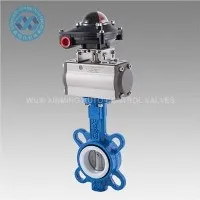
Pneumatic Actuator Butterfly Valves
Pneumatic Actuator Ball Valves
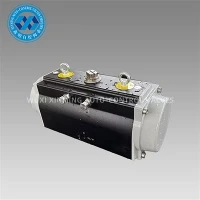
Pneumatic Actuators with Limit Switch Boxes
Double-Acting and Spring-Return Types
Each valve-actuator assembly is tested for torque accuracy, leak prevention, and long-term durability.
6. Which One Should You Choose?
Choose a butterfly valve if you need a lightweight, low-cost valve for large-diameter or low-pressure applications.
Choose a ball valve if you need tight shut-off and high-pressure resistance in critical process systems.
For most industrial automation systems, combining a pneumatic actuator with the right valve ensures reliable performance, safety, and efficiency.
While both butterfly valves and ball valves serve important roles in fluid control, the right choice depends on your system's pressure, flow rate, and media type.
With years of expertise, WUXI XINMING AUTO-CONTROL VALVES INDUSTRY CO., LTD. provides a full range of valve and actuator solutions tailored to meet your application needs.
Still unsure which valve fits your system best?
Contact WUXI XINMING AUTO-CONTROL VALVES INDUSTRY CO., LTD. today - our engineering team will help you choose the ideal butterfly valve or ball valve solution for your industrial automation project.