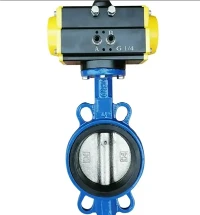
Picking a butterfly valve is no longer a catalogue lottery. A 150 mm valve that works perfectly in chilled-water HVAC can fail within months when asked to throttle 80 °C brine with 2 % salt. Use the following decision tree-based on the latest 2025 industry guides-to match valve type, material and actuator to your real-world pipeline.
1. Define the mission
Start with function: on/off isolation, modulating control, or emergency trip? For simple isolation above DN 40 mm (1½ in.), a resilient-seated centric valve is usually adequate; for continuous throttling, choose double-eccentric (high-performance) designs that reduce seat wear and offer linear Cv between 30° and 70° opening .
2. Size for flow, not pipe diameter
Calculate required Cv: Cv = Q / √(ΔP). Example: 1 800 m³ h⁻¹ cooling water with 0.3 bar allowable drop needs Cv ≈ 3 300. A DN 300 mm centric valve delivers Cv 4 100-operating in the efficient 60–80 % range-whereas a DN 250 mm would be choked and a DN 350 mm oversized, causing poor control and seat flutter.
3. Pressure & temperature envelope
• 0–16 bar, –10 °C to 120 °C: EPDM-lined centric valve, ductile-iron body.
• 16–50 bar, up to 250 °C: double-eccentric, PTFE or metal seat, CF8M stainless body.
• Cryogenic LNG: triple-offset stainless with Inconel seat, Class VI shut-off . Always add 20 % surge margin to rated pressure.
4. Fluid compatibility matrix
Potable water: NSF-61 EPDM liner; seawater: nickel-aluminium-bronze disc; food-grade: white NBR liner with stainless body and polished disc Ra ≤ 0.8 µm . Avoid carbon steel in chlorine-rich circuits-pitting can perforate a disc within weeks.
5. Body style choice
Wafer type is cheapest and suits ASME 125/150 lb flanges, but requires full-length bolts; lug type allows dead-end service for maintenance isolation; U-section body gives higher strength for vacuum lines .
6. Actuation economics
• < 2 cycles/day: manual lever or worm gear.
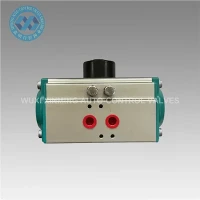
• 2–60 cycles/day: pneumatic double-acting (1–3 s stroke, fail-safe with spring return) .
• Continuous modulating: electric actuator with PID positioner, accuracy ±1 %, but slower (5–30 s) and higher capital. In explosive atmospheres, pneumatics remain the default because they are intrinsically safe.
7. Installation nuances
Mount the stem horizontal whenever possible; vertical stems trap condensate and can ice in sub-zero plants. Ensure at least 5 D straight pipe upstream to avoid asymmetric flow that vibrates the disc . For pumps or elbows, orient the stem perpendicular to the flow disturbance plane.
8. Cost snapshot (DN 200 mm, PN 16, 2025 pricing)
Resilient centric, wafer, manual: €220
Same valve + pneumatic scotch-yoke, fail-safe: €650
Double-eccentric, metal seat, electric: €1 350
Factor in lifecycle: a €50 premium for stainless disc pays back in <18 months if corrosion-related shutdowns are avoided.
By stepping through function, Cv, pressure, fluid, body and actuator in that order, you eliminate 80 % of premature failures and arrive at a valve that is neither under-spec'd nor gold-plated-just the right butterfly for your pipeline.