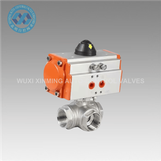
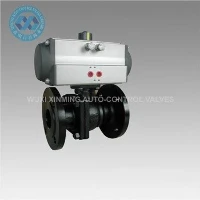
Hey there! As a supplier of 220V solenoid valves, I often get asked whether a 220V solenoid valve can be used in a food processing plant. It's a great question, and one that deserves a detailed answer. So, let's dive right in and explore this topic together.
First off, let's talk a bit about what a solenoid valve is. A solenoid valve is an electromechanically operated valve. It uses an electric current to generate a magnetic field, which then moves a plunger or a piston to open or close the valve. These valves are widely used in various industries for controlling the flow of liquids or gases.
Now, when it comes to food processing plants, there are some strict requirements and regulations that need to be met. The main concerns are food safety, hygiene, and compliance with industry standards. So, can a 220V solenoid valve meet these requirements?
Voltage Considerations
The 220V voltage is a common power supply in many regions. One of the advantages of using a 220V solenoid valve is that it can provide sufficient power to operate the valve effectively. It can handle larger loads and is often more suitable for applications where a stronger magnetic force is needed to open or close the valve quickly.
However, in a food processing plant, electrical safety is of utmost importance. The electrical system needs to be properly grounded and protected to prevent any electrical hazards. A 220V system requires more careful installation and maintenance compared to lower - voltage systems. But if the installation is done correctly by a qualified electrician following all the safety codes, the 220V solenoid valve can be used safely.


Material and Hygiene
Food processing plants demand that all equipment in contact with food products is made of food - grade materials. When choosing a 220V solenoid valve for a food processing plant, the valve body, seals, and other components that come into contact with the food or food - related substances must be made of materials that are non - toxic, corrosion - resistant, and easy to clean.
For example, stainless steel is a popular choice for the valve body as it is durable, resistant to corrosion, and can be easily cleaned and sanitized. The seals should be made of materials like EPDM (Ethylene Propylene Diene Monomer) or FKM (Fluoroelastomer), which are approved for food contact. As a supplier, I make sure that all our 220V solenoid valves meet these strict material requirements.
Regulatory Compliance
Food processing plants are subject to a variety of regulations, such as those set by the Food and Drug Administration (FDA) in the United States or the European Union's food safety regulations. These regulations ensure that the equipment used in food processing does not contaminate the food products.
Our 220V solenoid valves are designed and manufactured to comply with these international standards. We have all the necessary certifications to prove that our valves are safe for use in food processing environments. This gives our customers peace of mind knowing that they are using a product that meets all the legal requirements.
Comparison with Other Voltage Solenoid Valves
There are also solenoid valves available in other voltages, such as 12V, 24V, and 110V. For instance, a 110V Solenoid Valve is often used in regions where 110V is the standard power supply. Lower - voltage solenoid valves like 12V and 24V are sometimes preferred in applications where safety is a major concern, as they pose less of an electrical shock risk.
However, 220V solenoid valves have their own advantages. They can be more energy - efficient in some cases, especially for larger - scale operations. They also tend to have a longer lifespan and can handle more demanding applications.
Applications in Food Processing
In a food processing plant, 220V solenoid valves can be used in a variety of applications. They can be used to control the flow of water, steam, or other fluids in processes like cleaning, cooking, and filling. For example, in a steam - based cooking process, a 220V solenoid valve can be used to precisely control the flow of steam into the cooking chamber.
They can also be used in pneumatic systems. Pneumatic Solenoid Valve 5 Way 2 - position Control Air 12V 24V are commonly used in food processing plants to control the movement of air in pneumatic cylinders, which can be used for tasks like packaging and sorting. Our 220V solenoid valves can be integrated into these pneumatic systems to provide reliable and efficient control.
Another application is in the control of liquid ingredients. For example, in a beverage production line, a 220V solenoid valve can be used to accurately meter the amount of syrup or other liquid additives into the final product.
Maintenance and Reliability
Maintenance is crucial in a food processing plant. A malfunctioning solenoid valve can disrupt the production process and potentially contaminate the food products. Our 220V solenoid valves are designed for easy maintenance. They have accessible parts that can be quickly replaced if needed.
We also offer high - quality products that are known for their reliability. For example, our Mechanical Equipment Special, High Precision Pneumatic Air Control Solenoid Valve is built with precision and durability in mind. This means less downtime for maintenance and more consistent operation in the food processing plant.
Conclusion
So, to answer the question, yes, a 220V solenoid valve can be used in a food processing plant. It meets the power requirements for many applications, and when it is made of the right materials and installed correctly, it can ensure food safety and compliance with industry regulations.
If you're in the food processing industry and are looking for a reliable 220V solenoid valve supplier, look no further. We have a wide range of products that are designed to meet your specific needs. Whether you need a valve for a small - scale operation or a large - scale production line, we've got you covered.
If you're interested in learning more about our 220V solenoid valves or would like to discuss your specific requirements, feel free to reach out. We're here to help you make the best choice for your food processing plant.
References
- Food and Drug Administration (FDA) regulations on food processing equipment.
- European Union food safety standards for equipment in food processing.
- Industry research on the use of solenoid valves in food processing plants.