Can a manual handwheel be used for continuous rotation?
In the realm of industrial machinery and valve control systems, the manual handwheel stands as a fundamental yet versatile component. As a dedicated supplier of manual handwheels, I often encounter inquiries about the capabilities of these devices, particularly regarding their suitability for continuous rotation. This blog post aims to delve into this topic, exploring the technical aspects, practical applications, and limitations of using a manual handwheel for continuous rotation.
Technical Considerations
At the core of the question lies an understanding of the design and mechanics of a manual handwheel. Typically, a manual handwheel is designed to provide a means of manual control over a valve or other mechanical device. It consists of a wheel, which is connected to a shaft that can be turned to operate the mechanism. The design of the handwheel itself can vary, with different sizes, shapes, and materials used depending on the application.
One of the key factors that determine whether a manual handwheel can be used for continuous rotation is the type of connection between the handwheel and the shaft. In some cases, the handwheel may be directly connected to the shaft, allowing for a one-to-one ratio of rotation. This type of connection is common in simple valve control systems, where the handwheel is used to open or close the valve by turning it a specific number of turns.
However, in more complex systems, a gearbox or other transmission mechanism may be used to provide a different ratio of rotation. For example, a gearbox may be used to increase the torque applied to the shaft, allowing for easier operation of larger valves or other heavy-duty equipment. In these cases, the handwheel may need to be turned multiple times to achieve a full rotation of the shaft, which can limit its suitability for continuous rotation.
Another important consideration is the type of bearing used in the handwheel assembly. A high-quality bearing is essential for smooth and efficient operation, especially when the handwheel is used for continuous rotation. Bearings that are designed to handle high loads and speeds are typically used in applications where continuous rotation is required.
Practical Applications
Despite the technical limitations, there are several practical applications where a manual handwheel can be used for continuous rotation. One such application is in emergency situations, where the power supply to the valve control system may be interrupted. In these cases, a manual handwheel can be used to operate the valve manually, ensuring that the system can continue to function even in the absence of power.
For example, in a water treatment plant, a manual handwheel may be used to control the flow of water through a valve in the event of a power outage. By turning the handwheel continuously, the operator can adjust the position of the valve to maintain the desired flow rate, preventing damage to the system and ensuring the safety of the facility.
Another application where a manual handwheel can be used for continuous rotation is in testing and calibration of valve control systems. During the testing process, the handwheel can be used to operate the valve at different speeds and positions, allowing for accurate measurement of the valve's performance. This type of testing is essential for ensuring that the valve meets the required specifications and operates safely and efficiently.
In addition, manual handwheels can be used in some industrial processes where continuous rotation is required for a specific task. For example, in a manufacturing plant, a manual handwheel may be used to control the speed and direction of a conveyor belt, allowing for precise positioning of the products being transported.
Limitations
While a manual handwheel can be used for continuous rotation in certain applications, it is important to recognize its limitations. One of the main limitations is the physical effort required to turn the handwheel continuously. Depending on the size and type of the handwheel, as well as the load being applied to the shaft, turning the handwheel for an extended period of time can be physically demanding and may lead to fatigue.
In addition, the speed of rotation that can be achieved with a manual handwheel is limited. Unlike an electric or hydraulic actuator, which can provide high-speed rotation, a manual handwheel is typically designed for slower, more precise operation. This can make it unsuitable for applications where high-speed rotation is required.
Another limitation is the accuracy of control. While a manual handwheel can provide a certain degree of precision, it is not as accurate as an automated control system. This can be a significant limitation in applications where precise control of the valve position is required, such as in a chemical processing plant or a nuclear power facility.
Our Products
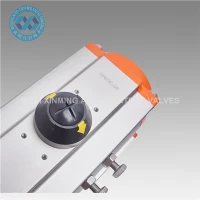
As a supplier of manual handwheels, we offer a wide range of products that are designed to meet the needs of different applications. Our High-Torque Manual Handwheel For Pneumatic Valves is specifically designed for use with pneumatic valves, providing high torque and smooth operation. This handwheel is ideal for applications where continuous rotation is required, such as in emergency manual operation or testing and calibration.
In addition, we also offer an Emergency Manual Operation Mechanism With Pneumatic Valve Actuator, which provides a reliable means of manual control in the event of a power outage or other emergency situation. This mechanism is designed to be easy to operate and can be used to open or close the valve quickly and safely.
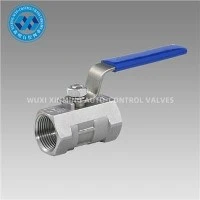
Our Pneumatic Actuator Internal Thread Stainless Steel 316 3pcs Pneumatic Bi-directional Ball Valve is another popular product that can be used in conjunction with a manual handwheel. This valve is made of high-quality stainless steel and is designed to provide reliable and efficient operation in a variety of applications.


Conclusion
In conclusion, while a manual handwheel can be used for continuous rotation in certain applications, it is important to consider the technical aspects, practical applications, and limitations before making a decision. Our products are designed to provide reliable and efficient manual control in a variety of applications, and we are committed to providing our customers with the highest quality products and services.
If you are interested in learning more about our manual handwheels or other products, please feel free to contact us to discuss your specific requirements. We look forward to the opportunity to work with you and help you find the right solution for your needs.
References
- "Valve Handbook", International Valve Manufacturers Association
- "Industrial Automation Handbook", Control Engineering