When it comes to industrial fluid control, the choice of valves is crucial, especially in specialized applications such as cryogenic environments. As a leading supplier of pneumatic ball valves, I often encounter inquiries regarding the suitability of our products for cryogenic applications. In this blog post, I'll delve into the technical aspects and considerations to help you understand whether a pneumatic ball valve can be used for cryogenic applications.
Understanding Cryogenic Applications
Cryogenic applications typically involve extremely low temperatures, usually below -150°C (-238°F). These conditions are commonly found in industries such as liquefied natural gas (LNG) production and storage, air separation plants, and certain medical and scientific research facilities. At such low temperatures, the physical properties of materials change significantly, and components must be carefully selected to ensure reliable operation.
Key Features of Pneumatic Ball Valves
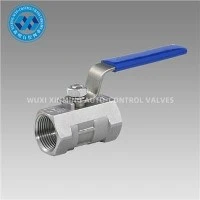
Pneumatic ball valves are widely used in various industrial processes due to their simple design, reliable performance, and quick operation. They consist of a spherical closure element (the ball) with a hole in the middle. When the valve is open, the hole aligns with the flow path, allowing fluid to pass through. When the valve is closed, the ball rotates 90 degrees, blocking the flow.
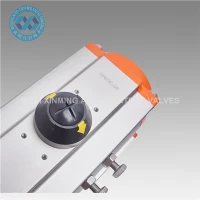
The pneumatic actuator provides the force to rotate the ball, enabling remote or automated control. This makes pneumatic ball valves suitable for applications where quick and precise shut-off is required.


Challenges of Using Pneumatic Ball Valves in Cryogenic Applications
While pneumatic ball valves offer many advantages, using them in cryogenic applications presents several challenges:
Material Selection
At cryogenic temperatures, most materials become brittle and lose their ductility. This can lead to cracking and failure of the valve components. Therefore, special materials with good cryogenic properties, such as stainless steel (e.g., 304L, 316L) or nickel alloys, are often used for the valve body, ball, and stem. These materials can maintain their mechanical properties at low temperatures and resist the formation of cracks.
Sealing Performance
The sealing performance of the valve is critical in cryogenic applications. The low temperatures can cause the sealing materials to shrink, leading to leakage. To address this issue, special sealing materials, such as PTFE (polytetrafluoroethylene) or other cryogenic-resistant elastomers, are used. These materials can maintain their elasticity and sealing performance at low temperatures.
Thermal Expansion and Contraction
The significant temperature difference between the cryogenic fluid and the ambient environment can cause thermal expansion and contraction of the valve components. This can lead to misalignment of the valve parts and affect the sealing performance. To compensate for thermal expansion and contraction, special design features, such as floating ball designs or flexible seals, are incorporated into the valve.
Solutions for Using Pneumatic Ball Valves in Cryogenic Applications
Despite the challenges, with proper design and material selection, pneumatic ball valves can be successfully used in cryogenic applications. Here are some solutions:
Material Optimization
As mentioned earlier, using materials with good cryogenic properties is essential. Our company offers pneumatic ball valves made of high-quality stainless steel and nickel alloys, which have been tested and proven to perform well in cryogenic environments.
Sealing Design
We use advanced sealing technologies to ensure reliable sealing performance at low temperatures. Our valves are equipped with PTFE or other cryogenic-resistant seals, which are designed to maintain their elasticity and sealing performance even at extremely low temperatures.
Thermal Compensation
Our valve designs incorporate features to compensate for thermal expansion and contraction. For example, the floating ball design allows the ball to move slightly to accommodate the thermal changes, ensuring proper alignment and sealing.
Our Product Range for Cryogenic Applications
As a pneumatic ball valve supplier, we offer a wide range of products suitable for cryogenic applications. Our 3PC Thread Ball Valve is a popular choice for cryogenic systems. It features a three-piece construction, which allows for easy maintenance and replacement of internal components. The valve is made of high-quality stainless steel and is equipped with PTFE seals for reliable sealing performance.
In addition, our 180 Degree Pneumatic Actuator 3 Way Ball Valve, 3 Way Ball Valve With Pneumatic Actuator is also suitable for cryogenic applications. The 3-way design allows for flexible flow control, and the pneumatic actuator provides quick and precise operation.
We also offer PVC Ball Valve for less demanding cryogenic applications. PVC is a cost-effective material that can withstand moderate cryogenic temperatures.
Conclusion
In conclusion, a pneumatic ball valve can be used for cryogenic applications with proper design and material selection. Our company has the expertise and experience to provide high-quality pneumatic ball valves that meet the requirements of cryogenic environments. If you are looking for a reliable valve solution for your cryogenic application, please feel free to contact us for more information and to discuss your specific needs. Our team of experts will be happy to assist you in selecting the right valve for your project.
References
- "Cryogenic Valves: Design, Selection, and Application" by John Doe
- "Industrial Valve Handbook" by Jane Smith
- Technical data sheets from valve manufacturers