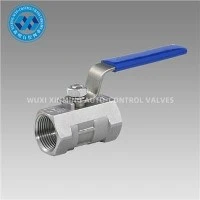
Hey there! As a supplier of PVC ball valves, I've seen firsthand how crucial it is to understand the relationship between valve opening angle and flow rate. It's a topic that comes up a lot in our discussions with customers, so I thought I'd share some insights in this blog post.
First off, let's talk about what a PVC ball valve is. A PVC ball valve is a type of valve that uses a ball with a hole in the middle to control the flow of fluid through a pipe. When the ball is turned so that the hole aligns with the pipe, the valve is open, and fluid can flow through. When the ball is turned so that the hole is perpendicular to the pipe, the valve is closed, and fluid is blocked.
The opening angle of the ball valve refers to the degree to which the ball is turned from the closed position. For example, a fully open valve has an opening angle of 90 degrees, while a fully closed valve has an opening angle of 0 degrees. The opening angle can be adjusted to control the flow rate of the fluid through the valve.
So, how does the valve opening angle affect the flow rate in a PVC ball valve? Well, it's all about the relationship between the opening area of the valve and the resistance to flow. When the valve is fully open, the opening area is at its maximum, and the resistance to flow is at its minimum. This means that the flow rate is at its highest. As the opening angle is decreased, the opening area of the valve decreases, and the resistance to flow increases. This results in a decrease in the flow rate.
However, the relationship between valve opening angle and flow rate is not linear. In other words, a small change in the opening angle does not necessarily result in a proportional change in the flow rate. This is because the resistance to flow is not only affected by the opening area of the valve but also by other factors such as the viscosity of the fluid, the velocity of the fluid, and the roughness of the pipe walls.
To better understand the relationship between valve opening angle and flow rate, let's take a look at a typical flow rate curve for a PVC ball valve. A flow rate curve is a graph that shows the relationship between the valve opening angle and the flow rate of the fluid through the valve. The curve is usually plotted with the valve opening angle on the x-axis and the flow rate on the y-axis.

The shape of the flow rate curve for a PVC ball valve depends on several factors, including the size of the valve, the type of fluid being used, and the operating conditions. In general, the curve starts at zero flow rate when the valve is fully closed and increases rapidly as the opening angle is increased from 0 to about 20 degrees. After that, the rate of increase in the flow rate slows down, and the curve becomes more gradual. At around 70 to 80 degrees of opening angle, the flow rate approaches its maximum value, and further increases in the opening angle have little effect on the flow rate.
It's important to note that the flow rate curve for a PVC ball valve is not the same for all types of fluids. For example, the curve for a viscous fluid such as oil will be different from the curve for a less viscous fluid such as water. This is because the viscosity of the fluid affects the resistance to flow, which in turn affects the relationship between valve opening angle and flow rate.
Now that we understand how the valve opening angle affects the flow rate in a PVC ball valve, let's talk about some practical applications of this knowledge. One of the most common applications is in the control of water flow in plumbing systems. By adjusting the opening angle of the ball valve, the flow rate of water can be controlled to meet the specific needs of the system. For example, in a residential plumbing system, a ball valve can be used to control the flow of water to a showerhead or a faucet. By adjusting the opening angle of the valve, the user can control the water pressure and flow rate to achieve the desired level of comfort.
Another application of the relationship between valve opening angle and flow rate is in the control of fluid flow in industrial processes. In many industrial processes, it's important to maintain a precise flow rate of fluid through a pipe. By using a PVC ball valve and adjusting the opening angle, the flow rate can be controlled to ensure that the process operates efficiently and safely. For example, in a chemical processing plant, a ball valve can be used to control the flow of a chemical solution through a pipeline. By adjusting the opening angle of the valve, the flow rate of the solution can be controlled to ensure that the chemical reaction takes place at the desired rate.
At our company, we offer a wide range of PVC ball valves to meet the needs of different applications. Our valves are made from high-quality PVC materials and are designed to provide reliable and long-lasting performance. We also offer a variety of valve sizes, opening angles, and end connections to ensure that our customers can find the right valve for their specific needs.
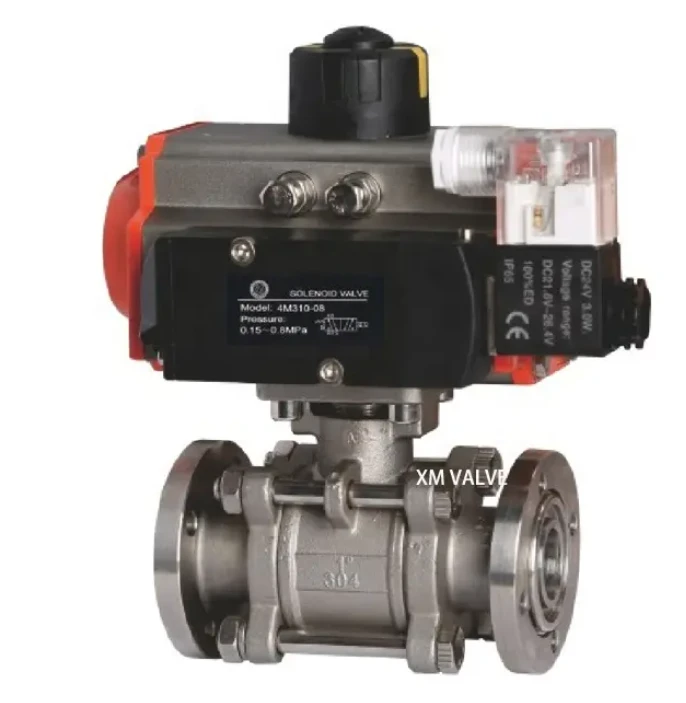
Some of our popular products include the Flange End Vacuum Ball Valve With Pneumatic Actuator, the L-t Stainless Steel Pneumatic Three-way Ball Valve, and the Manual 1pc Thread Ball Valve. These valves are suitable for a variety of applications, including water treatment, chemical processing, and industrial automation.
If you're in the market for a PVC ball valve, we'd love to hear from you. Our team of experts can help you choose the right valve for your specific needs and provide you with all the information you need to make an informed decision. Whether you're a homeowner looking to upgrade your plumbing system or an industrial manufacturer looking for a reliable valve for your process, we've got you covered.
In conclusion, understanding the relationship between valve opening angle and flow rate is essential for anyone who uses PVC ball valves. By adjusting the opening angle of the valve, the flow rate of the fluid through the valve can be controlled to meet the specific needs of the application. At our company, we're committed to providing our customers with high-quality PVC ball valves and excellent customer service. So, if you have any questions or need help choosing the right valve, don't hesitate to contact us.
References
- Perry, R. H., & Green, D. W. (Eds.). (1997). Perry's Chemical Engineers' Handbook. McGraw-Hill.
- Crane Co. (1988). Flow of Fluids Through Valves, Fittings, and Pipe. Technical Paper No. 410.