Hey there! As a supplier of pneumatic actuators, I've been getting a lot of questions lately about the hygiene requirements for these devices in the food industry. So, I thought I'd take a few minutes to break it all down for you.
First off, let's talk about why hygiene is such a big deal in the food industry. When it comes to producing and processing food, safety is the number one priority. Any contamination can lead to serious health risks for consumers, not to mention potential legal and financial headaches for food manufacturers. That's where pneumatic actuators come in. These devices are used in a wide range of food processing applications, from opening and closing valves to controlling conveyor belts. If they're not kept clean and hygienic, they can become a breeding ground for bacteria, mold, and other harmful microorganisms.
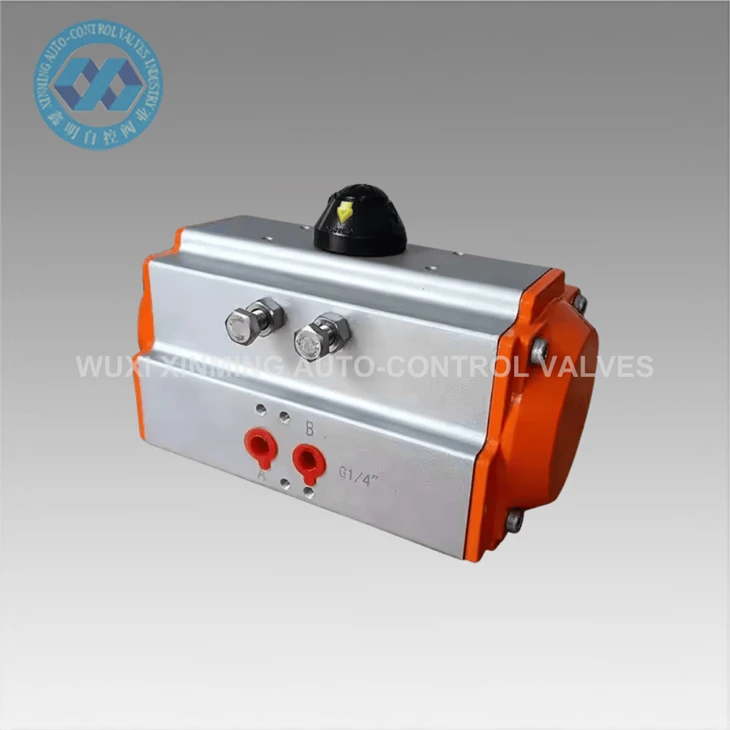

So, what are the specific hygiene requirements for pneumatic actuators in the food industry? Well, it all starts with the materials used to make the actuators. In general, you want to look for actuators that are made from food-grade materials that are resistant to corrosion, wear, and chemical damage. Stainless steel is a popular choice because it's durable, easy to clean, and doesn't react with food products. Other materials that are commonly used include aluminum, plastic, and rubber.
Another important factor to consider is the design of the actuator. Actuators should be designed to minimize the number of crevices, corners, and other hard-to-reach areas where dirt and bacteria can accumulate. Smooth surfaces are easier to clean and sanitize, so look for actuators that have a simple, streamlined design. Additionally, actuators should be designed to prevent the ingress of water, dust, and other contaminants. This can be achieved through the use of seals, gaskets, and other protective measures.
In addition to the materials and design of the actuator, it's also important to consider the cleaning and maintenance procedures. Pneumatic actuators should be cleaned regularly to remove any dirt, debris, or food particles that may have accumulated on the surface. This can be done using a variety of cleaning agents, such as detergents, disinfectants, and sanitizers. However, it's important to choose cleaning agents that are safe for use in the food industry and that won't damage the actuator.
When cleaning the actuator, it's important to follow the manufacturer's instructions carefully. This may include disassembling the actuator to clean hard-to-reach areas, using specific cleaning tools and techniques, and allowing the actuator to dry completely before reassembling it. It's also a good idea to keep a record of all cleaning and maintenance activities, including the date, time, and type of cleaning agent used.
In addition to regular cleaning, pneumatic actuators should also be inspected regularly to ensure that they're functioning properly and that there are no signs of wear or damage. This can be done by a qualified technician using specialized tools and equipment. Any worn or damaged parts should be replaced immediately to prevent further damage to the actuator and to ensure that it continues to operate safely and efficiently.
Now, let's talk about some of the specific applications of pneumatic actuators in the food industry. One of the most common applications is in the control of valves. Pneumatic actuators are used to open and close valves in a variety of food processing applications, such as filling, packaging, and dispensing. In these applications, it's important to ensure that the actuator is able to operate quickly and accurately to prevent spills, leaks, and other problems.
Another common application of pneumatic actuators in the food industry is in the control of conveyor belts. Pneumatic actuators are used to start, stop, and control the speed of conveyor belts, which are used to transport food products from one area of the processing facility to another. In these applications, it's important to ensure that the actuator is able to operate smoothly and quietly to prevent damage to the food products and to minimize noise pollution in the processing facility.
Finally, let's talk about some of the benefits of using pneumatic actuators in the food industry. One of the main benefits is their reliability. Pneumatic actuators are known for their durability and long service life, which means that they can provide years of trouble-free operation in even the most demanding food processing applications. Additionally, pneumatic actuators are relatively easy to install and maintain, which can help to reduce downtime and increase productivity.
Another benefit of using pneumatic actuators in the food industry is their energy efficiency. Pneumatic actuators use compressed air as their power source, which is a clean, renewable energy source that doesn't produce any emissions or pollutants. This makes them a more environmentally friendly choice than other types of actuators, such as electric actuators.
In conclusion, the hygiene requirements for pneumatic actuators in the food industry are very important. By choosing actuators that are made from food-grade materials, have a simple, streamlined design, and are easy to clean and maintain, you can help to ensure that your food processing operations are safe, efficient, and compliant with all relevant regulations. If you're in the market for pneumatic actuators for your food processing facility, I encourage you to check out our website at /pneumatic-actuator/. We've got eighteen Years in Pneumatics – Expertise You Rely On, and we offer a wide range of high-quality pneumatic actuators, including the Quarter Turn Air Actuator For Ball/butterfly Valve Double Acting Pneumatic Rotary Actuator and the High Quality Pneumatic Three Way Ball Valve. If you have any questions or need help choosing the right actuator for your application, please don't hesitate to contact us. We're here to help you find the best solution for your needs.
References
- Food and Drug Administration (FDA). (n.d.). Sanitation in Food Processing. Retrieved from [FDA website]
- International Organization for Standardization (ISO). (n.d.). ISO 22000:2018 - Food safety management systems - Requirements for any organization in the food chain. Retrieved from [ISO website]
- National Sanitation Foundation (NSF). (n.d.). NSF/ANSI 169 - Food Equipment Materials and Construction. Retrieved from [NSF website]