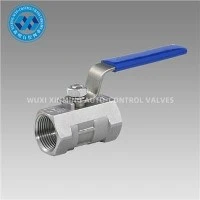
Hey there! As a supplier of flange ball valves, I often get asked about the quality inspection methods for these valves. So, I thought I'd share some insights on this topic.
Visual Inspection
The first step in quality inspection is a simple visual check. We look at the overall appearance of the flange ball valve. Check for any visible defects like cracks, scratches, or dents on the valve body. A smooth and clean surface usually indicates good manufacturing quality. For example, if there are any rough edges on the flange, it might cause problems during installation and lead to leaks later on.
We also examine the valve's finish. A proper finish not only makes the valve look good but also protects it from corrosion. If the finish is uneven or has blisters, it could be a sign of a sub - standard manufacturing process.
Dimensional Inspection
Accurate dimensions are crucial for flange ball valves. We use precision measuring tools like calipers, micrometers, and gauges to measure various parts of the valve. The flange dimensions, such as the outer diameter, bolt hole size, and pitch circle diameter, must match the industry standards. Any deviation can lead to installation issues and affect the valve's performance.
The ball inside the valve also needs to have the right diameter. If it's too large or too small, it won't seal properly, causing leakage. The stem length and diameter are also important, as they affect the operation of the valve.
Pressure Testing
Pressure testing is one of the most important quality inspection methods. We subject the flange ball valve to different pressure levels to ensure it can withstand the required working pressures. There are two main types of pressure tests: hydrostatic and pneumatic.
Hydrostatic testing involves filling the valve with water and applying a specific pressure for a certain period. This test helps us detect any leaks in the valve body, seals, and connections. If there are any leaks, we can identify and fix them before the valve is shipped.
Pneumatic testing, on the other hand, uses compressed air. It's a quicker and more sensitive test for detecting small leaks. We can use a soapy water solution to check for bubbles, which indicate the presence of a leak.
Material Analysis
The materials used in the flange ball valve play a vital role in its performance and durability. We use various methods to analyze the materials. One common method is spectroscopy, which can determine the chemical composition of the valve body, ball, and other components.
By analyzing the material, we can ensure that the valve is made of the right grade of metal or other materials. For example, if the valve is supposed to be made of stainless steel, we can confirm that it has the correct amount of chromium, nickel, and other elements to provide corrosion resistance.
Functionality Testing
We need to make sure that the flange ball valve functions properly. This involves opening and closing the valve multiple times to check its smooth operation. The valve should open and close easily without any jamming or excessive force.
We also test the valve's ability to control the flow of fluid. For example, in a control valve application, we check if the valve can accurately regulate the flow rate according to the input signals.
Sealing Performance Testing
A good seal is essential for a flange ball valve. We test the sealing performance by applying pressure and checking for any leakage. There are different types of seals, such as soft seals and metal - to - metal seals.
Soft seals, usually made of materials like rubber or PTFE, provide a tight seal at lower pressures. Metal - to - metal seals are more suitable for high - pressure and high - temperature applications. We test both types of seals to ensure they meet the required standards.
Comparison with Standards
We always compare our flange ball valves with industry standards. Standards like API 6D, ISO 5208, and ASME B16.34 provide guidelines for the design, manufacturing, and testing of valves. By following these standards, we can ensure that our valves are of high quality and can be used in various industries.
The Role of Quality Inspection in Our Business
As a flange ball valve supplier, quality inspection is at the core of our business. We want to provide our customers with valves that are reliable, durable, and perform well. By conducting thorough quality inspections, we can reduce the risk of product failures and customer complaints.


We also understand that different customers have different requirements. Some might need valves for high - temperature applications, while others might need them for corrosive environments. Our quality inspection process allows us to customize the valves according to these specific needs.
Related Products
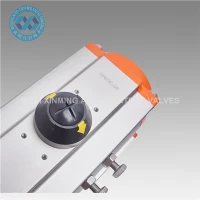
If you're interested in other types of valves, we also offer Pneumatic threaded ball valve, Segment Control Valve With Pneumatic Actuator, and Pneumatic Actuator Jacketed Flange Ball Valve. These valves are also subject to the same strict quality inspection processes.
Let's Connect
If you're in the market for high - quality flange ball valves or any of our other products, don't hesitate to reach out. We're here to help you find the right valve for your needs. Whether you're a small business or a large industrial company, we can provide you with the best solutions.