Hey there! I'm a supplier of pneumatic ball valves, and today I'm gonna chat about the customization options available for these nifty valves. Pneumatic ball valves are super useful in a whole bunch of industries, from manufacturing to chemical processing. They offer quick and reliable shut - off, and the ability to customize them makes them even more versatile.
Body Material
One of the first things you can customize is the body material of the pneumatic ball valve. Different applications call for different materials based on factors like corrosion resistance, temperature tolerance, and pressure requirements.
For applications where corrosion is a major concern, stainless steel is a top choice. It can withstand harsh chemicals and environments, making it ideal for the chemical and petrochemical industries. If you're dealing with less corrosive substances and looking for a more cost - effective option, brass might be the way to go. Brass valves are also relatively easy to machine, which can be handy for some custom designs.
Cast iron is another option, especially for applications that require high strength and durability. It can handle high pressures and is often used in water treatment plants and large - scale industrial systems.
End Connections
The end connections of a pneumatic ball valve are crucial as they determine how the valve will be installed in the pipeline. There are several customization options here.
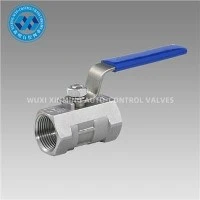
Threaded connections are common for smaller - sized valves and are easy to install. They're often used in residential and small - scale commercial applications. You can choose between NPT (National Pipe Thread) or BSP (British Standard Pipe) threads depending on your location and the existing pipeline system.
Flanged connections are great for larger valves and applications where a more secure and leak - proof connection is needed. Flanged valves are easier to maintain and replace compared to threaded ones. You can check out our Flange Ball Valve for more details on this type of end connection.
Welded connections provide a permanent and very strong joint. They're used in high - pressure and high - temperature applications where leakage is not an option.


Ball Type
The ball inside the valve also offers customization possibilities. There are full - port and reduced - port balls.
A full - port ball has an opening that's the same size as the pipeline. This allows for a smooth flow of fluid with minimal pressure drop. It's ideal for applications where a high flow rate is required, such as in oil and gas pipelines.
A reduced - port ball, on the other hand, has a smaller opening. While it restricts the flow to some extent, it can be more cost - effective and is suitable for applications where the flow rate is not the primary concern.
Actuator Options
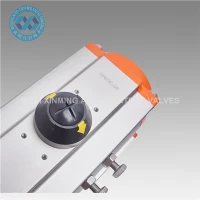
Since we're talking about pneumatic ball valves, the actuator is a key component. There are different types of pneumatic actuators available for customization.
Single - acting actuators use air pressure to open or close the valve and a spring to return it to the original position. They're often used in applications where power failure is a concern, as the spring will ensure the valve returns to a safe position.
Double - acting actuators use air pressure to both open and close the valve. They offer more precise control and are suitable for applications where frequent and rapid operation is required.
You can also choose the size and torque of the actuator based on the valve size and the operating conditions. A larger valve or one that operates under high pressure will require an actuator with higher torque.
Sealing Material
The sealing material of the valve is essential for preventing leaks. Different sealing materials have different properties and are suitable for different applications.
PTFE (Polytetrafluoroethylene) is a popular choice as it has excellent chemical resistance and low friction. It can handle a wide range of temperatures and is often used in the food and beverage industry as well as in chemical processing.
Nitrile rubber is another option. It's more flexible and has good resistance to oils and fuels. It's commonly used in automotive and industrial applications.
Viton is a high - performance elastomer that can withstand high temperatures and harsh chemicals. It's often used in aerospace and chemical industries.
Special Features
Apart from the basic customization options, there are also some special features you can add to your pneumatic ball valve.
For example, you can add a position indicator to the valve. This allows you to easily see the position of the valve (open or closed) without having to physically inspect it. It's very useful in large - scale industrial plants where there are many valves to monitor.
A lockout device can also be added. This prevents unauthorized operation of the valve and is important for safety reasons, especially in applications where accidental valve operation can lead to serious consequences.
If you need a valve for a specific flow control application, you can get a valve with a flow control insert. This allows you to precisely control the flow rate of the fluid passing through the valve.
Manual vs. Automated
In addition to the pneumatic actuation, you can also choose between manual and automated operation. Manual valves are simple and cost - effective. They're suitable for applications where the valve doesn't need to be operated frequently. You can take a look at our Manual 1pc Thread Ball Valve for an example of a manual option.
Automated valves, on the other hand, offer more convenience and can be integrated into a larger control system. They're ideal for applications where remote operation or precise control is required. Our Pneumatic Stainless Steel 3 Way Ball Valve is a great example of an automated valve with advanced features.
Three - Way vs. Two - Way Valves
You can also customize the valve based on the number of ports. Two - way valves are the most common and are used for simple on - off control. Three - way valves, however, offer more flexibility. They can be used to divert the flow of fluid, mix different fluids, or perform other complex flow control tasks.
So, as you can see, there are a ton of customization options available for pneumatic ball valves. Whether you're in a small - scale business or a large industrial operation, you can find the perfect valve to meet your specific needs.
If you're interested in purchasing a customized pneumatic ball valve or have any questions about the customization options, don't hesitate to reach out. We're here to help you find the best solution for your application.
References
- Valve Handbook by J. S. Pipelines
- Industrial Valves: Selection, Specification, and Installation by R. D. Smith