In the realm of industrial equipment, manual handwheels play a crucial role in various applications. As a reliable supplier of manual handwheels, I have witnessed firsthand the diverse uses and significance of these mechanical components. However, like any technology, manual handwheels are not without their drawbacks. In this blog post, I will delve into the backlash of a manual handwheel, exploring its causes, effects, and potential solutions.
Understanding Backlash in Manual Handwheels
Backlash, in the context of a manual handwheel, refers to the amount of play or free movement between the handwheel and the mechanism it controls. This play can occur due to several factors, including manufacturing tolerances, wear and tear, and improper installation. When there is backlash in a handwheel, it means that when the handwheel is turned, there is a small amount of movement before the controlled mechanism actually starts to move. This can lead to inaccuracies in positioning and control, which can be particularly problematic in applications where precision is crucial.
Causes of Backlash
Manufacturing Tolerances
One of the primary causes of backlash in manual handwheels is manufacturing tolerances. During the manufacturing process, it is impossible to achieve perfect precision in every component. There will always be some variation in the dimensions of the parts that make up the handwheel and the mechanism it controls. These variations can result in small gaps or clearances between the components, which contribute to backlash.
Wear and Tear
Over time, manual handwheels are subject to wear and tear due to regular use. The constant rotation and friction can cause the components to gradually wear down, increasing the clearances between them. This wear can be exacerbated by factors such as improper lubrication, high loads, and harsh operating environments. As the clearances increase, so does the amount of backlash in the handwheel.
Improper Installation
Another common cause of backlash is improper installation. If the handwheel is not installed correctly, it may not be properly aligned with the mechanism it controls. This can result in uneven forces being applied to the components, leading to increased wear and backlash. Additionally, if the fasteners used to secure the handwheel are not tightened properly, it can also cause the handwheel to become loose and develop backlash.
Effects of Backlash
Reduced Precision
The most significant effect of backlash in a manual handwheel is reduced precision. When there is backlash, it becomes difficult to accurately position the controlled mechanism. For example, in a machine tool application, the operator may turn the handwheel to move the cutting tool to a specific position, but due to the backlash, the tool may not move exactly as intended. This can result in errors in the machining process, leading to defective parts and increased production costs.
Increased Wear
Backlash can also lead to increased wear on the components of the handwheel and the mechanism it controls. The constant movement and impact caused by the backlash can cause the parts to wear out more quickly, reducing their lifespan. This can result in more frequent maintenance and replacement of the components, increasing the overall cost of ownership.
Safety Risks
In some applications, backlash in a manual handwheel can pose safety risks. For example, in a valve control system, if there is significant backlash in the handwheel, it may be difficult to accurately control the flow of fluid through the valve. This can lead to overpressure or underpressure in the system, which can cause damage to the equipment or even result in a safety hazard.
Solutions to Backlash
Precision Manufacturing
One way to reduce backlash in manual handwheels is to use precision manufacturing techniques. By using high-precision machining and quality control processes, manufacturers can minimize the variations in the dimensions of the components, reducing the clearances and backlash. Additionally, using high-quality materials can also help to improve the durability and performance of the handwheel, reducing the effects of wear and tear.
Regular Maintenance
Regular maintenance is essential for minimizing backlash in manual handwheels. This includes lubricating the components to reduce friction and wear, checking and tightening the fasteners to ensure proper alignment, and inspecting the handwheel for signs of damage or wear. By performing regular maintenance, operators can identify and address any issues with backlash before they become significant problems.
Backlash Compensation
In some cases, it may be possible to compensate for backlash in a manual handwheel using software or mechanical means. For example, in a CNC machine, the control system can be programmed to compensate for the backlash by adding a small amount of additional movement to the handwheel input. This can help to improve the accuracy of the positioning and control of the machine.
Our Product Offerings
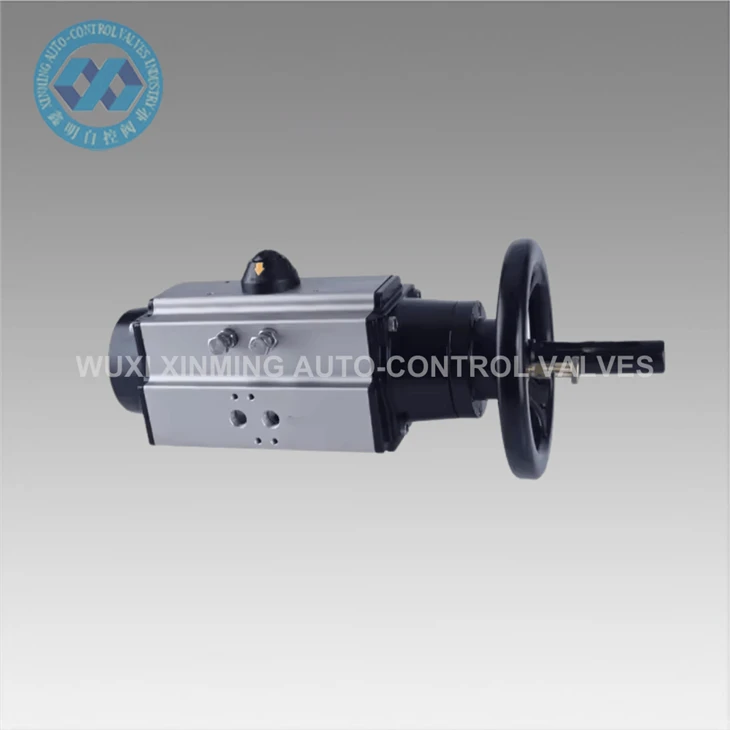
As a leading supplier of manual handwheels, we offer a wide range of products to meet the diverse needs of our customers. Our AT/GT Actuator Nodular Cast Iron Pneumatic Handwheel is designed for use in pneumatic actuator applications, providing reliable and precise control. Our High Efficiency Air Single And Double Acting Air Handwheel Pneumatic Actuator offers high efficiency and performance, making it suitable for a variety of industrial applications. And our Emergency Hand Wheel With Pneumatic Valve Actuator is designed for use in emergency situations, providing a reliable backup control option for pneumatic valves.

Conclusion
In conclusion, backlash in a manual handwheel can have significant effects on the precision, performance, and safety of the equipment it controls. By understanding the causes and effects of backlash, and implementing appropriate solutions, operators can minimize the impact of backlash and ensure the reliable operation of their equipment. As a supplier of manual handwheels, we are committed to providing high-quality products and solutions to help our customers overcome the challenges associated with backlash. If you are interested in learning more about our products or have any questions about manual handwheel backlash, please do not hesitate to contact us for further discussion and potential procurement.
References
- Smith, J. (2018). Handbook of Industrial Machinery Design. New York: McGraw-Hill.
- Jones, A. (2019). Precision Engineering: Principles and Applications. London: Elsevier.
- Brown, R. (2020). Maintenance and Troubleshooting of Industrial Equipment. Chicago: Wiley.