Hey there! As a supplier of Limit Switch Boxes, I often get asked about the difference between mechanical limit switch boxes and electronic ones. So, I thought I'd write this blog to break it down for you in a simple and easy-to-understand way.
What's a Limit Switch Box Anyway?
Before we dive into the differences, let's quickly go over what a limit switch box is. A limit switch box is a device that's used to detect the presence or absence of an object, or to measure the position, count, or travel of an object. It's commonly used in industrial applications to control machinery, automate processes, and ensure safety.
Mechanical Limit Switch Boxes
Let's start with mechanical limit switch boxes. These are the old-school type of limit switches that have been around for ages. They work on a pretty simple principle. Inside the box, there's a mechanical actuator, like a lever or a roller. When an object comes into contact with this actuator, it causes a mechanical movement. This movement then triggers the switch, which can either open or close an electrical circuit.
One of the biggest advantages of mechanical limit switch boxes is their durability. They're built tough and can withstand harsh environments, like extreme temperatures, vibrations, and dust. For example, in a manufacturing plant where there's a lot of heavy machinery moving around, mechanical limit switches can handle the rough conditions without breaking down easily.
Another plus is their simplicity. They don't rely on complex electronics, so they're relatively easy to install, maintain, and troubleshoot. If something goes wrong, you can usually figure out the problem just by looking at the mechanical parts. And if a part breaks, it's often easy and cheap to replace.
However, mechanical limit switch boxes also have some drawbacks. They have a limited number of operations. Over time, the mechanical parts can wear out, especially if they're used frequently. This can lead to a decrease in accuracy and reliability. Also, they're not as fast as electronic limit switches. The mechanical movement takes a bit of time, so they might not be suitable for applications that require high-speed switching.
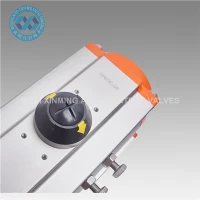
If you're interested in a mechanical limit switch box, you might want to check out our ISO 5211 Mechanical Limit Switch For Pneumatic Valves. It's a great option for pneumatic valve applications.
Electronic Limit Switch Boxes
Now, let's talk about electronic limit switch boxes. These are the more modern version of limit switches. Instead of relying on mechanical movement, they use electronic sensors to detect the presence or position of an object. There are different types of sensors used in electronic limit switches, such as inductive, capacitive, and photoelectric sensors.
One of the main advantages of electronic limit switch boxes is their speed. They can switch on and off much faster than mechanical limit switches. This makes them ideal for high-speed applications, like in conveyor systems where objects are moving quickly.


They also offer high accuracy. Electronic sensors can detect very small changes in position or presence, which is great for applications that require precise control. For example, in a robotic assembly line, electronic limit switches can ensure that the robot picks up and places parts in the exact right position.
Another benefit is their long lifespan. Since there are no mechanical parts to wear out, electronic limit switches can last a long time with proper maintenance. They're also less affected by vibrations and shocks compared to mechanical limit switches.
However, electronic limit switch boxes also have some downsides. They're more sensitive to environmental factors. Extreme temperatures, humidity, and electrical interference can affect their performance. They're also more complex and expensive than mechanical limit switches. If something goes wrong, it can be more difficult and costly to repair.
If you're looking for an electronic limit switch box, our APL210 Limit Switch Box is a top-notch choice. It offers high performance and reliability.
Comparison Table
To make it easier to compare, here's a quick table summarizing the differences between mechanical and electronic limit switch boxes:
| Feature | Mechanical Limit Switch Box | Electronic Limit Switch Box |
|---|---|---|
| Durability | High, can withstand harsh environments | More sensitive to environmental factors |
| Speed | Slower | Faster |
| Accuracy | Lower | Higher |
| Complexity | Simple | More complex |
| Cost | Cheaper | More expensive |
| Lifespan | Limited due to mechanical wear | Longer, no mechanical wear |
Which One Should You Choose?
So, which type of limit switch box is right for you? Well, it depends on your specific application. If you're working in a harsh environment where durability is key, and speed and accuracy aren't as critical, a mechanical limit switch box might be the way to go. On the other hand, if you need high-speed switching and precise control, an electronic limit switch box would be a better choice.
If you're dealing with potentially explosive environments, we also offer Limit Switch Box Explosion Proof options. These are designed to meet strict safety standards and prevent explosions.
Let's Talk
Whether you're still not sure which type of limit switch box is best for your needs, or you're ready to make a purchase, I'd love to hear from you. We have a team of experts who can help you choose the right product and answer any questions you might have. Just reach out to us, and we'll start the conversation.
References
- Industrial Automation Handbook
- Limit Switch Technology Guides
So, that's all about the difference between mechanical and electronic limit switch boxes. I hope this blog has been helpful. If you have any more questions, feel free to leave a comment below.