As a seasoned supplier of Vacuum Ball Valves, I often encounter inquiries regarding the torque requirements for opening and closing these essential components. Understanding the torque requirements is crucial for ensuring the proper functioning, longevity, and safety of vacuum ball valves in various industrial applications. In this blog post, I will delve into the factors that influence the torque requirements and provide insights to help you make informed decisions.
What is Torque in the Context of Vacuum Ball Valves?
Torque, in mechanical terms, is the measure of the force that can cause an object to rotate around an axis. In the case of vacuum ball valves, torque is the force needed to turn the valve stem, which in turn rotates the ball inside the valve to open or close the flow path. The torque requirement is a critical parameter as it determines the type of actuator (manual, pneumatic, electric, etc.) needed to operate the valve effectively.
Factors Influencing Torque Requirements
Valve Size
One of the primary factors affecting the torque requirement is the size of the valve. Larger valves generally require more torque to operate because they have a larger ball and sealing surface area. As the diameter of the valve increases, the force exerted on the ball by the pressure differential across the valve also increases. This means that more torque is needed to overcome the frictional forces between the ball and the seats and to turn the ball. For example, a 2-inch vacuum ball valve will typically require less torque than a 6-inch valve.


Pressure Differential
The pressure differential across the valve is another significant factor. When there is a high pressure on one side of the valve and a low pressure on the other, the force acting on the ball can be substantial. This force creates a frictional resistance between the ball and the seats, which must be overcome by the torque applied to the valve stem. In vacuum applications, the pressure differential can be significant, especially when the valve is used to isolate a high-vacuum chamber from a higher-pressure environment. For instance, if a valve is used to control the flow between a vacuum chamber at 1 torr and the atmosphere at 760 torr, the pressure differential is 759 torr, which can result in a relatively high torque requirement.
Sealing Material and Design
The type of sealing material used in the valve and its design also play a crucial role in determining the torque requirement. Different sealing materials have different coefficients of friction, which affect the frictional forces between the ball and the seats. For example, soft sealing materials like elastomers generally have a higher coefficient of friction than hard materials like metals. This means that valves with elastomeric seats may require more torque to operate compared to those with metal seats. Additionally, the design of the sealing surface, such as the shape and the preload on the seats, can also impact the torque requirement. A well-designed sealing system can minimize the frictional forces and reduce the torque needed to open and close the valve.
Temperature
Temperature can have a significant effect on the torque requirement of vacuum ball valves. As the temperature changes, the physical properties of the valve components, including the ball, seats, and stem, can change. For example, at high temperatures, the sealing material may expand, increasing the contact pressure between the ball and the seats and thus increasing the frictional forces. On the other hand, at low temperatures, the material may become more brittle, which can also affect the torque requirement. It is essential to consider the operating temperature range when selecting a valve and determining the appropriate torque for its operation.
Calculating Torque Requirements
Calculating the exact torque requirement for a vacuum ball valve can be complex, as it involves considering multiple factors. In many cases, valve manufacturers provide torque data based on standard operating conditions. These data can serve as a starting point for determining the torque requirement for a specific application. However, it is important to note that the actual torque requirement may vary depending on the specific operating conditions, such as the pressure differential, temperature, and fluid properties.
In some cases, it may be necessary to perform a detailed engineering analysis to calculate the torque requirement accurately. This analysis may involve using computational fluid dynamics (CFD) simulations to model the flow through the valve and determine the forces acting on the ball. Additionally, finite element analysis (FEA) can be used to analyze the mechanical stresses and deformations in the valve components and to predict the frictional forces.
Importance of Proper Torque
Using the correct torque to open and close a vacuum ball valve is essential for several reasons. Firstly, if the torque is too low, the valve may not open or close fully, which can lead to leakage and reduced flow control. This can be particularly problematic in vacuum applications, where even a small leak can compromise the integrity of the vacuum system. Secondly, if the torque is too high, it can cause excessive wear and tear on the valve components, leading to premature failure. This can result in costly repairs and downtime.
Selecting the Right Actuator
Based on the torque requirement, it is important to select the right actuator for the vacuum ball valve. There are several types of actuators available, including manual, pneumatic, electric, and hydraulic actuators.
- Manual Actuators: Manual actuators are the simplest and most cost-effective option for small valves with relatively low torque requirements. They are operated by hand using a handle or a wheel. However, they may not be suitable for large valves or applications where frequent operation is required.
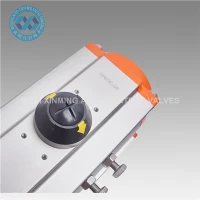
- Pneumatic Actuators: Pneumatic actuators use compressed air to generate the torque needed to operate the valve. They are fast, reliable, and can provide high torque output. Pneumatic actuators are commonly used in industrial applications where quick and precise valve operation is required. For example, our Pneumatic Actuated Three-Way Stainless Steel Ball Valve is designed for high-performance applications and can provide the necessary torque to operate the valve effectively.
- Electric Actuators: Electric actuators use an electric motor to generate the torque. They are suitable for applications where precise control and automation are required. Electric actuators can be programmed to open and close the valve at specific times or in response to certain signals.
- Hydraulic Actuators: Hydraulic actuators use hydraulic fluid to generate the torque. They can provide very high torque output and are suitable for large valves or applications where high force is required.
Our Product Range
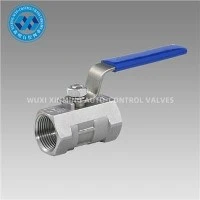
As a Vacuum Ball Valve supplier, we offer a wide range of valves to meet the diverse needs of our customers. Our 1PC Thread Ball Valve is a popular choice for small-scale applications due to its compact design and easy installation. It has a relatively low torque requirement, making it suitable for manual operation.
For more demanding applications, our Pneumatic Ball Valve For Precision Control And Industrial Flow Regulation is an excellent option. It is designed to provide precise control of the flow and can handle high-pressure differentials. The pneumatic actuator ensures fast and reliable operation, with the torque output carefully calibrated to meet the specific requirements of the valve.
Conclusion
Understanding the torque requirement for opening and closing a vacuum ball valve is essential for ensuring the proper functioning and longevity of the valve. By considering factors such as valve size, pressure differential, sealing material, and temperature, you can accurately determine the torque requirement and select the right actuator for your application. As a Vacuum Ball Valve supplier, we are committed to providing high-quality valves and technical support to help you make the best choices for your industrial needs. If you have any questions or need assistance in selecting the right valve or actuator, please feel free to contact us for procurement discussions.