Humidity is a crucial environmental factor that can significantly impact the performance and longevity of pneumatic actuators. As a pneumatic actuator supplier, we understand the importance of providing high - quality products that can withstand various environmental conditions. In this blog, we will explore in detail how humidity affects pneumatic actuators and what measures can be taken to mitigate these effects.
1. Basic Working Principle of Pneumatic Actuators
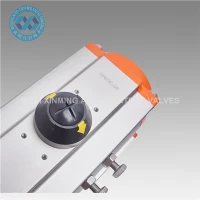
Before delving into the impact of humidity, it's essential to understand the basic working principle of pneumatic actuators. Pneumatic actuators use compressed air as the power source. When compressed air enters the actuator chamber, it exerts force on a piston or a diaphragm, causing mechanical movement. This movement is then used to control valves, dampers, or other industrial equipment. The types of pneumatic actuators vary, including Single/double Acting Pneumatic Actuator and Single Acting Pneumatic Valve Actuator(CE,ATEX,SIL3).
2. Effects of Humidity on Pneumatic Actuators
2.1 Corrosion
One of the most significant impacts of humidity on pneumatic actuators is corrosion. When the air contains a high level of moisture, it can react with the metal components of the actuator, such as pistons, cylinders, and valves. Corrosion can lead to the formation of rust on the surface of these components. Rust not only weakens the structural integrity of the metal but also increases the friction between moving parts. As a result, the actuator may experience reduced efficiency, slower response times, and even mechanical failures. For example, in a high - humidity environment like a coastal area or a chemical plant with steam, the corrosion process can be accelerated, shortening the service life of the actuator.


2.2 Contamination of Compressed Air
Humidity can also cause contamination of the compressed air used in pneumatic actuators. Moisture in the air can condense within the compressed air system, leading to the formation of water droplets. These water droplets can carry dirt, dust, and other contaminants present in the air. When the contaminated compressed air enters the actuator, it can clog the small orifices and passages within the actuator, affecting the proper flow of air and the smooth operation of the actuator. In addition, the presence of water can promote the growth of bacteria and fungi, which can further damage the internal components of the actuator.
2.3 Freezing
In cold environments, high humidity can pose another problem - freezing. If the temperature drops below the freezing point, the moisture in the compressed air can freeze inside the actuator. Frozen water can block the air passages, prevent the movement of the piston or diaphragm, and even cause damage to the actuator due to the expansion of ice. This is particularly a concern in outdoor applications or in industries where the actuator is exposed to low - temperature conditions, such as refrigeration plants or cold storage facilities.
2.4 Lubrication Issues
Most pneumatic actuators require proper lubrication to ensure smooth operation. However, humidity can affect the lubrication process. Excessive moisture can wash away the lubricating oil on the moving parts of the actuator, reducing the lubrication effect. At the same time, the water can react with the lubricant, causing it to break down and lose its lubricating properties. This can lead to increased wear and tear of the components, increased friction, and ultimately, a decrease in the performance of the actuator.
3. Detection and Monitoring of Humidity - Related Problems
3.1 Visual Inspection
Regular visual inspection is an important way to detect humidity - related problems in pneumatic actuators. Check for signs of rust, water stains, or other visible damage on the surface of the actuator. If there are signs of corrosion or water accumulation, it may indicate that the actuator is being affected by high humidity.
3.2 Performance Monitoring
Monitoring the performance of the actuator is also crucial. Pay attention to changes in the actuator's response time, operating speed, and force output. A decrease in performance may be a sign of humidity - related issues, such as corrosion or contamination.
3.3 Humidity Sensors
Installing humidity sensors in the compressed air system or the environment where the actuator is located can provide real - time information about the humidity level. This allows for timely detection of high - humidity conditions and enables proactive measures to be taken to prevent damage to the actuator.
4. Mitigation Measures
4.1 Air Drying
One of the most effective ways to reduce the impact of humidity on pneumatic actuators is to dry the compressed air. There are several methods of air drying, including refrigerated dryers, desiccant dryers, and membrane dryers. Refrigerated dryers cool the compressed air to remove moisture by condensation. Desiccant dryers use a desiccant material to adsorb moisture from the air. Membrane dryers separate moisture from the air based on the difference in the permeability of water vapor and air through a membrane. By using these air - drying methods, the moisture content in the compressed air can be significantly reduced, minimizing the risk of corrosion, contamination, and freezing.
4.2 Protective Coatings
Applying protective coatings to the metal components of the actuator can help prevent corrosion. Coatings such as epoxy, zinc, or powder coatings can provide a barrier between the metal and the humid environment, reducing the contact between the metal and moisture. This can extend the service life of the actuator and improve its resistance to humidity - related damage.
4.3 Sealing and Insulation
Proper sealing and insulation of the actuator can also help protect it from humidity. Use high - quality seals to prevent moisture from entering the actuator. In addition, insulating the actuator can help maintain a stable temperature inside the actuator, reducing the risk of condensation and freezing.
4.4 Regular Maintenance
Regular maintenance is essential for ensuring the proper operation of pneumatic actuators in a humid environment. This includes cleaning the actuator, replacing worn - out components, and checking the lubrication. By performing regular maintenance, any humidity - related problems can be detected and resolved in a timely manner, preventing further damage to the actuator.
5. Our Products and Solutions
As a pneumatic actuator supplier, we offer a wide range of high - quality pneumatic actuators, such as 90 Degree Auto - control Valve Pneumatic Rotary Actuators(CE), which are designed to withstand various environmental conditions, including high humidity. Our actuators are made of high - quality materials and are equipped with advanced air - drying and protection systems to ensure reliable performance.
If you are facing problems with humidity affecting your pneumatic actuators or are looking for reliable pneumatic actuator solutions, we are here to help. Our team of experts can provide you with professional advice and customized solutions based on your specific requirements. Contact us today to discuss your needs and explore how our products can meet your industrial automation needs.
References
- ISO 8573 - 1:2010, Compressed air -- Part 1: Contaminants and purity classes.
- ASHRAE Handbook - Fundamentals, American Society of Heating, Refrigerating and Air - Conditioning Engineers.
- Pneumatic Actuator Handbook, Various Industry Publications.