Hey there! As a supplier of sanitary ball valves, I often get asked about the flow coefficient of these valves. So, I thought I'd take a few minutes to break it down for you.
First off, let's talk about what a sanitary ball valve is. These valves are commonly used in industries where hygiene and cleanliness are top priorities, like food and beverage, pharmaceutical, and dairy. They're designed to handle fluids and gases in a way that minimizes the risk of contamination.
Now, the flow coefficient, also known as Cv, is a crucial factor when it comes to understanding how well a valve can control the flow of a fluid. In simple terms, the flow coefficient tells you how much fluid can pass through a valve at a given pressure drop. A higher Cv value means the valve can allow more fluid to flow through it.
The formula for calculating the flow coefficient is based on the amount of water (in US gallons per minute) that will flow through the valve with a pressure drop of 1 psi across the valve. It takes into account things like the valve's size, the type of fluid, and the pressure conditions.
So, why is the flow coefficient so important for sanitary ball valves? Well, in industries where precise control of fluid flow is essential, knowing the Cv value helps engineers and operators select the right valve for the job. For example, if you're dealing with a high - volume production line, you'll need a valve with a high Cv to ensure that the fluid can flow through quickly enough to keep up with the production rate.
Let's say you're in the food industry and you're filling bottles with a liquid product. You need to make sure that the valve can supply the right amount of liquid at the right time. If the Cv is too low, the filling process will be slow, and you might not be able to meet your production targets. On the other hand, if the Cv is too high, you could end up with over - filling and waste.
When it comes to our sanitary ball valves, we've done a lot of testing to determine the accurate flow coefficients for each of our products. We understand that different applications require different flow rates, so we offer a range of valves with varying Cv values.
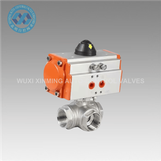
For instance, our Pneumatic 3PC Stainless Steel Ball Valve is designed to provide a reliable and efficient flow control solution. Its construction and design features are optimized to achieve a good balance between flow capacity and pressure drop, resulting in an appropriate Cv value for many common applications.
Another great option is our Three Stage Pneumatic Rotary Actuator Ball Valve Made in China. This valve is engineered to handle more complex flow control requirements. The three - stage pneumatic rotary actuator allows for precise adjustment of the valve opening, which in turn affects the flow coefficient. By being able to control the opening of the valve more accurately, you can fine - tune the flow rate to match your specific needs.
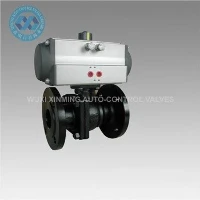
And then there's our Pneumatic Actuator WCB Flange Ball Valve. This valve is suitable for applications where a larger flow capacity is needed. The WCB flange construction provides a strong and durable connection, and the pneumatic actuator enables quick and easy operation. With a relatively high Cv value, it can handle significant volumes of fluid without causing excessive pressure drops.
It's also important to note that the flow coefficient can be affected by a few factors. One of these is the viscosity of the fluid. Thicker fluids, like honey or syrup, will have a harder time flowing through a valve compared to thinner fluids like water. So, when calculating the required Cv for a particular application, you need to take the fluid's viscosity into account.
The temperature of the fluid can also play a role. As the temperature changes, the fluid's properties, such as density and viscosity, can change as well. This can impact the flow rate through the valve and, consequently, the effective Cv value.
In addition, the valve's internal design, including the size and shape of the ball and the port, can influence the flow coefficient. A valve with a larger port diameter will generally have a higher Cv value because there's more space for the fluid to pass through.
As a supplier, we're always here to help you figure out the right valve for your application. We can provide you with detailed information about the flow coefficients of our products and assist you in making an informed decision. Whether you're starting a new project or looking to upgrade your existing system, we've got the expertise and the products to meet your needs.


If you're interested in learning more about our sanitary ball valves or have any questions regarding the flow coefficient and how it relates to your specific requirements, don't hesitate to reach out. We're eager to have a discussion with you and help you find the perfect valve solution. Our team is ready to work with you to ensure that your fluid flow control needs are met efficiently and effectively.
So, if you're in the market for a high - quality sanitary ball valve, give us a shout. We're confident that we can provide you with a valve that not only has the right flow coefficient but also meets the strictest hygiene and performance standards.
References
- "Valve Handbook" by Valve Manufacturers Association
- "Fluid Mechanics for Engineers" textbooks for general fluid flow and valve operation principles