In the modern era of industrial automation, smart factories are at the forefront of technological innovation, integrating advanced technologies to optimize production processes, enhance efficiency, and improve quality control. Among the many components that contribute to the seamless operation of a smart factory, limit switch boxes play a crucial role. As a supplier of limit switch boxes, I am well - versed in their significance and the impact they have on smart factory operations.
Understanding Limit Switch Boxes
A limit switch box is an electromechanical device that is used to detect the presence or absence of an object, typically by physically contacting it. It consists of a switch mechanism enclosed in a protective box. When an object comes into contact with the actuator of the limit switch, it causes the switch to change its state, either opening or closing an electrical circuit. This simple yet effective operation makes limit switch boxes an essential part of many industrial applications.
In a smart factory, limit switch boxes are used in a wide range of functions, from basic position sensing to complex safety and control systems. They are often employed to monitor the position of moving parts, such as conveyor belts, robotic arms, and machine tools. By providing accurate position feedback, limit switch boxes ensure that these components operate within their predefined limits, preventing collisions, over - travel, and other potentially dangerous situations.
The Role of Limit Switch Boxes in Smart Factory Automation
1. Position Sensing and Control
One of the primary roles of limit switch boxes in a smart factory is position sensing. In automated production lines, precise positioning of components is crucial for the quality and efficiency of the manufacturing process. For example, in a pick - and - place operation, a robotic arm needs to accurately pick up a part from one location and place it in another. Limit switch boxes can be used to define the exact positions where the arm should stop and start its movement.
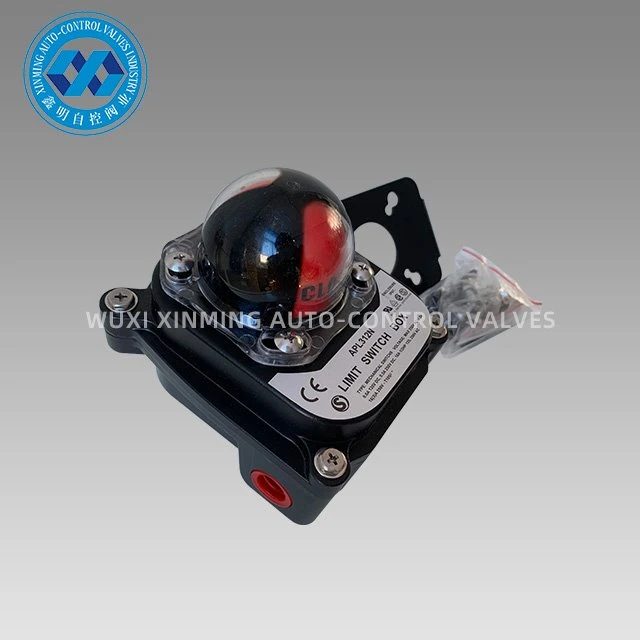

The APL312 Limit Switch Box is an excellent choice for such applications. It offers high precision and reliability, ensuring that the robotic arm moves to the correct positions every time. The switch can be easily adjusted to different positions, allowing for flexibility in the production process.
2. Safety Systems
Safety is a top priority in any smart factory. Limit switch boxes play a vital role in ensuring the safety of workers and equipment. They are commonly used in emergency stop systems, safety interlocks, and access control systems. For instance, in a machine with moving guards, limit switch boxes can be installed to detect when the guard is opened. When the guard is opened, the switch will send a signal to the control system, which will immediately stop the machine, preventing any potential accidents.
The APL210 Limit Switch Box is designed with safety in mind. It has a robust construction and is resistant to environmental factors such as dust, moisture, and vibration. This makes it suitable for use in harsh industrial environments where safety is of utmost importance.
3. Process Monitoring and Quality Control
Limit switch boxes can also be used for process monitoring and quality control in a smart factory. By monitoring the position and movement of components, they can detect any deviations from the normal production process. For example, in a packaging line, limit switch boxes can be used to ensure that each package is correctly positioned before it is sealed. If a package is not in the correct position, the switch can trigger an alarm or stop the line, allowing for corrective action to be taken.
The ISO 5211 Mechanical Limit Switch For Pneumatic Valves is ideal for monitoring the position of pneumatic valves. It provides reliable feedback on the valve's open and closed positions, ensuring that the pneumatic system operates correctly and that the quality of the final product is maintained.
Integration with Smart Factory Systems
In a smart factory, limit switch boxes are not standalone devices. They are integrated with other automation systems, such as programmable logic controllers (PLCs), human - machine interfaces (HMIs), and industrial networks. This integration allows for centralized control and monitoring of the entire production process.
Limit switch boxes can communicate with PLCs through various interfaces, such as digital inputs and outputs. The PLC can then use the information from the limit switch boxes to make decisions and control other components in the system. For example, if a limit switch box detects that a conveyor belt is overloaded, the PLC can adjust the speed of the belt or stop it altogether.
HMIs provide a user - friendly interface for operators to monitor and control the production process. Limit switch box status can be displayed on the HMI, allowing operators to quickly identify any issues and take appropriate action. Industrial networks, such as Ethernet and Profibus, enable the seamless transfer of data between limit switch boxes, PLCs, and other devices, ensuring real - time communication and control.
Advantages of Using Limit Switch Boxes in Smart Factories
1. High Reliability
Limit switch boxes are known for their high reliability. They have a simple mechanical design, which reduces the number of components that can fail. Additionally, they are often made of durable materials that can withstand harsh industrial environments. This means that they can operate continuously for long periods without requiring frequent maintenance or replacement.
2. Cost - Effectiveness
Compared to other types of sensors and control devices, limit switch boxes are relatively inexpensive. They offer a cost - effective solution for position sensing and control in smart factories. Their low cost makes them accessible to small and medium - sized enterprises, allowing them to benefit from automation technology without incurring high expenses.
3. Easy Installation and Maintenance
Limit switch boxes are easy to install and maintain. They can be easily mounted on machines and equipment using standard mounting brackets. Their simple design also makes troubleshooting and repair straightforward. In most cases, a faulty limit switch box can be replaced quickly, minimizing downtime in the production process.
Conclusion
In conclusion, limit switch boxes play a crucial role in the operation of smart factories. They are essential for position sensing, safety, process monitoring, and quality control. By providing accurate and reliable feedback, they ensure the smooth and efficient operation of automated production lines. As a supplier of limit switch boxes, I understand the importance of these devices in the modern industrial landscape.
If you are looking to enhance the efficiency, safety, and quality of your smart factory, I encourage you to consider incorporating our limit switch boxes into your automation systems. Whether you need a high - precision position sensor or a reliable safety interlock, we have the right solution for you. Contact us today to discuss your specific requirements and start the procurement process. We are committed to providing you with the best products and services to meet your needs.
References
- "Industrial Automation Handbook", Second Edition, by Peter Nachtwey.
- "Automation, Production Systems, and Computer - Integrated Manufacturing", Third Edition, by Mikell P. Groover.