A few years ago, a customer called us late on a Friday afternoon.
Their production line was scheduled to start up the following week, but several automated butterfly valves were failing during commissioning.
The valves were new.
The air supply system was working.
The control signals were correct.
After a brief investigation, we discovered the root cause wasn't the valve or the control system.
The actuators had simply been selected incorrectly.
Unfortunately, this isn't unusual.
At WUXI XINMING AUTO-CONTROL VALVES INDUSTRY CO., LTD., we've seen projects delayed, budgets exceeded, and maintenance costs increase because a 90 degree pneumatic actuator was chosen based on price or valve size alone.
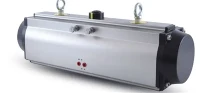
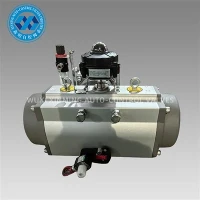
If you're planning to purchase a quarter-turn pneumatic actuator for a ball valve or butterfly valve, here are ten things worth checking before placing an order.
1. Don't Choose Based Only on Valve Size
This is probably the most common mistake.
Many buyers assume:
4-inch valve = small actuator
12-inch valve = large actuator
Real projects rarely work that way.
We once supplied actuators for two 8-inch valves.
One required nearly twice the torque of the other because of different valve designs and operating pressures.
Always check valve torque, not just valve diameter.
2. Know the Actual Torque Requirement
Before selecting an actuator, ask the valve manufacturer for:
Breakaway torque
Running torque
End-of-stroke torque
The highest value should usually be used as the basis for actuator sizing.
Ignoring this step is one of the fastest ways to create future operating problems.
3. Leave a Safety Margin
The torque listed in a catalogue is rarely the torque required after several years of service.
Over time:
Valve seats wear
Deposits accumulate
Friction increases
Process conditions change
One wastewater treatment customer learned this lesson the hard way when several valves became difficult to operate after only two years.
The original actuators had virtually no torque reserve.
4. Decide Whether You Need Fail-Safe Operation
One question we always ask customers is:
"What happens if compressed air is lost?"
The answer determines whether you need:
Single Acting (Spring Return)
The spring automatically moves the valve to a safe position.
Common in:
Emergency shutdown systems
Fire protection systems
Critical process lines
Double Acting
Air powers both opening and closing strokes.
Typically used when maximum torque and compact size are priorities.
5. Consider the Installation Environment
Not every actuator faces the same conditions.
I remember visiting a coastal facility where even stainless steel handrails showed signs of corrosion.
In contrast, another customer operated actuators indoors in a clean manufacturing environment with almost no corrosion risk.
The environment often determines the housing material and protective requirements.
6. Check Air Supply Quality
Many actuator failures are actually air system failures.
Dirty compressed air can cause:
Seal damage
Internal corrosion
Reduced service life
One customer replaced multiple actuators before discovering the real issue was water contamination in the airline.
After installing proper filtration and drying equipment, the problem disappeared.
7. Think About Cycle Frequency
A valve operating twice per week and a valve cycling every thirty seconds require different considerations.
High-cycle applications place greater demands on:
Bearings
Seals
Internal components
Always estimate how often the actuator will operate during its service life.
8. Verify ISO Mounting Compatibility
This sounds simple, but installation delays often happen because mounting interfaces were never checked.
Before ordering, confirm:
ISO 5211 flange size
Drive shaft dimensions
Valve stem connection
Accessory mounting requirements
A few minutes of verification can prevent costly site modifications.
9. Consider Future Maintenance
When selecting equipment, many people focus only on installation.
Maintenance teams often think differently.
Several years ago, we visited a plant where automated valves were installed on elevated pipe racks nearly six meters above ground.
Every maintenance task required scaffolding.
In locations like these, reliability and serviceability become extremely important.
10. Look Beyond Purchase Price
The cheapest actuator is not always the least expensive option.
When evaluating costs, consider:
Installation labor
Downtime risk
Spare parts availability
Maintenance requirements
Expected service life
One customer saved a small amount on actuator purchases but later spent far more on replacement labor and production interruptions.
The initial price difference quickly became irrelevant.
What Experienced Engineers Usually Do
After years of supporting valve automation projects, we've noticed that experienced engineers rarely start by comparing actuator brands.
Instead, they ask:
What torque is required?
What happens if air pressure fails?
What environment will the actuator face?
How often will it operate?
How difficult will maintenance be?
These questions usually determine the correct actuator long before the quotation stage.
Final Thoughts
Buying a 90 degree pneumatic actuator isn't simply a purchasing decision.
It's a reliability decision.
The right actuator should match the valve, the process, the environment, and the long-term operating requirements of the facility.
At WUXI XINMING AUTO-CONTROL VALVES INDUSTRY CO., LTD., we've found that the most successful projects aren't necessarily the ones with the most expensive actuators. They're the ones where the actuator was selected correctly from the start.
A little extra attention before purchase can save years of maintenance headaches later.