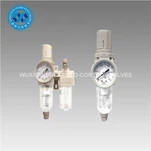
See if its performance is normal, then how should we check it? Let's take a look together.
1. The ball valve can be disassembled and disassembled only when the pressure before and after the ball valve is removed.
2. In the process of disassembling and re-assembling the ball valve, it is necessary to protect the sealing parts, especially the tools used for non-metal parts, such as O-rings and other parts.
3. When the ball valve body is reassembled, the bolts must be tightened symmetrically, gradually and evenly.
4. The cleaning agent should be compatible with rubber parts, plastic parts, metal parts and working medium (such as gas) in the ball valve. When the working medium is gas, gasoline (GB484-89) can be used to clean the metal parts. Clean non-metal parts with pure water or alcohol.
5. The decomposed individual parts can be cleaned by dipping. Metal parts with undecomposed non-metal parts can be scrubbed with a clean, fine silk cloth impregnated with cleaning agent (to prevent fibers from falling off and adhering to the parts). When cleaning, remove all grease, dirt, glue, dust, etc. adhering to the wall surface.
6. Non-metal parts should be taken out of the cleaning agent immediately after cleaning, and should not be soaked for a long time.
7. After cleaning, it needs to be assembled after the cleaning agent of the wall surface to be washed evaporates (can be wiped with a silk cloth not soaked in cleaning agent), but it should not be left for a long time, otherwise it will rust and be contaminated by dust.
8. New parts also need to be cleaned before assembling.
9. Use grease to lubricate. Grease should be compatible with ball valve metal materials, rubber parts, plastic parts and working medium. When the working medium is gas, for example, special 221 grease can be used. Apply a thin layer of grease on the surface of the seal installation groove, apply a thin layer of grease on the rubber seal, and apply a thin layer of grease on the sealing surface and friction surface of the valve stem.
10. Metal chips, fibers, grease (except those specified for use), dust, other impurities, foreign objects, etc., should not be allowed to contaminate, adhere or stay on the surface of the parts or enter the cavity during assembly.