That sharp hiss-thwack of a pneumatic actuator snapping a valve shut is the soundtrack of almost every industrial plant I visit. At WUXI XINMING AUTO-CONTROL VALVES INDUSTRY CO., LTD., we manufacture and commission thousands of these 90-degree (quarter-turn) pneumatic actuators every year for ball, butterfly, and plug valves.
But after years of troubleshooting on the shop floor and standing in muddy valve pits with our clients, I've learned that a 90-degree pneumatic actuator isn't just a "cheaper alternative to electric." It's a highly specific tool. Here is where they truly earn their keep in real-world industrial systems-and where they don't belong.
Water and Wastewater: Surviving the Mud and the Cold
If you walk through a municipal water plant or a sludge handling facility, you'll see 90-degree pneumatic actuators on large butterfly valves everywhere. Why? Because these environments are wet, dirty, and often unheated.
Last winter, I was commissioning a sludge dewatering line in northern China. The ambient temperature was -15°C. The client had originally spec'd electric actuators, but the gearboxes were freezing up with condensation, and the motors were struggling against the thick, viscous sludge. We swapped them out for our heavy-duty pneumatic rack-and-pinion actuators. Because pneumatics don't rely on electrical windings that can short out in high humidity, and because they deliver massive breakaway torque instantly, they chewed through the thick sludge without stalling. In wet, heavy-duty on/off applications, pneumatics are bulletproof.
Chemical Dosing Skids: Beating the "Explosion-Proof Tax"
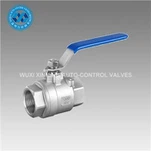
In chemical and pharmaceutical plants, space is tight, and safety is paramount. I frequently work on compact dosing skids packed with small stainless steel ball valves.
When a skid is located in a hazardous area (Zone 1 or Zone 2), using electric actuators means you have to buy expensive, heavy explosion-proof (ATEX/IECEx) models. You also have to pay an electrician to run thick, sealed electrical conduits to every single valve. On a recent solvent recovery skid, I advised the client to switch to 90-degree pneumatic actuators. Because they run on air, they are intrinsically safe. We simply ran a few small nylon air tubes through a single cable tray. The client saved thousands of dollars on both the actuator hardware and the electrical installation labor.
Oil, Gas, and Marine: The Non-Negotiable Fail-Safe
This is where the 90-degree spring-return pneumatic actuator is the undisputed king. In oil and gas, or on marine vessels, if the power goes out, the valve must go to a safe position (usually closed) to prevent a blowout or spill.
I still get chills thinking about an offshore platform audit I attended. The safety engineer was reviewing the Emergency Shutdown (ESD) system. To achieve a fail-safe with an electric actuator, you need a massive, expensive battery backup system that still only gives you a few cycles. With a spring-return pneumatic actuator, the mechanical energy is already stored inside the cylinder. When the air supply is intentionally vented during an emergency, the springs slam the valve shut in under two seconds, completely independent of the plant's electrical grid. For critical safety systems, there is no substitute.
An Engineer's Reality Check: When NOT to Use Them
I'll be honest: I will tell a client not to buy our pneumatic actuators if their site conditions don't support them.
If your plant's instrument air is dirty, wet, or lacks proper filtration, a pneumatic actuator will die a quick, painful death. Moisture in the air line will wash away the internal grease and rust the spring. Also, if your valve is located two kilometers away from the nearest air compressor, the pressure drop will make the actuator crawl. In those cases, I'll happily sell you an electric actuator instead.
Let's Match the Actuator to Your Reality
A 90-degree pneumatic actuator is a brilliant, robust solution for fast, safe, and reliable quarter-turn valve automation-provided it's applied correctly.
If you are designing a new valve system or retrofitting an old one, don't just guess based on a catalog. Send your P&ID, valve torque requirements, and site utility conditions to the engineering team at WUXI XINMING AUTO-CONTROL VALVES INDUSTRY CO., LTD. We'll give you a practical, field-tested recommendation that keeps your process running smoothly.
Contact Xinming today, and let's engineer your next valve automation project right the first time.