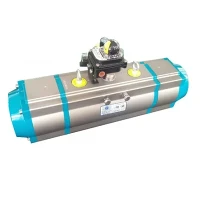
The pneumatic dust butterfly valve plays an important role in industrial production. To ensure its performance, the following maintenance work needs to be done:
1. Daily inspection
Appearance inspection: Check the appearance of the valve for damage and deformation every day, such as whether the valve body has cracks and whether the pneumatic actuator shell has bumps. Check whether the connecting bolts are loose. If they are loose, tighten them in time to prevent the bolts from falling off due to vibration during operation, which will affect the normal operation of the valve.
Seal inspection: Observe whether there is dust leakage at the valve seal. If dust leakage is found, it may be that the seal is worn or damaged, which needs to be handled in time. The integrity of the seal can be checked. If there is slight wear, the sealing effect can be improved by adjusting the compression of the seal; if the wear is serious, the seal needs to be replaced.
Action inspection: Manually operate the valve regularly to check whether the opening and closing action of the butterfly plate is flexible. If the butterfly plate is not rotating smoothly, it may be that there is dust accumulation or insufficient lubrication at the connection between the valve stem and the butterfly plate. At this time, the accumulated dust should be cleaned, and the relevant parts should be lubricated.
2. Regular maintenance
Cleaning work: Clean the valve thoroughly at regular intervals. Use compressed air or a brush to remove dust accumulation inside and outside the valve, especially on the butterfly plate, valve stem, and sealing surface, to ensure that dust does not affect the normal operation and sealing performance of the valve.
Lubrication maintenance: Lubricate the valve stem, moving parts of the pneumatic actuator, etc., in accordance with regulations. Choose a suitable lubricant, such as lithium-based grease, and apply or inject it regularly to ensure that these parts are flexible and reduce wear.
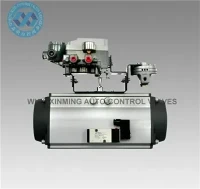
Pneumatic system maintenance: Check whether the air source pressure of the pneumatic actuator is stable and whether there is leakage in the pipeline. If the air source pressure is unstable, it may cause inaccurate valve movement, and the air source pressure needs to be adjusted in time; if a pipeline leak is found, the leak point should be found and repaired. At the same time, check and test control components such as solenoid valves to ensure their normal operation.
3. Performance testing and calibration
Perform performance tests on valves regularly, including switching time, sealing, opening adjustment, etc. Through testing, determine whether the valve can meet the requirements of the production process. If the valve performance is found to be degraded, such as long switching time, poor sealing, etc., it should be calibrated and adjusted in time, and repaired or replaced if necessary.
If you need a Pneumatic Dust Butterfly Valve, please contact XINMING AUTO_CONTROL VALVES INDUSTRY. We are a team with high professional quality and strong technical skills.