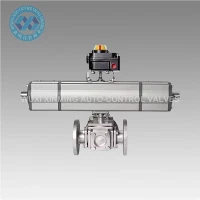
I still remember the smell of chlorine at a dairy processing plant I visited last year. The plant manager was pointing at a row of automated butterfly valves, frustrated. "We bought the stainless steel actuators like you suggested," he said, "but look at the accessories."
He was right. The 316 stainless steel cylinders were pristine, but the standard aluminum limit switch boxes and carbon steel mounting kits were covered in white corrosion. It was a harsh reminder that in aggressive environments, a half-measure is still a failure.
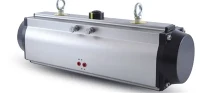
At WUXI XINMING AUTO-CONTROL VALVES INDUSTRY CO., LTD., we don't just build stainless steel pneumatic actuators; we deploy them in the toughest environments on earth. Over the years, our engineering team has learned that specifying a stainless steel actuator isn't just about picking a premium material-it's about matching the exact metallurgical properties to the specific threats of the food, chemical, and marine industries.
Here is a look at where these actuators truly earn their keep, based on what we see on the shop floor and out in the field.
1. The Food and Beverage Industry: Surviving the Daily Washdown
In food and pharma, hygiene isn't just a buzzword; it's the law. Facilities rely heavily on CIP (Clean-in-Place) and SIP (Steam-in-Place) systems. This means actuators are subjected to daily, high-pressure washdowns using 80°C (176°F) caustic soda and acidic sanitizers.
I once inspected an aluminum actuator pulled from a bakery line after just eight months. The caustic cleaners had literally eaten through the hard anodizing, leaving the aluminum pitted and flaking. In a food plant, flaking metal is a contamination risk.
The Xinming Solution: For these applications, we specify full 316L stainless steel actuators with a polished, Ra < 0.8µm finish. The smooth surface prevents bacteria from hiding in micro-crevices, and the 316L alloy easily shrugs off caustic and acidic washdowns. We also ensure the entire assembly-including the fasteners and nameplates-is stainless, so there are no weak points for rust to start.
2. The Chemical Processing Industry: Battling Invisible Vapors
In chemical plants, the threat isn't always a liquid spill; sometimes, it's the air itself. Acidic or alkaline vapors can silently degrade standard epoxy-coated carbon steel actuators. Once the coating gets a microscopic scratch during installation, the vapors attack the exposed metal, causing the end caps to swell and seize the pinion.
During a retrofit at a fertilizer plant, we replaced a batch of seized carbon steel actuators that were controlling sulfuric acid lines. The new 316 stainless steel actuators we installed didn't just resist the occasional splash; they completely ignored the ambient acid fog that hung over the pipe rack.
The Xinming Solution: For chemical processing, we focus on the internals just as much as the externals. We use PTFE-coated stainless steel springs and ensure all dynamic seals are chemically compatible (like FKM/Viton) to prevent the process vapors from degrading the actuator from the inside out.
3. The Marine and Offshore Industry: The Ultimate Chloride Test
If you want to see what salt does to metal, spend a week on an offshore oil rig or a shipboard ballast water system. The combination of constant salt spray, high humidity, UV exposure, and heavy vibration is the ultimate torture test for valve automation.
We supplied actuators for a coastal desalination plant where the intake valves were constantly blasted by sea mist. Standard 304 stainless steel showed surface tea-staining within a year.
The Xinming Solution: For marine environments, we strictly use 316L stainless steel for the main body and hardware. But we also upgrade the accessories. We pair the actuators with IP68-rated stainless steel or heavy-duty polyamide limit switch boxes, and use marine-grade epoxy on the air supply ports to prevent salt ingress into the cylinder.
An Engineer's Honest Advice: Don't Over-Spec
Here is the truth: stainless steel actuators cost more. As a manufacturer, I could tell you that you need them for every project. But I won't.
If your ball valve is controlling clean water in a dry, indoor HVAC plant, a stainless steel actuator is a waste of your capital. We will always recommend our heavy-duty, hard-anodized aluminum actuators for those standard applications to protect your ROI. But if you are in food, chemical, or marine, the premium for stainless steel pays for itself by preventing just one unplanned shutdown.
Let's Engineer Your Solution
Choosing the right actuator material is about protecting your process. If you are automating valves in a harsh environment, don't just guess.
Send your process details-medium type, washdown frequency, or ambient chloride exposure-to the engineering team at WUXI XINMING AUTO-CONTROL VALVES INDUSTRY CO., LTD. We will provide a free, honest material assessment and a customized stainless steel pneumatic actuator solution designed to survive your specific reality.
Contact Xinming today, and let's keep your valves moving smoothly, no matter what the environment throws at them.