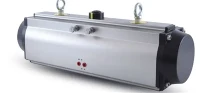
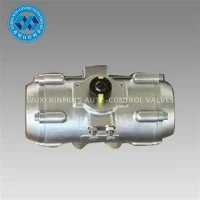
A few months ago, a customer from Southeast Asia sent us a valve automation inquiry.
The project looked straightforward at first: dozens of automated ball valves, similar operating pressure, similar torque requirements, and almost identical actuator sizes.
Then came a question that stopped the discussion.
"Should we use stainless steel actuators or aluminum actuators?"
Many people expect a simple answer.
In reality, this is one of the most misunderstood decisions in valve automation.
After working with pneumatic actuators for years at WUXI XINMING AUTO-CONTROL VALVES INDUSTRY CO., LTD., we've learned that choosing the wrong housing material can create more problems than choosing the wrong brand.
The Day a Customer Almost Overspent on Stainless Steel
I still remember a project involving a food processing facility.
The purchasing department had already decided to specify stainless steel pneumatic actuators for every automated valve in the plant.
Their logic seemed reasonable.
Stainless steel resists corrosion.
More corrosion resistance must be better.
Right?
When we reviewed the layout drawings, something caught our attention.
Almost 90% of the valves were installed indoors.
The production area was temperature-controlled.
No aggressive chemicals.
No salt spray.
No coastal exposure.
No washdown procedures.
In other words, there was very little risk of serious corrosion.
During a video meeting, we asked a simple question:
"Why pay for corrosion resistance you may never need?"
After discussing the operating environment in detail, the customer decided to use aluminum pneumatic actuators throughout most of the facility and reserve stainless steel units only for cleaning and sanitation zones.
The result was a noticeable reduction in equipment costs without sacrificing reliability.
More importantly, maintenance technicians later told us the lighter aluminum actuators were much easier to install on elevated piping.
Why Aluminum Actuators Are So Popular
Walk through almost any water treatment plant, HVAC facility, or general manufacturing site and you'll probably see aluminum pneumatic actuators everywhere.
There is a reason for that.
Not because they are cheap.
Because they are practical.
In our workshop, when technicians unpack aluminum rack and pinion actuators, one of the first things they notice is the weight difference.
When you're standing on a maintenance platform three meters above the ground trying to replace an actuator, every kilogram matters.
Lighter equipment means:
- Faster installation
- Easier maintenance
- Lower structural load
- Reduced transportation costs
These benefits rarely appear in catalog specifications, but they become very obvious in real projects.
When Stainless Steel Becomes the Better Choice
That doesn't mean aluminum is always the answer.
Several years ago, we supplied actuators for a coastal desalination facility.
The site was less than a kilometer from the ocean.
During our visit, we noticed a thin layer of salt residue on exposed metal surfaces throughout the plant.
Handrails.
Cable trays.
Pipe supports.
Everything showed signs of corrosion.
Under those conditions, aluminum was no longer the best option.
The customer selected stainless steel pneumatic actuators for critical valve positions.
The decision increased the initial investment, but it significantly reduced the risk of corrosion-related maintenance in the future.
In environments like these, stainless steel is not a luxury.
It is often the safer long-term investment.
The Biggest Misconception We Encounter
Many buyers assume stainless steel automatically means higher quality.
That's not always true.
Material selection should be based on application requirements.
Not marketing language.
An aluminum pneumatic actuator operating in a clean indoor environment can easily provide years of reliable service.
A stainless steel actuator installed in the same location may offer little additional benefit despite costing more.
The goal is not to buy the strongest material available.
The goal is to buy the most suitable material for the job.
What We Usually Ask Before Recommending Either Option
Whenever a customer contacts us, we rarely begin with actuator models.
Instead, we ask questions such as:
Where is the valve installed?
Is the equipment indoors or outdoors?
Is there chemical exposure?
How often is the valve cycled?
How accessible is the installation point?
Can maintenance personnel easily reach the actuator?
The answers often determine the material choice long before we discuss torque or actuator size.
Final Thoughts
After years of supporting valve automation projects, we've found that the best actuator decisions are usually made after understanding the environment, not after comparing specification sheets.
If your application involves general industrial service, water treatment, HVAC systems, or indoor manufacturing facilities, aluminum pneumatic actuators often provide the best balance of performance, weight, and cost.
If your valves operate in offshore locations, chemical plants, coastal facilities, or highly corrosive environments, stainless steel may be the smarter long-term solution.
In the end, the right actuator material isn't the one with the highest specification.
It's the one that makes sense when you're standing next to the valve years after installation and it's still doing its job reliably.