In valve automation projects, material selection is often treated as a secondary detail. Many engineers focus first on torque, pressure, or valve type - and only later consider the actuator housing material.
However, in real industrial environments, the housing material can directly influence long-term reliability, maintenance frequency, and even system downtime risk.
At WUXI XINMING AUTO-CONTROL VALVES INDUSTRY CO., LTD., we have seen this clearly in different field applications, especially in water treatment plants, HVAC systems, and outdoor valve installations where environmental exposure becomes a long-term factor rather than a design assumption.
Where aluminum pneumatic actuators make the most sense
Aluminum pneumatic actuators are widely used in industrial automation mainly because they offer a practical balance between strength, weight, and corrosion resistance.
In many projects, especially export installations, customers are not looking for the "strongest possible material", but the most practical and stable solution over years of operation.
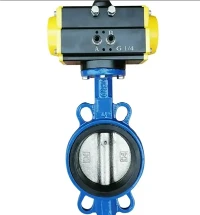
For example, in one of our water treatment-related valve automation projects, the client initially compared stainless steel and aluminum actuator options for butterfly valve control in outdoor pumping stations. The final decision was not driven by cost alone, but by installation practicality and long-term handling considerations during maintenance cycles.
Key reason 1: Lightweight but structurally reliable
One of the most noticeable advantages of aluminum pneumatic actuators is weight.
Compared to stainless steel housings, aluminum actuators are significantly lighter. This may sound like a simple detail, but in real installation work, it affects:
- Ease of valve mounting on pipelines
- Load on supporting brackets
- Handling during maintenance or replacement
- Installation speed in field conditions
For large valve assemblies, especially overhead or elevated piping systems, reducing actuator weight makes installation noticeably safer and more efficient.
Key reason 2: Corrosion resistance through surface treatment
Modern aluminum actuators are typically manufactured using AL6005-T5 or similar alloys, followed by anodized surface treatment.
In practical terms, this provides:
- Good resistance to atmospheric corrosion
- Stable performance in humid environments
- Suitable operation in non-extreme coastal conditions
- Long-term surface durability
We have observed that in many water treatment and HVAC installations, anodized aluminum housings maintain stable appearance and performance even after years of continuous outdoor exposure.
Of course, in highly aggressive chemical or offshore environments, stainless steel may still be the better choice - but for general industrial automation, aluminum is often more than sufficient.
Key reason 3: Ideal balance between cost and performance
In industrial procurement, "cost" is never just the purchase price. It includes:
- Installation cost
- Maintenance effort
- Replacement difficulty
- System downtime risk
Aluminum pneumatic actuators usually offer a better overall balance in standard automation systems where extreme corrosion resistance is not required.
This is why they are commonly selected in:
- Water treatment systems
- HVAC control systems
- General industrial valve automation
- Medium-duty production lines
Key reason 4: Suitable for rack and pinion design
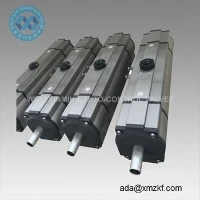
Most aluminum pneumatic actuators are designed around the rack and pinion mechanism, which benefits directly from a lightweight and rigid housing structure.
In real operation, this combination provides:
- Stable torque output
- Smooth 90° or 180° rotation
- Reliable repeatability in cycling applications
- Easy integration with ISO 5211 valve mounting standards
From our manufacturing experience, this is one of the reasons aluminum remains the most widely used actuator housing material in general industrial automation.
A real-world observation from field use
In one retrofit project for a water distribution system, the customer originally used mixed actuator materials across different valve zones due to historical procurement differences.
During maintenance planning, technicians reported a clear difference:
- Aluminum actuators were easier and faster to handle during replacement
- Heavier stainless steel units required additional support during installation
- Standardization became difficult due to weight and handling differences
Eventually, the system was gradually standardized toward aluminum housing actuators for non-critical zones, simply because it reduced long-term operational complexity.
This is not a theoretical advantage - it becomes visible in maintenance records and field work efficiency.
When aluminum may not be the best choice
To keep this honest and practical, aluminum pneumatic actuators are not suitable for every condition.
Engineers typically consider alternatives when:
- The environment is highly corrosive
- Mechanical impact risk is high
- Extreme temperature or pressure conditions are involved
- Long-term heavy-duty safety-critical applications are required
In these cases, stainless steel actuators or specially coated solutions are usually more appropriate.
How we approach material selection at WUXI XINMING
At WUXI XINMING AUTO-CONTROL VALVES INDUSTRY CO., LTD., we do not position aluminum pneumatic actuators as a universal solution.
Instead, we evaluate:
- Operating environment
- Valve torque requirements
- Maintenance accessibility
- Installation constraints
- Long-term operating cycle expectations
In many real projects, aluminum actuators are selected not because they are "cheaper", but because they are more practical for the system lifecycle.
Conclusion
Choosing an aluminum pneumatic actuator is not just a material decision - it is a system-level decision about weight, corrosion resistance, maintenance efficiency, and long-term operational stability.
For most general industrial valve automation applications, aluminum offers a well-balanced solution that combines durability, practicality, and ease of installation.
However, like all engineering decisions, the correct choice always depends on real working conditions rather than specifications alone.