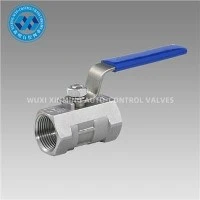
Are there any automated control options for a thread ball valve?
In the industrial field, thread ball valves are widely used due to their simple structure, reliable sealing performance, and convenient operation. As technology advances, the demand for automated control of these valves has also increased. This blog will explore the automated control options available for thread ball valves, providing valuable insights for those in need.
The Need for Automated Control of Thread Ball Valves
In modern industrial processes, precision and efficiency are crucial. Manual operation of thread ball valves can be time - consuming and may not meet the requirements of continuous and accurate control. Automated control can help achieve better flow regulation, reduce human error, and enhance overall system performance. For example, in chemical plants, where precise control of fluid flow is necessary for safety and product quality, automated thread ball valves can play a vital role.
Available Automated Control Options
Electric Actuators
Electric actuators are a popular choice for automating thread ball valves. They work by converting electrical energy into mechanical motion. Electric actuators offer several advantages. Firstly, they are relatively easy to install and integrate into existing control systems. Most electric actuators can be controlled using standard electrical signals such as 4 - 20 mA or 0 - 10 V, which are commonly used in industrial automation.
Secondly, electric actuators provide precise control. They can be programmed to open or close the valve at specific angles, allowing for accurate flow regulation. For instance, in a water treatment plant, an electric - actuated thread ball valve can be adjusted to maintain a constant flow rate of water through different treatment stages.
However, electric actuators also have some limitations. They may require a continuous power supply, and in case of power failure, the valve may lose its control function. Additionally, the initial cost of electric actuators can be relatively high compared to some other options.
Pneumatic Actuators
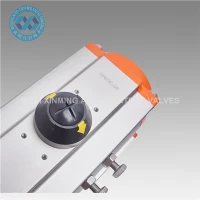
Pneumatic actuators are another common option for automating thread ball valves. These actuators use compressed air to generate mechanical force and operate the valve. Pneumatic actuators are known for their fast operation speed. They can open or close the valve quickly, which is beneficial in applications where rapid response is required, such as in emergency shutdown systems.
Pneumatic actuators are also relatively simple in structure and have a long service life. They are suitable for use in harsh industrial environments as they are less affected by dust, moisture, and temperature variations compared to electric actuators. For example, in a mining operation, a pneumatic - actuated thread ball valve can be used to control the flow of slurry, and its robust design can withstand the abrasive nature of the slurry.
On the downside, pneumatic actuators require a compressed air supply system, which adds to the overall cost and complexity of the installation. Moreover, the control precision of pneumatic actuators may be slightly lower than that of electric actuators, especially for applications that require very fine - tuned flow control.

Hydraulic Actuators
Hydraulic actuators use hydraulic fluid to generate force and operate the thread ball valve. Hydraulic actuators can generate a large amount of force, making them suitable for large - sized thread ball valves or applications where high - torque operation is required. For example, in heavy - duty industrial pipelines, hydraulic - actuated thread ball valves can handle high - pressure and high - flow conditions.
Hydraulic actuators offer excellent control stability. They can maintain a constant position under high loads, ensuring reliable valve operation. However, hydraulic systems are relatively complex and require careful maintenance. Leakage of hydraulic fluid can also cause environmental pollution and safety hazards.
Our Product Offerings
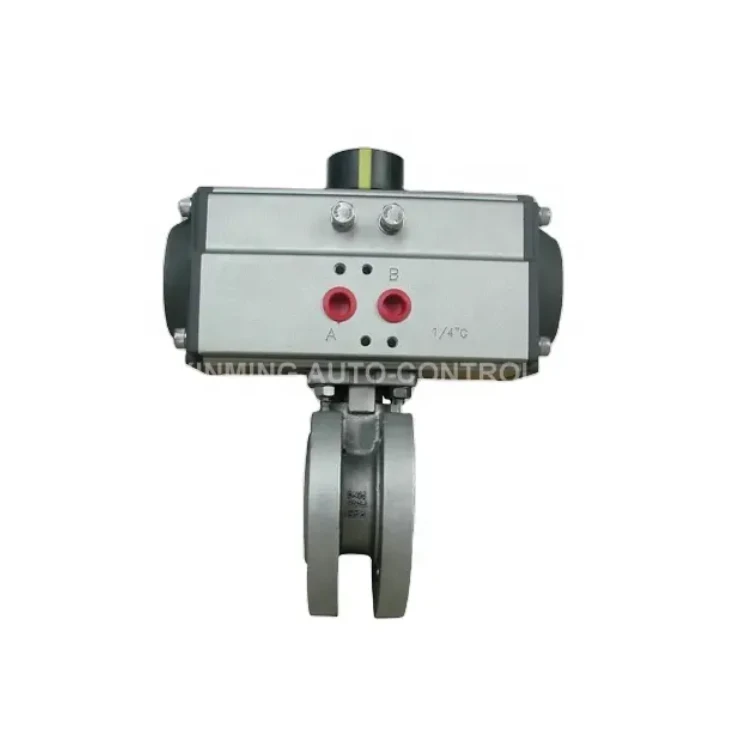
As a thread ball valve supplier, we offer a wide range of thread ball valves with different automated control options. For example, our Pneumatic Actuator Wafer Thin Ball Valve combines the advantages of a wafer - thin design and pneumatic actuation. This valve is suitable for applications where space is limited and fast operation is required.
Our Sanitary Three Way Clamp Ball Valve With Pneumatic Actuator is designed for the food, beverage, and pharmaceutical industries. The sanitary design ensures that the valve meets strict hygiene standards, and the pneumatic actuator provides reliable and precise control.
In addition, we also have Pneumatic Ball Valve products that are available in various sizes and pressure ratings. These valves are widely used in different industrial applications and can be customized according to specific customer requirements.
Contact Us for Purchase and Negotiation
If you are interested in our thread ball valves with automated control options, we welcome you to contact us for further discussion. Our professional sales team will provide you with detailed product information, technical support, and competitive pricing. We are committed to meeting your specific needs and providing high - quality products and services. Whether you are looking for a small - scale valve for a laboratory experiment or a large - scale valve for an industrial project, we have the right solution for you.
References
- [1] Smith, J. (2018). Industrial Valve Handbook. New York: Industrial Press.
- [2] Brown, A. (2019). Automation in Fluid Control Systems. London: Elsevier.
- [3] Johnson, R. (2020). Actuator Technology for Valves. Tokyo: Springer.