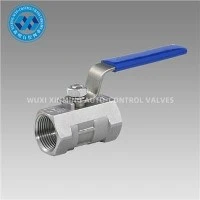
Are there any special installation requirements for a thread ball valve?
As a supplier of thread ball valves, I often get asked about the special installation requirements for these essential components in fluid control systems. Thread ball valves are widely used in various industries due to their reliability, durability, and ease of operation. In this blog post, I will discuss the key installation considerations and special requirements for thread ball valves.
General Installation Guidelines
Before delving into the special requirements, it's important to understand the general installation guidelines for thread ball valves. First and foremost, ensure that the valve is suitable for the intended application. Consider factors such as the type of fluid (liquid or gas), pressure, temperature, and flow rate. Select a valve with the appropriate material, size, and pressure rating to ensure optimal performance and safety.
When installing a thread ball valve, it's crucial to follow the manufacturer's instructions carefully. These instructions typically include details on valve orientation, torque specifications, and sealing requirements. Improper installation can lead to leaks, reduced performance, and even valve failure.
Special Installation Requirements
Pipe Preparation
One of the special installation requirements for thread ball valves is proper pipe preparation. The threads on both the valve and the pipe must be clean, free of debris, and in good condition. Any dirt, rust, or burrs can prevent a proper seal and lead to leaks. Use a pipe reamer to remove any burrs from the pipe ends and a wire brush to clean the threads.
In addition to cleaning the threads, it's important to apply a suitable thread sealant. Thread sealants help to create a tight seal between the valve and the pipe, preventing leaks. There are several types of thread sealants available, including Teflon tape, pipe dope, and anaerobic sealants. Choose a sealant that is compatible with the fluid being handled and the operating conditions.
Valve Orientation
Another important consideration is valve orientation. Thread ball valves are typically designed to be installed in a specific orientation to ensure proper operation. In most cases, the valve should be installed with the stem in a vertical position. This allows for easy operation and prevents any trapped air or fluid from interfering with the valve's performance.
However, some applications may require a different orientation. For example, in systems where space is limited, the valve may need to be installed horizontally. In such cases, it's important to ensure that the valve is properly supported and that the stem is still accessible for operation.
Torque Specification
Proper torque is essential for a secure and leak-free installation. Over-tightening the valve can damage the threads and cause leaks, while under-tightening can result in a loose connection. Refer to the manufacturer's instructions for the recommended torque specifications for the specific valve being installed.
Use a torque wrench to apply the correct amount of torque. Start by hand-tightening the valve until it is snug, and then use the torque wrench to apply the remaining torque. Be careful not to exceed the recommended torque, as this can cause damage to the valve or the pipe.
Support and Alignment
Thread ball valves should be properly supported and aligned to prevent stress on the valve and the pipe. Inadequate support can cause the valve to move or vibrate, leading to leaks or premature failure. Use pipe clamps or brackets to secure the valve and the pipe in place.
Ensure that the valve is aligned with the pipe to prevent any misalignment. Misalignment can cause the valve to bind or leak, reducing its performance. Use a level or a straightedge to check the alignment and make any necessary adjustments.
Applications and Compatibility
Thread ball valves are used in a wide range of applications, including water treatment, chemical processing, oil and gas, and HVAC systems. Depending on the application, there may be additional special installation requirements.
For example, in applications where the fluid is corrosive or abrasive, it's important to choose a valve made of a suitable material. Stainless steel valves are often used in corrosive environments, while valves with ceramic balls may be used in abrasive applications.
In some applications, such as those involving high-pressure or high-temperature fluids, additional safety measures may be required. For instance, in high-pressure systems, a pressure relief valve may be installed in parallel with the thread ball valve to prevent overpressure.
Our Product Range
As a leading supplier of thread ball valves, we offer a wide range of products to meet the diverse needs of our customers. Our product range includes Pneumatic Actuated Three-Way Stainless Steel Ball Valve, Pneumatic Ball Valve, and Pneumatic Stainless Steel 3 Way Ball Valve. These valves are designed and manufactured to the highest quality standards, ensuring reliable performance and long service life.
Conclusion
In conclusion, while thread ball valves are relatively easy to install, there are several special installation requirements that must be followed to ensure a proper and leak-free installation. Proper pipe preparation, valve orientation, torque specification, support, and alignment are all crucial factors that can affect the performance and longevity of the valve.


If you have any questions or need further assistance with the installation of thread ball valves, please don't hesitate to contact us. Our team of experts is always ready to provide you with the support and guidance you need. Whether you are a contractor, engineer, or end-user, we can help you find the right valve for your application and ensure a successful installation.
References
- Valve Handbook, Valve Manufacturers Association
- ASME B16.34 - Valves - Flanged, Threaded, and Welding End