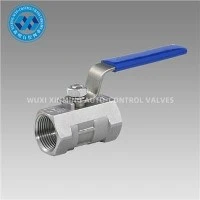
Hey there! I'm a supplier of WCB ball valves, and today I want to dig into a question that often pops up: Are WCB ball valves suitable for high-viscosity fluids?
Let's start by getting a handle on what WCB ball valves are. WCB is a type of carbon steel material commonly used in valve manufacturing. Ball valves, as the name suggests, use a ball with a hole in the middle to control the flow of fluids. When the ball is rotated, the hole aligns with the pipe, allowing the fluid to pass through; when it's turned 90 degrees, the flow is stopped.
Now, high-viscosity fluids are a different beast. Viscosity refers to a fluid's resistance to flow. Think of honey compared to water. Honey is thick and flows slowly, so it has a high viscosity, while water flows easily and has a low viscosity.
So, are WCB ball valves up to the task of handling high-viscosity fluids? Well, it depends on a few factors.
Advantages of Using WCB Ball Valves for High-Viscosity Fluids
One of the main advantages of WCB ball valves is their simple design. The ball and seat arrangement provides a tight seal, which can be crucial when dealing with high-viscosity fluids. These fluids tend to stick to surfaces, and a good seal helps prevent leakage.
Another plus is that WCB ball valves can be operated relatively easily. Whether it's a manual valve or one with an actuator, opening and closing the valve to control the flow of high-viscosity fluids is straightforward. For example, if you're using a Three Way Stainless Steel Ball Valve With Pneumatic Actuator, the pneumatic actuator can quickly and precisely open or close the valve, even when dealing with thick fluids.
WCB is also a durable material. It can withstand the pressure and abrasion that high-viscosity fluids might cause. Since these fluids are thick and can be more abrasive than low-viscosity ones, having a valve made of a strong material like WCB can ensure a longer service life.
Challenges of Using WCB Ball Valves for High-Viscosity Fluids
However, there are some challenges as well. One of the biggest issues is the potential for blockage. High-viscosity fluids are more likely to get stuck in the valve, especially in the small gaps between the ball and the seat. This can lead to reduced flow rates and even complete blockage of the valve.
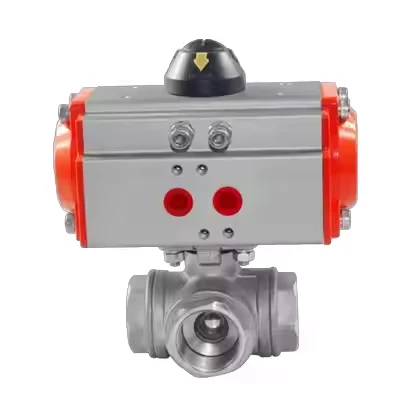
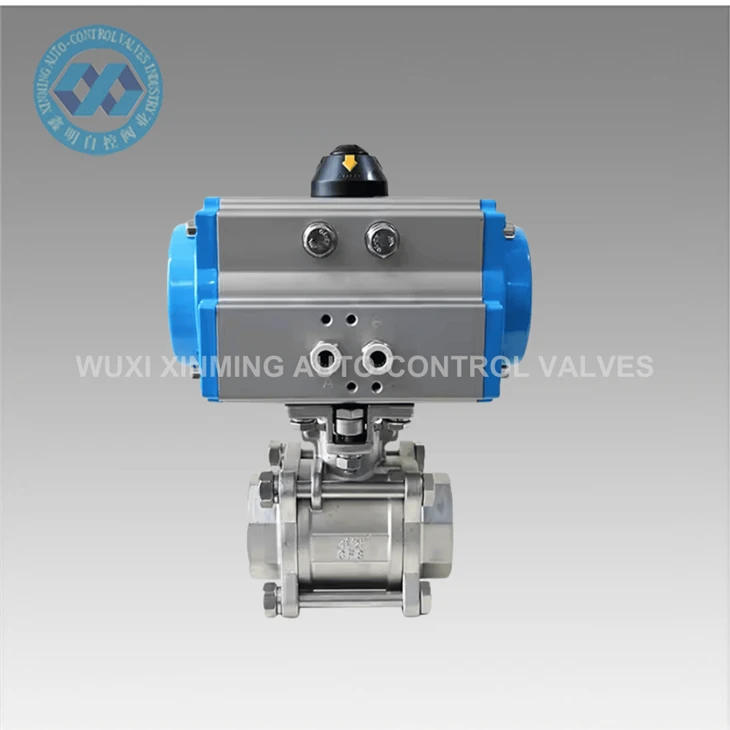
The torque required to operate the valve can also be a problem. Since high-viscosity fluids resist flow, more force is needed to turn the ball in the valve. If you're using a manual valve, this can be physically demanding for the operator. And even with an actuator, like in a Pneumatic Ball Valve For High Temperature Media, the actuator might need to be more powerful to handle the increased torque.
Another consideration is the cleaning process. Once high-viscosity fluids have been flowing through the valve, they can leave residue behind. Cleaning the valve thoroughly to prevent buildup and ensure proper operation can be time-consuming and difficult.
Mitigating the Challenges
So, how can we make WCB ball valves work better with high-viscosity fluids?
First, proper valve sizing is crucial. A valve that is too small can increase the chances of blockage, while a valve that is too large might not provide an efficient flow control. By carefully calculating the flow rate and pressure requirements of the high-viscosity fluid, we can select the right size of WCB ball valve.
Using a valve with a full-bore design can also help. A full-bore ball valve has a larger opening in the ball, which reduces the chances of blockage by allowing the high-viscosity fluid to flow more freely.
For the torque issue, we can choose a more powerful actuator. For example, a 180 Degree Pneumatic Actuator 3 Way Ball Valve, 3 Way Ball Valve With Pneumatic Actuator can provide the necessary force to open and close the valve smoothly, even when dealing with thick fluids.
Regular maintenance is also essential. This includes cleaning the valve at appropriate intervals to remove any built-up residue and checking for any signs of wear or damage.
Real-World Applications
There are many real-world applications where WCB ball valves are used with high-viscosity fluids. In the oil and gas industry, for example, crude oil is a high-viscosity fluid. WCB ball valves are used to control the flow of crude oil in pipelines and storage tanks. The durability of the WCB material and the tight seal of the ball valve make it a suitable choice for this application.
In the food and beverage industry, substances like chocolate syrup and honey are high-viscosity fluids. WCB ball valves can be used to control the flow of these products during the manufacturing process. The ease of operation and the ability to provide a good seal are important factors in this industry.
Conclusion
In conclusion, WCB ball valves can be suitable for high-viscosity fluids, but they come with their own set of advantages and challenges. By understanding these factors and taking appropriate measures to mitigate the challenges, we can make the most of WCB ball valves in applications involving high-viscosity fluids.
If you're in the market for WCB ball valves for your high-viscosity fluid applications, I'd love to have a chat with you. I can help you select the right valve for your specific needs and provide you with all the information you need. Don't hesitate to reach out and start the procurement discussion.
References
- Valve Handbook: A Guide to Valve Technology by John N. Anderson
- Fluid Mechanics: Fundamentals and Applications by Yunus A. Cengel and John M. Cimbala