

Hey there, folks! As a supplier of WCB ball valves, I often get asked whether our WCB ball valves are suitable for vacuum applications. Well, let's dig into this topic and find out the answer together.
First off, let's understand what WCB ball valves are. WCB is a common material used in valve manufacturing. It's a type of carbon steel that offers good strength and durability. Ball valves, on the other hand, are valves that use a ball to control the flow of fluid. The ball has a hole in the middle, and when the valve is open, the hole aligns with the flow path, allowing the fluid to pass through. When the valve is closed, the ball rotates to block the flow path.
Now, let's talk about vacuum applications. Vacuum systems are used in a wide range of industries, such as semiconductor manufacturing, food processing, and pharmaceutical production. In these applications, the pressure inside the system is lower than the atmospheric pressure. This creates a unique set of challenges for valves, as they need to be able to maintain a tight seal to prevent air from leaking into the system.
So, are WCB ball valves suitable for vacuum applications? The answer is: it depends. There are several factors to consider when determining whether a WCB ball valve is appropriate for a vacuum system.
Material Compatibility
One of the most important factors is material compatibility. In vacuum applications, it's crucial to use materials that are resistant to outgassing. Outgassing is the release of gas from a solid or liquid material when it's exposed to a vacuum. If a valve material outgasses, it can contaminate the vacuum system and affect the performance of the equipment.
WCB is a carbon steel material, and while it's generally strong and durable, it can outgas under certain conditions. The amount of outgassing depends on factors such as the surface finish of the valve, the presence of contaminants, and the temperature of the system. In some cases, the outgassing from a WCB ball valve may be acceptable, especially in low-vacuum applications. However, in high-vacuum applications where even a small amount of contamination can be a problem, a different material may be more suitable.
Seal Integrity
Another important factor is seal integrity. In a vacuum system, a valve needs to be able to maintain a tight seal to prevent air from leaking into the system. WCB ball valves typically use elastomeric seals, such as O-rings, to provide a seal between the ball and the valve body. These seals need to be able to withstand the vacuum pressure and maintain their elasticity over time.

The quality of the seal depends on several factors, including the design of the valve, the material of the seal, and the installation process. If the seal is not properly installed or if it's damaged, it can lead to leaks and compromise the performance of the vacuum system. It's important to choose a WCB ball valve that has a reliable sealing design and to follow the manufacturer's installation and maintenance instructions carefully.
Pressure Rating
The pressure rating of the valve is also an important consideration. Vacuum systems can operate at a wide range of pressures, from low vacuum (around 1 to 100 mbar) to high vacuum (less than 10^-3 mbar). It's important to choose a WCB ball valve that has a pressure rating that is suitable for the specific vacuum application.
If the pressure rating of the valve is too low, it may not be able to withstand the vacuum pressure and could fail. On the other hand, if the pressure rating is too high, it may be overkill and could add unnecessary cost to the system. It's important to work with a knowledgeable valve supplier to determine the appropriate pressure rating for your application.
Application-Specific Requirements
In addition to the general factors mentioned above, there may be application-specific requirements that need to be considered. For example, in some vacuum applications, the valve may need to be able to handle high temperatures or corrosive fluids. In these cases, a WCB ball valve may need to be specially designed or coated to meet these requirements.
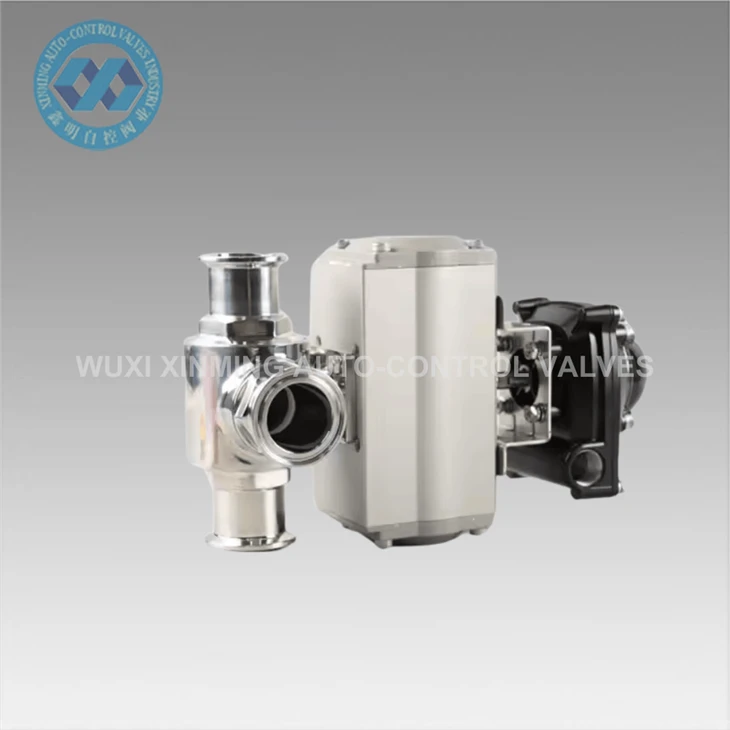
Now, let's take a look at some of the products we offer that may be suitable for vacuum applications. We have the L-t Stainless Steel Pneumatic Three-way Ball Valve, which is made of stainless steel and offers good corrosion resistance. This valve is pneumatically actuated, which allows for easy and precise control.
Another option is our Sanitary Ball Valve. This valve is designed for use in sanitary applications, such as food and beverage processing and pharmaceutical production. It has a smooth, polished surface that is easy to clean and sterilize, making it suitable for applications where hygiene is a concern.
We also offer the Stainless Steel Flanged Floating Jacketed Ball Valve For Investment Casting. This valve is made of stainless steel and has a flanged connection, which provides a secure and reliable seal. The floating design of the ball allows for better sealing performance, and the jacketed design can be used to control the temperature of the valve.
In conclusion, while WCB ball valves can be suitable for some vacuum applications, it's important to carefully consider the specific requirements of your system before making a decision. Factors such as material compatibility, seal integrity, pressure rating, and application-specific requirements all need to be taken into account. If you're not sure whether a WCB ball valve is the right choice for your vacuum application, don't hesitate to reach out to us. We have a team of experts who can help you choose the right valve for your needs.
If you're interested in purchasing any of our ball valves or have any questions about our products, please feel free to contact us. We're here to help you find the best valve solutions for your applications.
References
- Valve Handbook, 4th Edition, by Robert W. Miller
- Vacuum Technology Basics, by Oerlikon Leybold Vacuum
- Ball Valve Selection Guide, by various valve manufacturers




