Hey there! As a supplier of ceramic ball valves, I often get asked if these valves can be used in the automotive industries. Well, let's dive right into this topic and explore the possibilities.
First off, let's understand what a ceramic ball valve is. A ceramic ball valve is a type of valve that uses a ceramic ball to control the flow of fluid. The ceramic material offers several advantages over traditional materials like metal. Ceramics are extremely hard, which means they can resist wear and tear much better. They also have excellent corrosion resistance, which is a big plus when dealing with various fluids in automotive applications.
In the automotive industry, there are a whole bunch of systems that require valves to control the flow of fluids. For example, the engine cooling system needs valves to regulate the flow of coolant. The fuel injection system also relies on valves to control the flow of fuel. And then there are the hydraulic systems in things like power steering and braking. So, the question is, can ceramic ball valves fit the bill in these systems?
One of the key factors to consider is the environment in which the valves will operate. In an automotive engine, temperatures can get really high. Ceramic ball valves are well - suited for high - temperature environments. Unlike some metal valves, ceramics don't expand as much under heat, which means they can maintain a tight seal even at elevated temperatures. This is crucial for preventing leaks in the engine cooling system or the fuel injection system.
Another aspect is the chemical compatibility. Automotive fluids can be quite harsh. Coolants often contain additives that can be corrosive to some metals. Fuel can also have different chemical compositions depending on the type of engine and the region. Ceramic ball valves, with their excellent corrosion resistance, can withstand these chemicals without degrading over time. This leads to a longer service life and less maintenance, which is a huge advantage for automotive manufacturers.
Let's talk about performance. In automotive applications, precise control of fluid flow is essential. Ceramic ball valves offer excellent flow control capabilities. The smooth surface of the ceramic ball allows for accurate adjustment of the flow rate. This is particularly important in fuel injection systems, where the right amount of fuel needs to be delivered at the right time to ensure optimal engine performance.
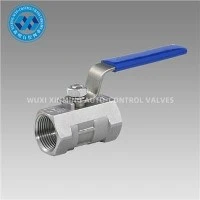
Now, let's compare ceramic ball valves with some other types of valves commonly used in the automotive industry. Stainless steel ball valves are also popular. You can check out Stainless Steel Ball Valve for more information. While stainless steel has its own advantages, such as good strength and some corrosion resistance, it can't match the hardness and high - temperature performance of ceramics. In high - wear applications, like in some hydraulic systems, ceramic ball valves are likely to outlast stainless steel ones.
There are also high - quality stainless - steel pneumatic three - way ball valves. You can find details about High Quality Stainless Steel Pneumatic Three - way Ball Valve. These valves are great for applications where you need to control the flow in multiple directions. However, when it comes to extreme conditions, such as high - pressure and high - temperature environments, ceramic ball valves may offer better performance.
And then there's the Tee High Platform Stainless Steel T - L - type Pneumatic Ball Valve. These valves are designed for specific flow - control requirements. But again, ceramic ball valves can provide a more durable and reliable solution, especially in long - term use.
Of course, there are some challenges to using ceramic ball valves in the automotive industry. One of the main issues is cost. Ceramics can be more expensive to manufacture than metals. However, when you consider the long - term benefits, such as reduced maintenance and longer service life, the initial investment may be worth it.


Another challenge is the brittleness of ceramics. While ceramics are very hard, they can be brittle. This means that they need to be handled carefully during installation and operation. Automotive manufacturers need to design their systems in a way that minimizes the risk of impact or shock that could damage the ceramic ball valves.
Despite these challenges, I believe that ceramic ball valves have a lot of potential in the automotive industry. As automotive technology continues to evolve, with a greater focus on efficiency, durability, and environmental friendliness, ceramic ball valves can play an important role.
For example, in electric vehicles, there are still fluid - control systems for things like battery cooling. Ceramic ball valves can offer a reliable solution for these applications, ensuring that the battery stays at the optimal temperature for better performance and longer life.
In conclusion, ceramic ball valves can definitely be used in the automotive industry. They offer unique advantages in terms of high - temperature resistance, corrosion resistance, and precise flow control. While there are some challenges to overcome, the long - term benefits make them a viable option for automotive manufacturers.
If you're an automotive manufacturer or someone involved in the automotive supply chain and you're interested in exploring the use of ceramic ball valves in your applications, I'd love to have a chat with you. We can discuss your specific requirements and see how our ceramic ball valves can fit into your systems. Don't hesitate to reach out for a procurement discussion. We're here to help you find the best fluid - control solutions for your automotive needs.
References:
- General knowledge about automotive engineering and valve technology.
- Industry reports on materials used in automotive fluid - control systems.