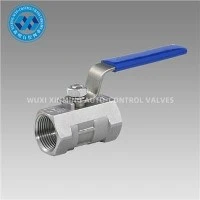
As a supplier of WCB ball valves, I often receive inquiries regarding the suitability of these valves for irrigation systems. In this blog post, I will delve into the details of whether a WCB ball valve can be used in irrigation systems, exploring its features, advantages, limitations, and practical applications.
Understanding WCB Ball Valves
WCB, which stands for "Wrought Carbon Steel B," is a common material used in the manufacturing of ball valves. WCB ball valves are known for their durability, strength, and resistance to corrosion. They consist of a spherical disc (the ball) with a hole in the middle, which can be rotated to control the flow of fluid through the valve. When the hole in the ball is aligned with the pipeline, the valve is open, allowing fluid to pass through. When the ball is rotated 90 degrees, the hole is perpendicular to the pipeline, blocking the flow.
Advantages of Using WCB Ball Valves in Irrigation Systems
1. Durability and Longevity
Irrigation systems often operate in harsh environments, exposed to various weather conditions, soil types, and water qualities. WCB ball valves are made of high - quality carbon steel, which provides excellent resistance to wear, tear, and corrosion. This means that they can withstand the rigors of continuous use in irrigation systems, reducing the need for frequent replacements and maintenance.


2. High Flow Capacity
One of the key requirements of an irrigation system is to ensure a sufficient and consistent flow of water to the plants. WCB ball valves have a full - port design, which means that the diameter of the hole in the ball is the same as the inner diameter of the pipeline. This results in minimal flow restriction, allowing water to flow through the valve with ease. As a result, WCB ball valves can maintain high flow rates, ensuring efficient water distribution in the irrigation system.
3. Precise Flow Control
In irrigation, it is often necessary to control the amount of water delivered to different areas of the field or garden. WCB ball valves offer precise flow control, as the ball can be rotated to any position between fully open and fully closed. This allows operators to adjust the flow rate according to the specific needs of the plants, ensuring optimal water usage and preventing over - or under - irrigation.
4. Reliable Sealing
A good sealing performance is crucial in an irrigation system to prevent water leakage. WCB ball valves are equipped with high - quality seals, such as PTFE (Polytetrafluoroethylene) or NBR (Nitrile Butadiene Rubber) seals, which provide reliable sealing even under high pressure. This ensures that there is no water loss due to leakage, improving the overall efficiency of the irrigation system.
Limitations of Using WCB Ball Valves in Irrigation Systems
1. Cost
Compared to some other types of valves used in irrigation, such as PVC ball valves, WCB ball valves can be more expensive. The cost of the raw material (carbon steel) and the manufacturing process contribute to the higher price. However, it's important to consider the long - term benefits of using WCB ball valves, such as their durability and low maintenance requirements, which can offset the initial investment.
2. Weight
WCB ball valves are relatively heavy due to the nature of the carbon steel material. This can make installation and handling more difficult, especially in large - scale irrigation systems where a large number of valves are required. Additionally, the weight of the valves may require more robust support structures in the pipeline system.
3. Corrosion in Certain Environments
Although WCB ball valves are generally resistant to corrosion, they may be susceptible to corrosion in certain environments, such as those with high levels of chloride or acidic water. In such cases, additional protective measures, such as coating the valve with anti - corrosion paint or using a lined valve, may be required.
Practical Applications of WCB Ball Valves in Irrigation Systems
WCB ball valves are suitable for a wide range of irrigation applications, including:
1. Large - Scale Agricultural Irrigation
In large - scale agricultural irrigation systems, where high flow rates and reliable performance are required, WCB ball valves can be used to control the flow of water from the main water source to different fields or irrigation zones. Their durability and high - pressure resistance make them ideal for handling large volumes of water over long distances.
2. Industrial Irrigation
Industrial facilities often have their own irrigation systems for maintaining green areas, cooling towers, or process water applications. WCB ball valves can be used in these systems to ensure precise flow control and reliable operation, even in industrial environments with demanding conditions.
3. Golf Course Irrigation
Golf courses require a sophisticated irrigation system to maintain the quality of the turf. WCB ball valves can be used in golf course irrigation systems to control the flow of water to different areas of the course, such as fairways, greens, and roughs. Their precise flow control capabilities allow for customized watering schedules, ensuring optimal turf health.
Comparison with Other Types of Valves in Irrigation
1. PVC Ball Valves
PVC ball valves are a popular choice in irrigation systems due to their low cost and light weight. They are suitable for small - scale irrigation applications and systems with low - pressure requirements. However, compared to WCB ball valves, PVC ball valves may have lower durability and pressure resistance. If you are interested in high - performance PVC ball valves, you can visit High Performance PVC Ball Valve.
2. Pneumatic Actuated Ball Valves
Pneumatic actuated ball valves offer the advantage of remote control and automation. They can be used in large - scale irrigation systems where it is necessary to control multiple valves simultaneously. For example, the Intelligent - driven Double - acting Pneumatic Plastic Actuator Ball Valve For Precise Opening Control provides precise opening control. However, they are more complex and expensive than manual WCB ball valves.
3. Stainless Steel Three - way Ball Valves
Stainless steel three - way ball valves, such as the L - t Stainless Steel Pneumatic Three - way Ball Valve, are used in irrigation systems where it is necessary to divert the flow of water to different directions. They are corrosion - resistant and suitable for applications with high - quality water requirements. However, they may be more expensive than WCB ball valves and have more limited flow capacity in some cases.
Conclusion
In conclusion, WCB ball valves can be effectively used in irrigation systems. Their durability, high flow capacity, precise flow control, and reliable sealing make them a suitable choice for a variety of irrigation applications, especially in large - scale and industrial settings. Although they have some limitations, such as higher cost and weight, the long - term benefits often outweigh these drawbacks.
If you are considering using WCB ball valves in your irrigation system or have any questions about our products, please feel free to contact us for further information and to discuss your specific requirements. Our team of experts is ready to assist you in finding the best valve solutions for your irrigation needs.
References
- "Valve Handbook" by Valve Manufacturers Association.
- "Irrigation System Design and Installation Guide" by Irrigation Association.