As a trusted ball valve supplier, I'm often asked about the intricate workings of various valve components. One question that frequently arises is, "How does a pneumatic actuator work on a ball valve?" In this blog post, I'll delve into the mechanics of pneumatic actuators on ball valves, shedding light on their operation, benefits, and applications.
Understanding the Basics: Ball Valves and Pneumatic Actuators
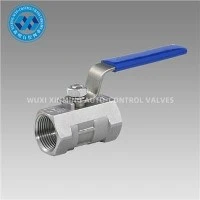
Before we explore how a pneumatic actuator works on a ball valve, let's first understand the individual components. A ball valve is a quarter-turn valve that uses a hollow, perforated, and pivoting ball to control the flow of a fluid through it. When the ball's hole is in line with the flow path, the valve is open, allowing fluid to pass. When the ball is rotated 90 degrees, the hole is perpendicular to the flow path, and the valve is closed, blocking the flow.

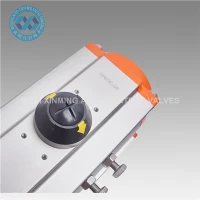
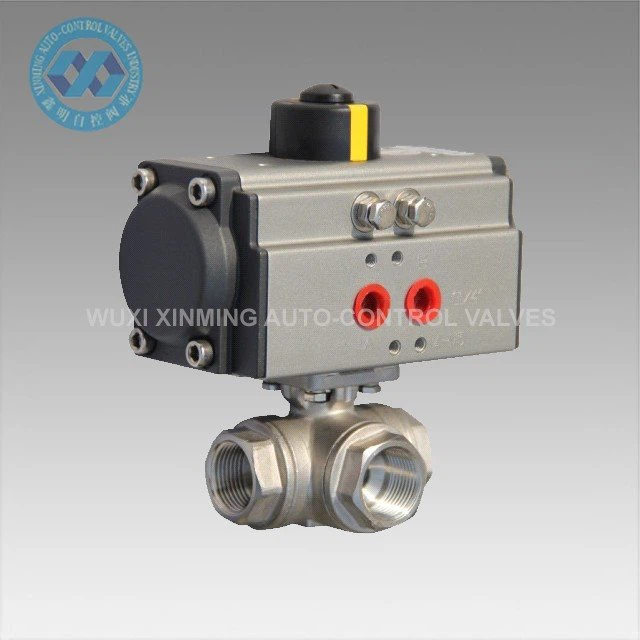
A pneumatic actuator, on the other hand, is a device that converts energy from compressed air into mechanical motion. This mechanical motion is then used to operate the valve, opening or closing it as required. Pneumatic actuators are popular in industrial applications due to their reliability, simplicity, and cost-effectiveness.
How a Pneumatic Actuator Works on a Ball Valve
The operation of a pneumatic actuator on a ball valve can be broken down into several key steps:

1. Compressed Air Supply
The process begins with the supply of compressed air to the pneumatic actuator. Compressed air is typically stored in a reservoir or supplied directly from an air compressor. The air is then directed to the actuator through a series of pipes and valves.
2. Actuator Design and Configuration
Pneumatic actuators come in various designs, but the most common types used with ball valves are piston and diaphragm actuators.

- Piston Actuators: In a piston actuator, compressed air is introduced into a cylinder, where it acts on a piston. The force generated by the compressed air causes the piston to move linearly within the cylinder. This linear motion is then converted into rotational motion through a mechanical linkage, which is connected to the ball valve stem. When the piston moves, it rotates the ball valve stem by 90 degrees, opening or closing the valve.
- Diaphragm Actuators: Diaphragm actuators use a flexible diaphragm to convert the energy of compressed air into mechanical motion. Compressed air is applied to one side of the diaphragm, causing it to flex. This flexing motion is transferred to a pushrod, which is connected to the ball valve stem. As the diaphragm flexes, the pushrod moves, rotating the ball valve stem and opening or closing the valve.
3. Control of the Actuator
The operation of the pneumatic actuator is controlled by a control system, which can be manual, semi-automatic, or fully automatic. In a manual control system, an operator uses a hand switch or lever to direct the flow of compressed air to the actuator, opening or closing the valve as needed. In a semi-automatic or fully automatic control system, the actuator is controlled by a programmable logic controller (PLC) or a similar device. The PLC receives input signals from sensors, such as flow sensors or pressure sensors, and based on these signals, it sends output signals to the actuator, instructing it to open or close the valve.
4. Feedback and Monitoring
Many pneumatic actuators are equipped with position sensors, which provide feedback on the position of the valve. This feedback is sent to the control system, allowing it to monitor the status of the valve and make adjustments as necessary. For example, if the valve fails to open or close fully, the control system can detect this and take corrective action, such as increasing the pressure of the compressed air or sending an alarm signal.
Benefits of Using a Pneumatic Actuator on a Ball Valve
There are several benefits to using a pneumatic actuator on a ball valve:
- Reliability: Pneumatic actuators are known for their reliability and durability. They have fewer moving parts compared to other types of actuators, such as electric actuators, which reduces the risk of mechanical failure. Additionally, pneumatic actuators are less affected by environmental factors, such as dust, moisture, and temperature variations, making them suitable for use in harsh industrial environments.
- Speed of Operation: Pneumatic actuators can operate at high speeds, allowing for rapid opening and closing of the ball valve. This is particularly important in applications where quick response times are required, such as in emergency shut-off systems.
- Cost-Effectiveness: Pneumatic actuators are generally more cost-effective than other types of actuators. They require less maintenance and have a lower initial cost, making them a popular choice for many industrial applications.
- Safety: Pneumatic actuators are inherently safe to use. They do not generate electrical sparks, which reduces the risk of fire or explosion in hazardous environments. Additionally, in the event of a power failure, pneumatic actuators can still be operated using stored compressed air, providing a reliable backup system.
Applications of Pneumatic Actuators on Ball Valves
Pneumatic actuators on ball valves are used in a wide range of industrial applications, including:
- Oil and Gas Industry: In the oil and gas industry, pneumatic actuators on ball valves are used to control the flow of oil, gas, and other fluids in pipelines, refineries, and storage facilities. They are also used in offshore platforms and drilling rigs, where reliability and safety are of utmost importance.
- Chemical Industry: In the chemical industry, pneumatic actuators on ball valves are used to control the flow of chemicals, acids, and other corrosive substances. They are designed to withstand the harsh chemical environment and provide reliable operation over an extended period of time.
- Water and Wastewater Treatment: In water and wastewater treatment plants, pneumatic actuators on ball valves are used to control the flow of water, sewage, and other fluids. They are used in various processes, such as filtration, disinfection, and pumping, to ensure the efficient and safe operation of the treatment plant.
- Food and Beverage Industry: In the food and beverage industry, pneumatic actuators on ball valves are used to control the flow of food products, such as milk, juice, and beer. They are designed to meet the strict hygiene and sanitation requirements of the industry and provide reliable operation without contaminating the products.
Conclusion
In conclusion, a pneumatic actuator is a reliable and cost-effective solution for operating a ball valve. By converting the energy of compressed air into mechanical motion, a pneumatic actuator can open or close a ball valve quickly and accurately, providing precise control over the flow of fluids. Whether you're in the oil and gas industry, the chemical industry, or any other industrial sector, a pneumatic actuator on a ball valve can help you improve the efficiency, safety, and reliability of your operations.
If you're interested in learning more about Pneumatic Ball Valve, 2PC Thread Ball Valve, or High Performance Pneumatic Thread Ball Valve, or if you have any questions about our products, please feel free to contact us. We're always happy to help you find the right valve solution for your needs.
References
- Crane Valve Group. (n.d.). Ball Valve Handbook.
- Emerson Automation Solutions. (n.d.). Pneumatic Actuators for Valves.
- Flowserve Corporation. (n.d.). Valve Actuation Handbook.